
Innovation in the Air: PTO Shafts for Rice Seedling Throwing Machines
Next-Gen Planting for Singapore’s Agritech Future. High-Speed, Vibration-Free Drivelines for Pneumatic and Centrifugal Seedling Casters (Pao Yang Ji).
Field Notes: The Efficiency of “Flying” Seedlings
As Singapore intensifies its focus on high-efficiency urban agriculture and food security (“30 by 30”), the labor-intensive nature of traditional rice transplanting is being challenged by a newer technology: the Seedling Throwing Machine (Pao Yang Ji / 抛秧机). Unlike traditional transplanters that mechanically insert seedlings into the mud, these machines use aerodynamic principles to launch seedlings into the air. The seedlings, grown in specialized plastic trays with a heavy soil ball at the root, fly in a parabolic arc and land upright in the paddy mud due to gravity.
This method is significantly faster than transplanting and promotes better root spread (“tillering”). However, the machinery required to achieve uniform distribution is complex. PTO-driven models typically power a High-Velocity Blower Fan (for pneumatic systems) or a High-Speed Conveyor Belt (for centrifugal systems).
The PTO Challenge: Driving a seedling thrower is an exercise in aerodynamics and inertia.
1. Fan Speed Stability: The throw distance is directly proportional to the fan or belt speed. If the PTO shaft vibrates or fluctuates in speed, the “throw pattern” becomes erratic—some seedlings land too close, others too far, creating uneven crop density.
2. High Inertia Spindown: The blower fan acts as a massive flywheel. When the tractor reaches the end of the paddy and the operator throttles down, the fan wants to keep spinning. A rigid connection would transmit this energy back to the tractor, potentially damaging the transmission or pushing the tractor forward.
3. Vibration and Electronics: Modern throwing machines are equipped with sensors to detect seedling flow. PTO vibration can rattle these sensors, causing false alarms or metering errors.
In 2024, field trials in Singapore’s experimental rice plots showed that “Uneven Distribution” was often caused by Harmonic Vibration in the driveline, which disrupted the laminar airflow in the throwing tubes.
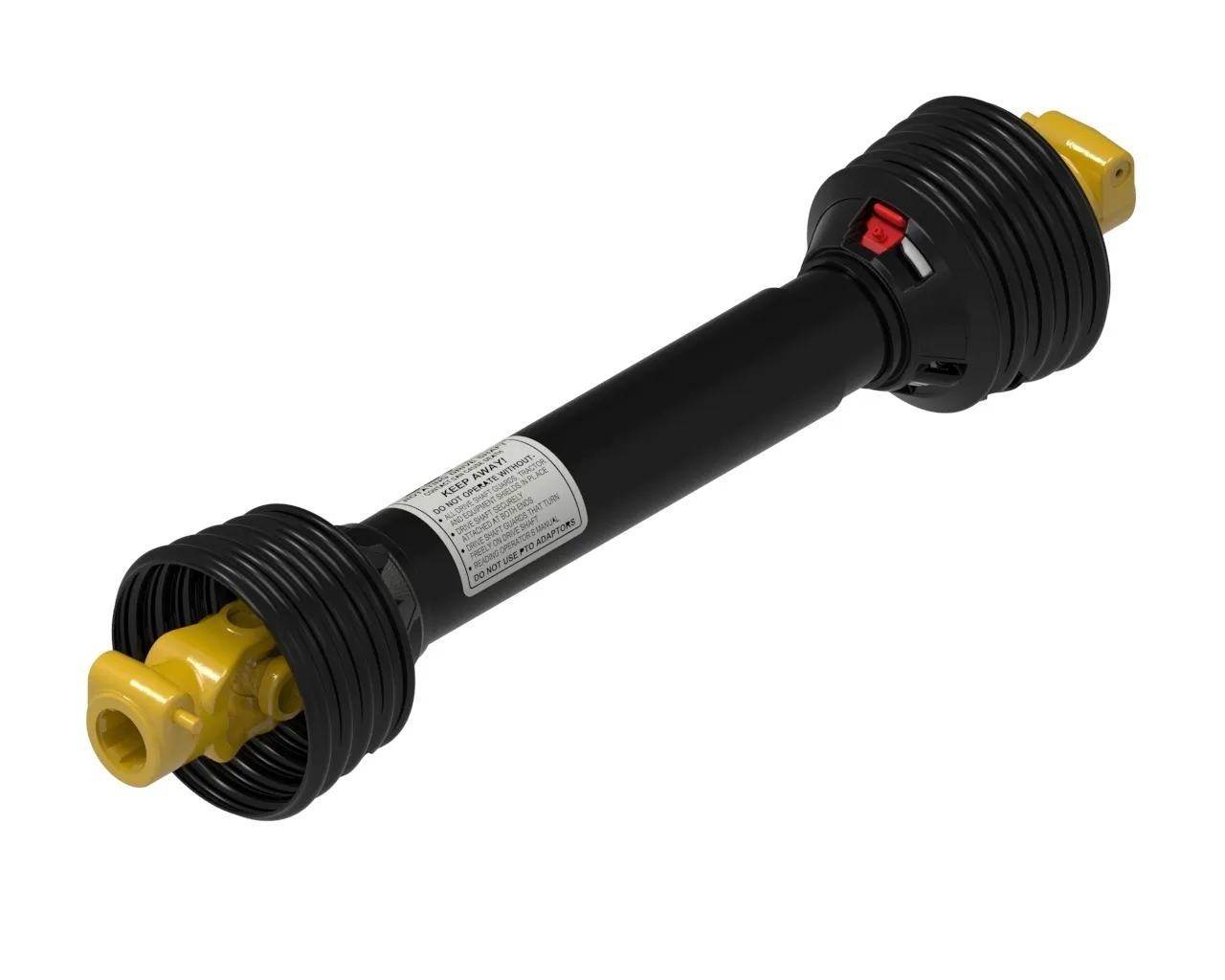
The EVER-POWER Solution: We developed the Series 4 “Aero-Cast” Driveline. This shaft is built like a turbine component. It features G6.3 Dynamic Balancing to eliminate vibration at high RPMs. It includes an integrated Overrunning Clutch (Free Wheel) to manage the fan’s inertia safely. The tubing is Precision Cold-Drawn Steel with a Star or Lemon profile to ensure zero rotational lash, providing the steady power needed for consistent aerodynamic lift.
Technical Specifications & Engineering Parameters
Seedling throwers operate at high speeds but low torque compared to tillers. The priority is balance and inertia management.
| Parameter ID | Specification Category | Technical Value / Standard |
|---|---|---|
| 01 | Series Classification | Series 4 (Standard) / Series 5 (Heavy Fan) |
| 02 | Nominal Torque (540 RPM) | 460 Nm (S4) / 780 Nm (S5) |
| 03 | Nominal Torque (1000 RPM) | 380 Nm (S4) / 610 Nm (S5) |
| 04 | Balancing Standard | ISO 1940-1 G6.3 (Turbine Grade) |
| 05 | Tractor Interface | 1-3/8″ Z6 (Standard 6-Spline) |
| 06 | Implement Interface | 1-3/8″ Z6 or Overrunning Clutch Yoke |
| 07 | Closed Length (Lz) | 710 mm – 1,010 mm (Standard Linkage) |
| 08 | Tube Profile | Precision Lemon Profile (Low Vibration) |
| 09 | Tube Material | ST52 Cold Drawn Seamless Steel |
| 10 | Cross Kit Dimensions | 27mm x 74.6mm (S4) / 30.2mm x 80mm (S5) |
| 11 | Bearing Type | Sealed High-Speed Needle Roller |
| 12 | Safety Device | Overrunning Clutch (RL) – Mandatory |
| 13 | Alternative Safety | Friction Clutch (Only if mechanical feed is present) |
| 14 | Operating Angle | Max 25° (Standard) / 50° (Wide Angle) |
| 15 | Guard Material | UV Stabilized HDPE (Safety Yellow) |
| 16 | Guard Certification | MOM / ISO 5674 Compliant |
| 17 | Lubrificazione | High-Speed Lithium Complex NLGI 2 |
| 18 | Trattamento della superficie | Zinc-Nickel Plating (Corrosion Resistance) |
| 19 | Telescoping Overlap | Min 300mm (Stability at extension) |
| 20 | Locking Mechanism | Collar Lock (Ball) or Push Pin |
| 21 | Peso | 12 kg – 20 kg |
| 22 | Applicazione | Seedling Throwing Machine / Pneumatic Spreader |
| 23 | Warranty | 1 Year (Mechanism) |
| 24 | Origin Compatibility | Yanmar, Kubota, Zoomlion, World, Local Agritech |
The Physics of Flight: Why the Shaft Matters
The seedling throwing machine converts rotational energy into airflow or centrifugal force. The PTO shaft is the critical link in this energy conversion.
1. The Overrunning Clutch (Safe Spindown)
The blower fan on a throwing machine spins at high velocity (often stepped up to 3000+ RPM).
The Physics: $E_k = \frac{1}{2} I \omega^2$. The fan stores significant kinetic energy. When the PTO is disengaged at the headland, the fan wants to coast.
The Danger: Without protection, this inertia drives back through the PTO shaft into the tractor transmission. This “back-driving” force can shear the PTO brake pin or push the tractor forward into the bund.
The Solution: The Overrunning Clutch (Free Wheel). This ratchet device allows torque to flow from tractor to implement, but freewheels when the implement spins faster than the tractor. It allows the fan to spool down naturally and safely, protecting the tractor’s transmission and the operator.

2. Vibration and Distribution Uniformity
Uniformity is the key to yield. Seedlings must land at equal distances.
The Physics: The throwing distance is determined by air velocity. Air velocity is determined by fan speed. If the PTO shaft vibrates (due to imbalance or wear), the fan speed oscillates.
The Result: “Pulsing” distribution. Seedlings land in clumps (high speed pulse) followed by gaps (low speed pulse).
The Solution: Precision Balancing. Our shafts are balanced on dynamic test rigs. We use precision-drawn tubing to ensure concentricity. This results in a silky-smooth power delivery, maintaining constant fan RPM and a perfectly uniform seedling spread pattern.
3. Geometry at the Headland
To cover the field edges, the operator often lifts the machine while turning.
The Problem: Lifting the machine changes the PTO angle. If the PTO is left running (to clear the remaining seedlings), standard U-joints will “chatter” at angles >25 degrees. This chatter shakes the seedling trays, causing jams.
The Solution: Wide-Angle CV Joints. By using a Constant Velocity joint, the shaft can operate smoothly even when the machine is raised. This allows the operator to finish the row completely before disengaging the PTO, improving field efficiency.
Operational Context: Singapore’s Rice Innovation
The equipment is tailored for high-efficiency, low-labor farming models being tested in the region.
Scenario A: Commercial Seedling Throwing (Lim Chu Kang)
Context: Large-scale pilot plots testing the efficiency of throwing vs. transplanting.
Machine: 12-Row Pneumatic Seedling Thrower.
Challenge: Continuous Fan Load. The fan runs at max RPM for hours.
Requirement: High-Speed Grease. Heat generation in the U-joints is the enemy. We use Lithium Complex grease designed for high-speed bearings to prevent liquefaction and leakage, ensuring long bearing life.
Scenario B: Hybrid Rice Research
Context: Experimental plots requiring precise plant density.
Machine: Precision Belt-Thrower (Centrifugal).
Challenge: Sensitive Electronics. The machine has optical sensors to count seedlings.
Requirement: Zero-Vibration Shaft. Mechanical vibration confuses the optical counters. Our dynamically balanced shaft ensures the machine frame is “quiet,” allowing the sensors to provide accurate data to researchers.

Scenario C: Amphibious Operations
Context: The tractor operates in flooded paddies.
Machine: Rear-mounted thrower on a high-clearance tractor.
Challenge: Corrosion. Splashback from the paddy water.
Requirement: Zinc-Nickel Plating. Standard paint peels off. Our plating provides a chemical bond that resists the corrosive organic acids in paddy water, keeping the telescoping tubes free-moving for years.
Interchangeability & OEM Systems Integration
We support the advanced machinery brands pushing the boundaries of rice cultivation.
Fitment Guide:
EVER-POWER shafts are engineered replacements for:
- Yanmar™ / Kubota™ (Throwing Attachments): Compatible with the PTO outputs of their paddy tractors (often 1-3/8″ Z6).
- Zoomlion™ / World™ (Chinese Tech): Many throwing machines are imported from China’s leading ag-tech firms. We provide high-quality replacement shafts that often exceed OEM specs for balance and sealing.
- Local Prototypes: We work with Singaporean engineering firms to provide custom-length shafts for locally developed autonomous throwing robots.
*Disclaimer: OEM names are for reference only. EVER-POWER is an independent manufacturer.
Compliance with Singapore Standards (MOM / WSH)
Workplace Safety and Health (WSH) is paramount. High-speed machinery creates unique hazards.
The “High-Kinetic” Safety Protocol
A spinning shaft driving a high-inertia load is dangerous even after the engine is off.
EVER-POWER Thrower Shafts utilize:
- Audible Coast-Down: The Overrunning Clutch makes a distinct clicking sound as the fan coasts down. This audible cue warns workers that the machinery is still moving inside, even if the tractor is silent.
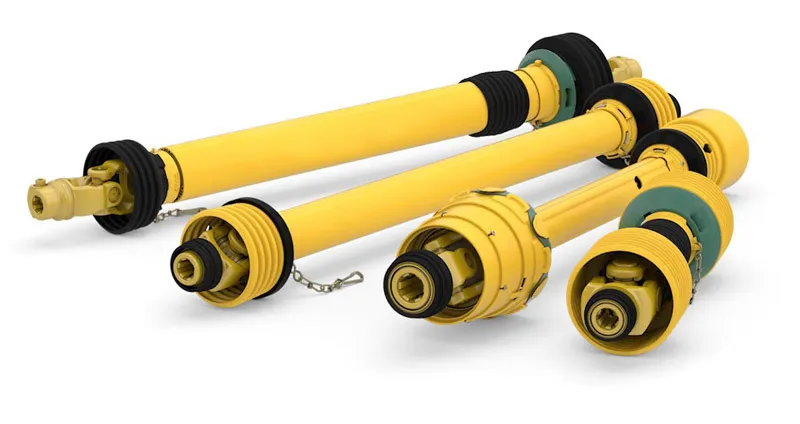
- Full Enclosure Guarding: The yellow plastic tubes cover the entire steel shaft.
- “Dead-Man” Bearings: The guard does not rotate. If a worker brushes against it, it stays stationary.
- Restraint Chains: Mandatory to prevent the guard from spinning up to 1000 RPM.
Material Science: Built for Speed and Wetness
The environment is wet, and the operation is fast. Materials must adapt.
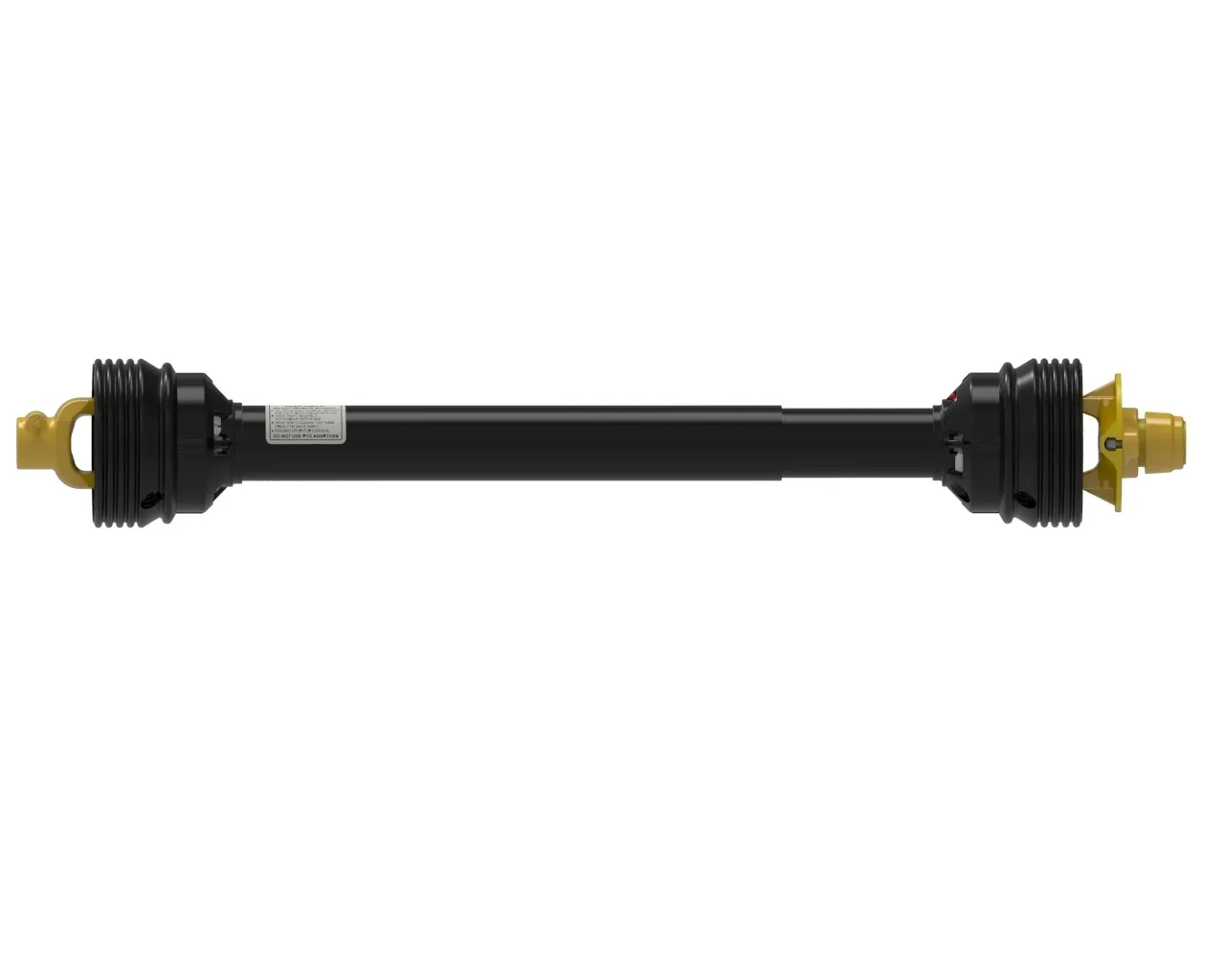
Cold Drawn Seamless Tubing: We use CDS tubing for its superior concentricity. This ensures the shaft spins true, minimizing vibration at high fan speeds.
Zinc-Nickel Plating: To combat the humid, wet paddy environment, we use Zinc-Nickel plating. It offers superior corrosion resistance compared to paint, ensuring the delicate telescoping action remains smooth and jam-free.
Case Study: The Autonomous Farm Trial
Client Profile: An agritech startup in Singapore testing autonomous tractors with seedling throwing attachments.
The Problem: The autonomous tractor’s guidance system was experiencing errors. The cause was traced to a severe vibration at 800 PTO RPM coming from the thrower’s driveshaft. This vibration was shaking the IMU (Inertial Measurement Unit) on the tractor chassis. Additionally, when the robot stopped at the end of a row, the inertia of the fan pushed the tractor past the geo-fence boundary.
The EVER-POWER Solution: We supplied a Series 4 “Aero-Cast” Shaft. It featured G6.3 dynamic balancing and an Overrunning Clutch.
The Result: The dynamic balancing eliminated the vibration, allowing the IMU to function correctly and the tractor to steer straight. The Overrunning Clutch allowed the fan to coast down harmlessly when the robot stopped, preventing the “push” effect. The trial was a success, proving the viability of unmanned seedling throwing in Singapore.
Maintenance: Keeping the Air Flowing
High-speed shafts need specific care.
- Clutch Greasing: The Overrunning Clutch has internal pawls. Grease them every 50 hours through the specific zerk fitting. Do not over-grease or the pawls may stick, causing drive failure.
- U-Joint Care: High speed generates heat. Grease the U-joints every 8 hours of operation to replenish the lubricant film.
- Guard Check: Ensure the yellow guard spins freely. If it binds, the friction at high speed will melt the plastic guard bearings.
Frequently Asked Questions (FAQ)
Why does my tractor lurch forward when I stop?
My shaft vibrates at high RPM. Is this normal?
Can I use a shear bolt shaft?
Agri-Market Trends: Drone vs. Ground Throwers
While agricultural drones are popular for seeding, Ground-Based Throwing Machines offer higher capacity and uniformity for large-scale operations. The trend is towards larger, wider ground machines that can cover more hectares per hour. This demands even more robust, balanced PTO drivelines to handle the increased power and fan size. EVER-POWER is ready with Series 6 “Aero-Cast” shafts for the next generation of mega-throwers.
 IT
IT  EN
EN  ES
ES  RU
RU  FR
FR  DE
DE  PT
PT  JA
JA  AR
AR  ZH
ZH