
The Art of the Fleece: PTO Shafts for Sheep Shearing Machinery
Powering the “Esquila” in the Pampa Gaúcho. Precision Drivelines for Mobile Overhead Plants, Ensuring Smooth Operation for Professional Shearers.
Field Notes: The Rhythm of the Handpiece
In the vast pampas of Rio Grande do Sul (Santana do Livramento, Bagé, Uruguaiana), sheep shearing (A Esquila) is a tradition and a highly professional industry. Unlike small flocks that use electric clippers, commercial wool harvesting relies on Mobile Shearing Plants (Reboques de Esquila). These trailers carry an overhead line shaft system that drives 2, 3, or 4 mechanical handpieces via flexible downtubes.
These plants are typically powered by a tractor PTO or a stationary engine. The mechanical requirement here is unique in agriculture: Absolute Smoothness.
The Problem: A shearing handpiece (caneta) reciprocates at 3,000 to 3,500 strokes per minute. The shearer is holding this vibrating tool all day, often bent over a 60kg Merino sheep.
If the PTO shaft driving the main line shaft is unbalanced or has “slop” (backlash), it creates a harmonic vibration that travels down the flexible drive to the handpiece.
The Consequence:
1. “Lock-Up” (Travamento): Velocity fluctuations cause the cutter to snag in the dense wool, potentially cutting the sheep or kicking back at the shearer.
2. Heat: Vibration creates friction in the downtube, heating up the handpiece to uncomfortable levels.
3. Fatigue: The extra vibration exhausts the shearer’s hand and arm muscles, reducing productivity.
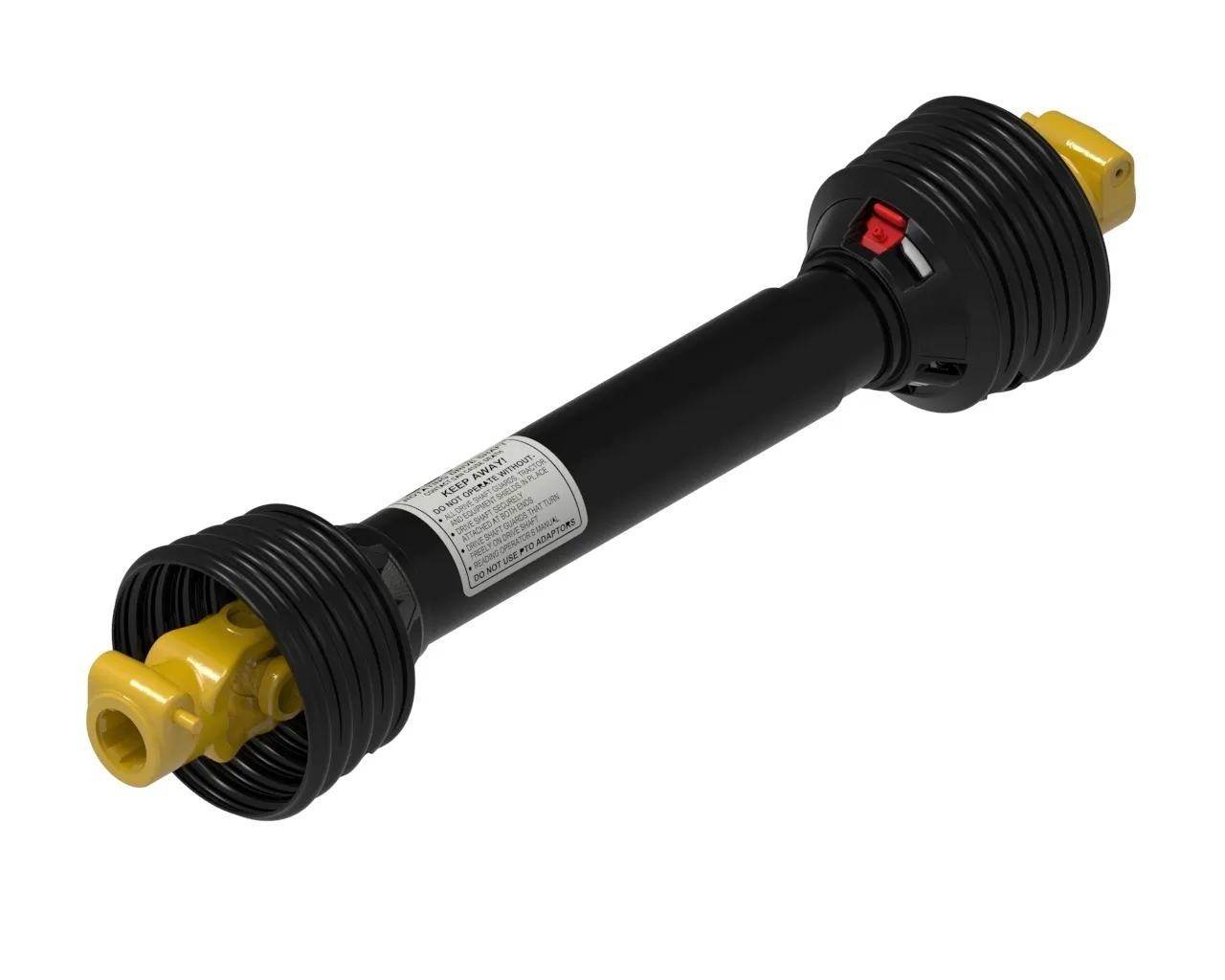
The EVER-POWER Solution: We developed the Series 2 “Wool-Master” Precision Shaft. This is not a standard tiller shaft. It uses Cold Drawn Lemon Profile Tubing for tight tolerance and is Dynamically Balanced to G6.3. By eliminating the “whip” at the power source, we ensure the shearer experiences a smooth, cool-running handpiece, allowing for a cleaner cut and a higher tally of sheep per day.
Technical Specifications & Engineering Parameters
Shearing plants require low torque but high speed and stability. The shaft must be light enough to handle easily but rigid enough to maintain RPM stability.
| Parameter ID | Specification Category | Technical Value / Standard |
|---|---|---|
| 01 | Series Classification | Series 1 (Small Plants) / Series 2 (Multi-Stand) |
| 02 | Nominal Torque (540 RPM) | 210 Nm (S1) / 270 Nm (S2) |
| 03 | Nominal Torque (1000 RPM) | 160 Nm (S1) / 210 Nm (S2) |
| 04 | Balancing Standard | ISO 1940-1 Grade G6.3 (Critical) |
| 05 | Tractor Interface | 1-3/8″ Z6 (Standard) |
| 06 | Implement Interface | 1-3/8″ Z6, 25mm Keyed, or 30mm Keyed |
| 07 | Closed Length (Lz) | 610 mm – 1,010 mm (Adjustable for Trailer Hitch) |
| 08 | Tube Profile | Lemon (Size 1/2) – Low Friction / Low Noise |
| 09 | Tube Material | ST52 Cold Drawn Precision Steel |
| 10 | Cross Kit Dimensions | 22x54mm (S1) / 23.8×61.3mm (S2) |
| 11 | Bearing Type | High-Speed Sealed Needle Roller |
| 12 | Safety Device | Shear Bolt (SB) or Friction Clutch (FV) |
| 13 | Operating Angle | Max 15° (Alignment is critical for smoothness) |
| 14 | Surface Finish | Zinc-Nickel Plating (Rust Resistance) |
| 15 | Guard Material | UV Stabilized HDPE (Yellow) |
| 16 | Guard Certification | NR-12 / ISO 5674 |
| 17 | تشحيم | High-Speed Lithium Complex (Blue) |
| 18 | Vibration Damping | Precision Yoke Alignment |
| 19 | Telescoping Overlap | Min 150mm (Rigidity) |
| 20 | Clutch Reset | Manual (Bolt replacement) |
| 21 | وزن | 7 kg – 12 kg (Lightweight) |
| 22 | طلب | Mobile Shearing Trailer / Wool Press |
| 23 | ضمان | 2 Years (Balance & Structure) |
| 24 | Origin Compatibility | Heiniger, Lister, Beiyuan, Local Fabrications |
The Physics of the Cut: Speed and Consistency
The mechanical chain from the tractor to the wool is long: PTO Shaft -> Belt Drive/Gearbox -> Overhead Line Shaft -> Downtube -> Handpiece. Every link introduces vibration. The PTO is the first link.
1. Rotational Stability (Estabilidade de Rotação)
The cutters on the handpiece must move at a consistent speed to slice the wool fibers cleanly.
The Physics: If the PTO shaft operates at a sharp angle without a CV joint, it creates “chordal action” (speeding up and slowing down twice per revolution).
The Effect: This speed fluctuation travels through the belts to the handpiece. The cutter “stutters.” Instead of slicing, it chews the wool. This results in “second cuts” (recortes), lowering the value of the fleece, and increases the risk of skin cuts.
The Solution: Precision Phasing and Alignment. We assemble our Series 2 shafts with laser-checked yoke alignment. We also advise operators to align the tractor perfectly straight with the trailer to keep PTO angles near zero, ensuring fluid power delivery.

2. Overload Protection (O “Tranco”)
Sometimes, a shearer hits a hidden tag or a burr, jamming the handpiece. Or the overhead gear locks up.
The Risk: The inertia of the tractor engine is massive. A jam can snap the expensive downtube (tripa) or shatter the overhead bevel gears.
The Defense: The Shear Bolt Yoke. We equip the implement end of the shaft with a Grade 5.8 (soft) shear bolt. If a jam occurs anywhere in the line shaft system, the bolt shears instantly. This disconnects the tractor power before the delicate downtubes or handpieces are destroyed.
3. The Wool Grease Factor (Suarda)
Shearing sheds are greasy environments. Lanolin (suarda) and dust coat everything.
The Issue: While lanolin is a lubricant, mixed with dust it becomes a sticky paste. This can gum up the telescoping tubes of the PTO shaft.
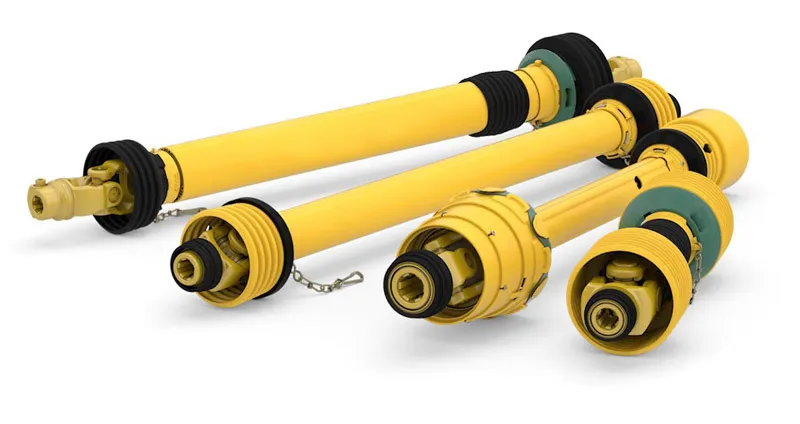
The Solution: Zinc-Nickel Plating. We plate our tubes to provide a slick, hard surface. This prevents the sticky dust from bonding to the steel as strongly as it does to paint or rust. It makes cleaning the shaft at the end of the season much easier.
Operational Context: The Brazilian Pampa
The equipment setup varies from professional contracting teams to individual farm units.
Scenario A: The Contractor Trailer (Equipe de Esquila)
Context: A large trailer with 4 to 6 stands, powered by a 75HP tractor. Shearing 1,000+ sheep a day.
Challenge: Continuous Duty. The shaft runs all day. Heat buildup in the U-joints.
Requirement: Series 2 High-Speed. Even though the torque is low, the RPM is constant. We use high-speed rated cross kits with synthetic grease that doesn’t liquefy after 8 hours of running. The guards are ventilated to allow airflow to the bearings.
Scenario B: The Wool Press (Prensa de Lã)
Context: Compressing the fleece into 200kg bales for export. Often hydraulic, powered by the same PTO circuit.
Challenge: Pressure Spikes. The hydraulic pump hits peak pressure at the end of the bale compression.
Requirement: Torsional Rigidity. We use Star profile tubes on press drives to handle the hydraulic pressure spikes without twisting, ensuring the pump delivers full pressure to compact the bale efficiently.
Interchangeability & Systems Integration
The shearing world relies on a few key global standards, adapted locally.
Fitment Guide:
EVER-POWER Series 2 shafts are engineered to interface with:
- Heiniger™ (Overhead Plants): The global leader. We supply shafts compatible with the input drive of their EVO and ONE plants.
- Lister™ / Beiyuan™: Compatible with belt-drive conversion kits used on these systems.
- Local Fabrication (Oficinas Gaúchas): The South has a strong tradition of custom-built trailers. We offer keyed yokes (25mm, 30mm, 35mm) to fit standard industrial pillow block bearings used in these custom builds.
*Disclaimer: OEM names are for reference only. EVER-POWER is an independent manufacturer.
Compliance with Brazilian Regulatory Standards (NR-12)
NR-12 is paramount. A shearing shed is crowded. Shearers, wool handlers (agarradores), and classers are constantly moving around the machinery.
The “Crowded Shed” Safety
A spinning shaft in a busy workspace is a severe hazard.
EVER-POWER Shearing Shafts utilize:
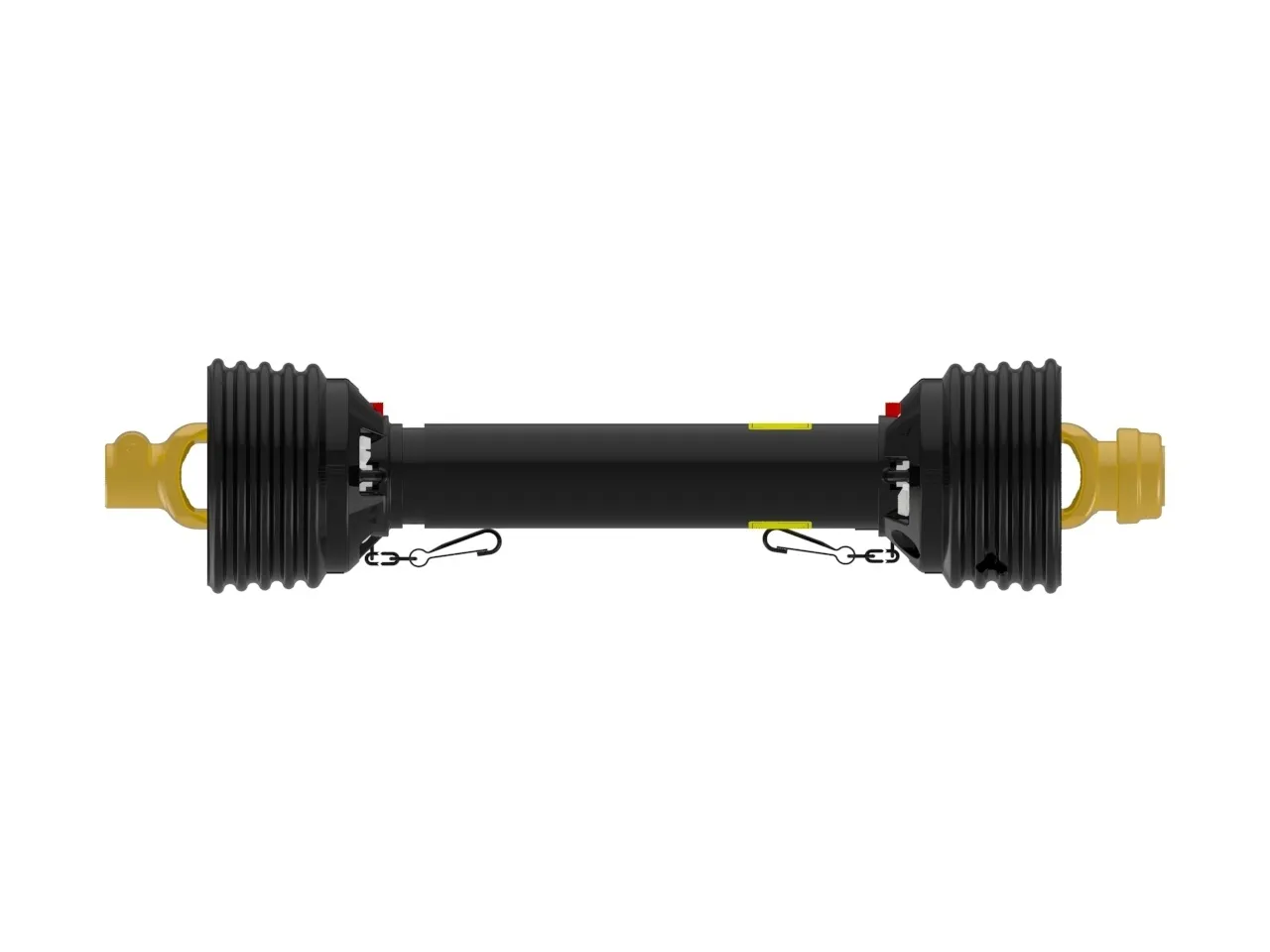
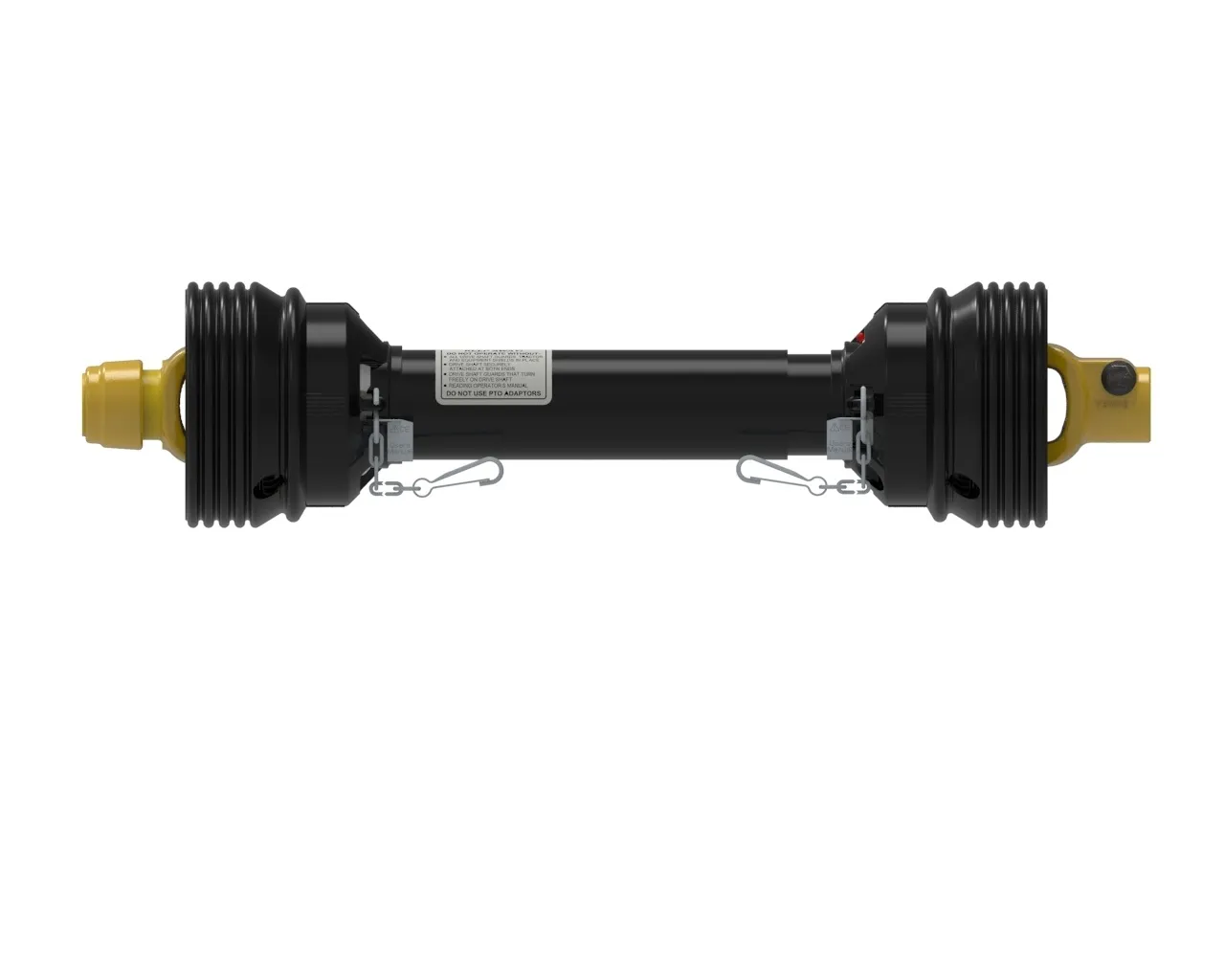
- Stationary Guard Technology: The yellow shield sits on high-quality bearings. It does not rotate. If a wool handler brushes against it with a fleece, the guard stays static.
- Full Cone Coverage: The guard cones extend over the entire U-joint. No rotating metal is visible. This is critical to prevent wool fibers from winding around the shaft.
- Secure Chains: We provide robust chains to anchor the guard. In a shearing shed, these must be secured to the trailer frame to ensure the guard never spins.
Material Science: Resistance to the Elements
Shearing often happens in late winter or spring (wet season). Trailers are parked outside.
Zinc-Nickel Plating: Standard paint flakes off and rusts. We plate our shafts to withstand the humidity of the Pampa. This ensures that when the season starts, the shaft telescopes freely and hasn’t seized with rust.
Cold Weather Plastics: Our safety guards are made from a polymer blend that remains flexible even in the near-freezing mornings of the southern winter, preventing cracking when impacted.
Case Study: The Estância in Santana do Livramento
Client Profile: A historic sheep station in Santana do Livramento (RS) with a flock of 5,000 Corriedale sheep.
The Problem: The shearing team complained of “hot handpieces” and vibration. They were changing downtube guts (cores) frequently. The PTO shaft driving the 4-stand plant was an old, bent unit with worn U-joints.
The EVER-POWER Solution: We replaced the main drive with a Series 2 Balanced “Wool-Master” Shaft.
The Result: The vibration in the overhead line shaft disappeared. The handpieces ran cooler because the friction in the downtubes was reduced. The shearers reported less fatigue at the end of the day. The farm manager noted that downtube breakages dropped to zero for the rest of the shearing season. The investment paid off in equipment longevity and shearer satisfaction.
Maintenance: The “Start of Season” Check
Shearing is seasonal. Maintenance happens before the first sheep enters the shed.
- Grease the Crosses: Old grease hardens over winter. Pump fresh grease into the U-joints until it purges from the seals before the season starts.
- Check Alignment: Ensure the tractor is parked straight with the trailer. Use wheel chocks to prevent the tractor from settling or moving during the day, which would change the PTO angle.
- Guard Inspection: Wool grease (lanolin) attracts dirt. Clean the plastic guard so it can spin freely on its bearings. A stuck guard is a safety hazard.
Frequently Asked Questions (FAQ)
Why do handpieces get hot?
Can I use a friction clutch instead of a shear bolt?
How do I align the tractor for the trailer?
Agri-Market Trends: Animal Welfare
The global wool market (RWS – Responsible Wool Standard) demands high animal welfare standards. This includes minimizing cuts and stress during shearing. Smooth-running machinery is essential for this. EVER-POWER’s Low-Vibration Drivelines help shearers maintain control and precision, contributing to the ethical and high-quality harvesting of Brazilian wool.
“` “`
 AR
AR  EN
EN  ES
ES  RU
RU  FR
FR  DE
DE  PT
PT  JA
JA  IT
IT  ZH
ZH