
Powering the River Highways: PTO Shafts for Agricultural Boats
Reliable Propulsion for the Amazon and Pantanal. Connecting Diesel Engines to Long-Tail Drives (Rabetas) and Pumps in the Wetland Frontiers of Brazil.
Field Notes: The Logistics of the “Ribeirinhos”
In vast regions of Brazil, such as the Amazon Basin (Amazonas/Pará) and the Pantanal (Mato Grosso), the rivers are the roads. Agriculture here depends on boats. Farmers use “Barcos de Popa” (stern-drive boats) and “Balsas” (barges) to transport Açaí, Manioc flour, and livestock. Furthermore, in the flooded rice fields of Rio Grande do Sul, specialized “Mud Boats” utilize PTO-driven propulsion to navigate the paddies.
A common propulsion method is the “Rabeta” (Long-Tail Drive). This system uses a stationary diesel engine (like a Yanmar or Agrale) mounted inside the boat. To connect this engine to the propeller shaft system, a PTO driveline is often used to accommodate the misalignment between the engine and the stern tube, or to drive auxiliary pumps for wash-down and irrigation.
The Challenge: The aquatic environment is the ultimate enemy of steel.
1. Corrosion: Constant exposure to humidity, freshwater, and sometimes brackish water causes rapid oxidation. A rusted telescoping tube will seize, transmitting axial thrust to the engine bearings, causing catastrophic failure.
2. Hull Flex (Torção do Casco): Wooden hulls flex as they move through the water. A rigid coupling cannot handle this movement. A Cardan shaft is essential to absorb the angular misalignment caused by hull flexing.
3. Vibration: Single-cylinder diesel engines produce high-torque pulses. If the shaft is not robust, these pulses will rattle the stuffing box (gaxeta), causing leaks in the boat.
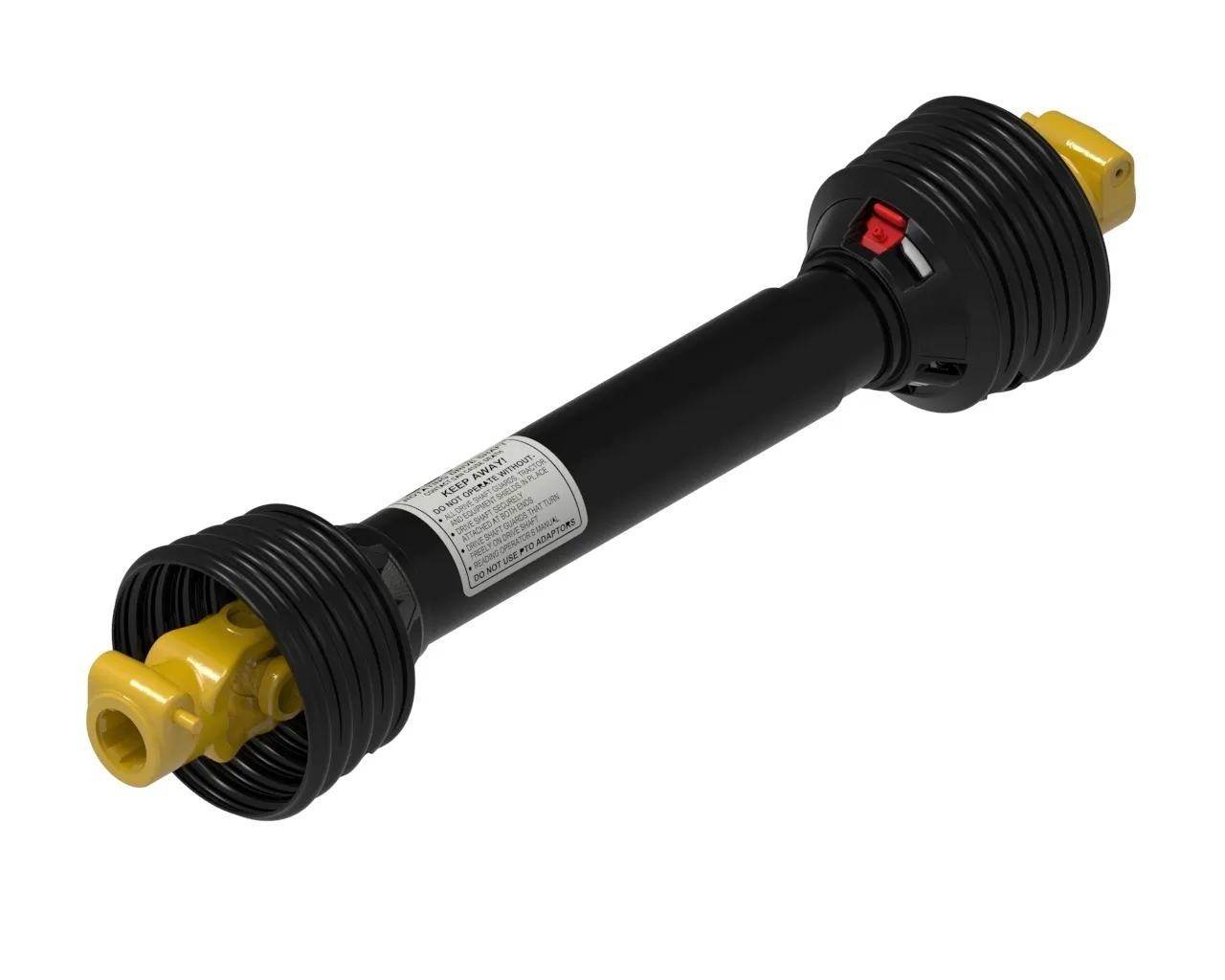
The EVER-POWER Solution: We engineered the Series 6 “River-Master” Driveline. This is not a standard tractor shaft painted blue. It undergoes a Zinc-Nickel Plating process that offers 1,000+ hours of salt-spray resistance. We use Cassette Seals on the U-joints to keep river water out and marine grease in. The profile tubes are coated to ensure they telescope freely even after months of exposure to the humid Amazonian air.
Technical Specifications & Engineering Parameters
Marine applications require specific attention to sealing and corrosion protection. Torque loads can be continuous and heavy (propulsion). Below are the specs for our Marine Ag Series.
| Parameter ID | Specification Category | Technical Value / Standard |
|---|---|---|
| 01 | Series Classification | Series 4 (Small Boats) / Series 6 (Cargo Barges) |
| 02 | Nominal Torque (540 RPM) | 460 Nm (S4) / 830 Nm (S6) |
| 03 | Nominal Torque (1000 RPM) | 380 Nm (S4) / 640 Nm (S6) |
| 04 | 耐食性 | Zinc-Nickel Plating (ASTM B117 tested) |
| 05 | Engine Interface | Keyed Shaft (25mm/30mm/35mm) or Flange |
| 06 | Driven Interface | Keyed Shaft (Propeller Shaft Input) |
| 07 | Closed Length (Lz) | 400 mm – 1,000 mm (Short-Coupled for Engine Box) |
| 08 | Tube Profile | Star Profile S4/S5 (Self-Centering) |
| 09 | Tube Material | ST52 Precision Steel (Plated Internal/External) |
| 10 | Cross Kit Dimensions | 27mm x 74.6mm (S4) / 30.2mm x 92mm (S6) |
| 11 | Bearing Type | Triple-Lip Cassette Seal (Waterproof) |
| 12 | Safety Device | Shear Bolt (SB) or Rubber Coupling Yoke |
| 13 | Operating Angle | Max 15° (Hull flex compensation) |
| 14 | Guard Material | UV Stabilized HDPE (Blue/Yellow) |
| 15 | Guard Certification | NR-12 / ISO 5674 |
| 16 | 潤滑 | Calcium Sulfonate (Marine Grease) |
| 17 | 表面処理 | Passivated Zinc-Nickel + Top Coat |
| 18 | Telescoping Overlap | Min 150mm (Short travel required) |
| 19 | Connection Type | Set Screw + Keyway or Clamp Collar |
| 20 | 重さ | 8 kg – 20 kg |
| 21 | 応用 | Propeller Drive / Water Pump / Winch |
| 22 | 保証 | 1 Year (Corrosion & Structure) |
| 23 | Origin Compatibility | Yanmar, Agrale, Tramontini, Forth, Buffalo |
The Physics of Water: Thrust and Vibration
Driving a propeller is different from driving a wheel. The medium (water) is fluid but incompressible.
1. Vibration Isolation (Isolamento de Vibração)
Wooden and aluminum boats act like drum skins; they amplify vibration. A single-cylinder diesel engine creates a “thump-thump” torque pulse.
The Issue: If connected rigidly to the propeller shaft, these pulses rattle the propeller shaft bearings (buchas) and cause leaks.
The Solution: Cardan Shaft + Rubber Element. We often recommend a PTO shaft that incorporates a flexible rubber coupling (bolachão) at the engine side. The Cardan shaft handles the misalignment, while the rubber element absorbs the engine’s firing pulses, resulting in a smoother, quieter ride and less fatigue on the hull structure.
2. Propeller Strike Protection (Proteção de Hélice)
Rivers in the Amazon and Pantanal are full of submerged logs and sandbars.
The Scenario: The boat is moving at speed. The propeller hits a submerged log. The prop stops instantly.
The Force: The inertia of the heavy diesel flywheel keeps pushing. Something has to break: the propeller, the shaft, or the gearbox.
The Defense: その Shear Bolt Yoke. We equip our marine shafts with a shear bolt yoke. Upon impact, the bolt snaps, disconnecting the engine from the propeller shaft. This is a cheap fuse that saves the expensive bronze propeller and the engine’s crankshaft.
3. The Corrosion Factor (Maresia e Umidade)
Even in freshwater, the humidity in the bilge (porão) is 100%. In coastal areas, salt spray accelerates rust.
The Failure: A standard shaft rusts at the telescoping point. When the hull flexes, the seized shaft cannot telescope. It pushes and pulls on the engine and prop shaft bearings, causing rapid wear.
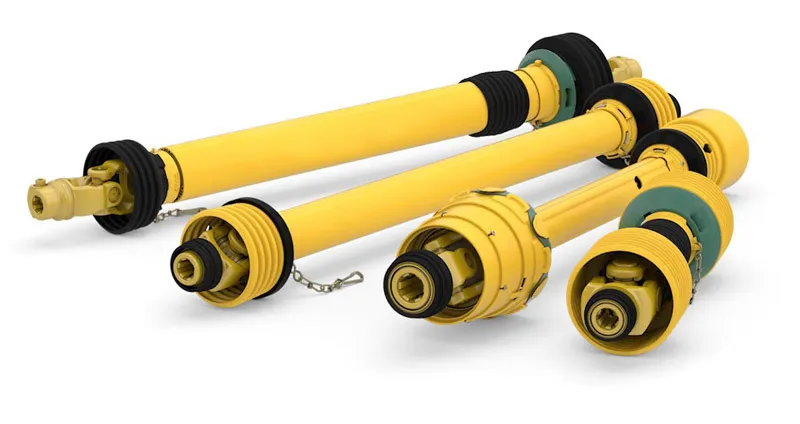
The Solution: Plating and Marine Grease. Our tubes are plated with Zinc-Nickel alloy. We factory-fill the bearings with Calcium Sulfonate grease, which is hydrophobic (repels water) and maintains lubricity even when submerged. This ensures the shaft remains free-sliding for the life of the vessel.

Operational Context: Life on the Water
The equipment is lifeline infrastructure for river communities.
Scenario A: The “Voadora” (Cargo Transport)
Context: A long, narrow wooden boat transporting bananas or açaí. Powered by a central diesel engine.
Challenge: Alignment. The engine is mounted on wood bearers that warp over time. The angle between engine and prop shaft changes.
Requirement: Wide-Angle Tolerance. Standard U-joints can handle up to 15 degrees continuously. This allows the engine to be mounted higher in the hull (to avoid bilge water) while driving a low-mounted propeller shaft.
Scenario B: Floating Pump Station (Balsa de Irrigação)
Context: A barge on the São Francisco River holding a large irrigation pump.
Challenge: Relative Movement. The barge rocks with waves, but the intake pipe is fixed or heavy.
Requirement: Telescoping Stability. The PTO shaft driving the pump must telescope in and out as the mountings flex. Our Star profile tubes prevent the “locking” that occurs with square tubes under torque, ensuring smooth length adjustment.
Scenario C: The Mud Boat (Barco de Lama)
Context: Used in flooded rice paddies in the South. A flat-bottomed boat with paddle wheels or a screw drive.
Challenge: Mud Ingress. The shaft is constantly splashed with gritty mud.
Requirement: Cassette Seals. We use cassette seals on the cross kits which provide a labyrinth barrier against mud. Standard rubber seals would be ground away by the grit in days.
Interchangeability & Systems Integration
We interface with the engines that drive the Amazon.
Fitment Guide:
EVER-POWER Marine shafts are engineered to interface with:
- Yanmar™ / Agrale™ (Stationary Engines): We supply keyed yokes (25.4mm, 30mm, 35mm, 40mm) to fit the output shafts of these ubiquitous diesel engines.
- Tramontini™ / Branco™: Compatible with the PTO stubs found on these power units.
- Rabeta Manufacturers: We provide universal joints and shafts to the workshops building custom long-tail drives (Rabetas) in Manaus and Belém.
- Pump Flanges: Adapters available for connecting to KSB or Imbil irrigation pumps mounted on barges.
*Disclaimer: OEM names are for reference only. EVER-POWER is an independent manufacturer.
Compliance with Brazilian Regulatory Standards (NR-12)
NR-12 applies to all machinery, including that on workboats. The risk of entanglement in a boat is extremely high due to loose clothing, fishing lines, and close quarters.
The “Bilge” Safety Standard
A spinning shaft in the bottom of a boat is a trap.
EVER-POWER Marine Shafts utilize:
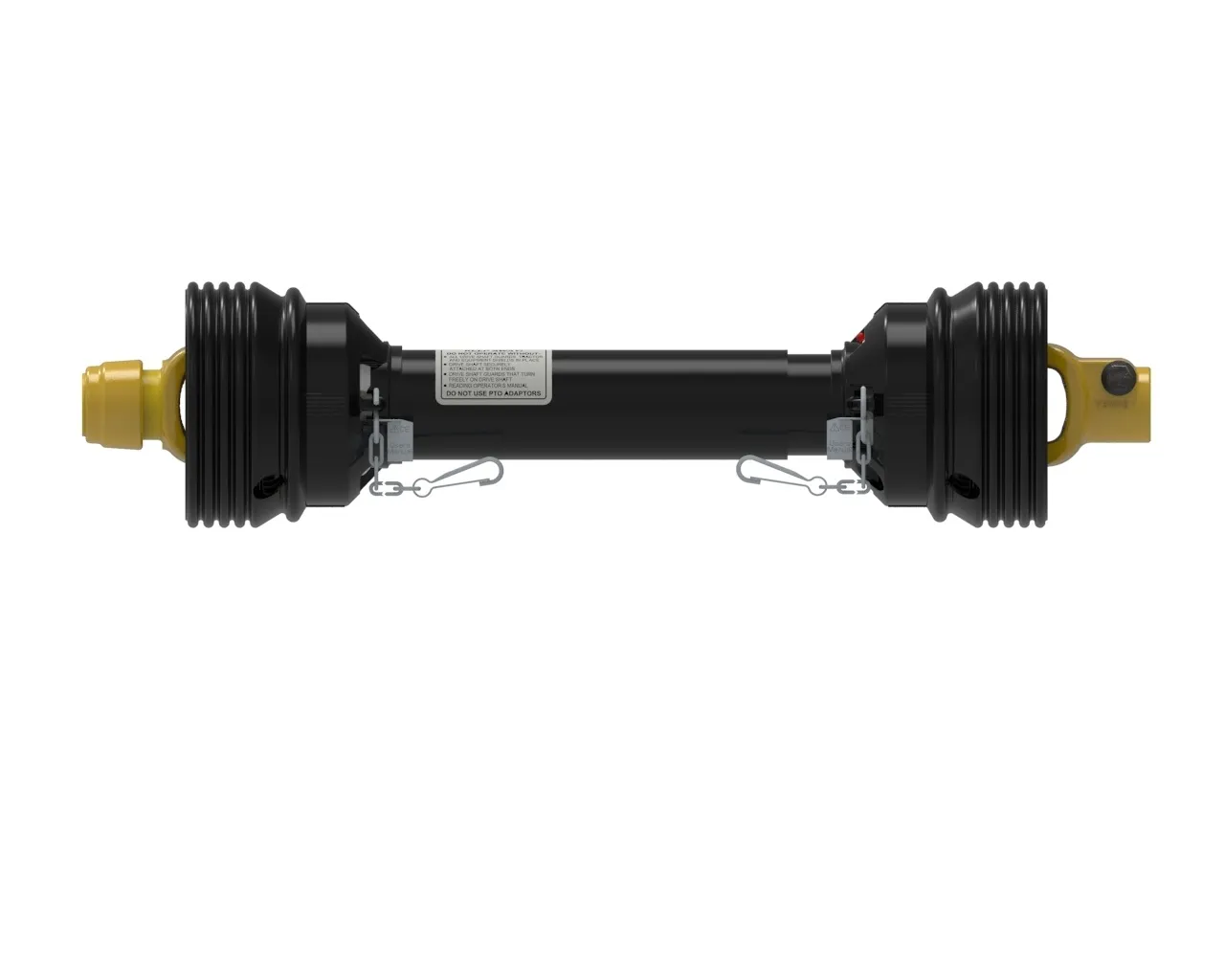
- Full Plastic Guarding: The yellow guard covers the entire shaft. It rides on bearings and does not rotate with the shaft. If a passenger steps on it or a net falls on it, it stays stationary.
- Rust-Proof Chains: We use stainless steel or galvanized chains to anchor the guard. In the humid bilge, standard chains rust and break, allowing the guard to spin dangerously.
- Cone Coverage: The guard cones cover the U-joints completely, preventing hair or clothing from being caught in the rotating knuckles.
Material Science: Resisting the Green and the Salt
Boat shafts face a unique combination of biological and chemical attacks.
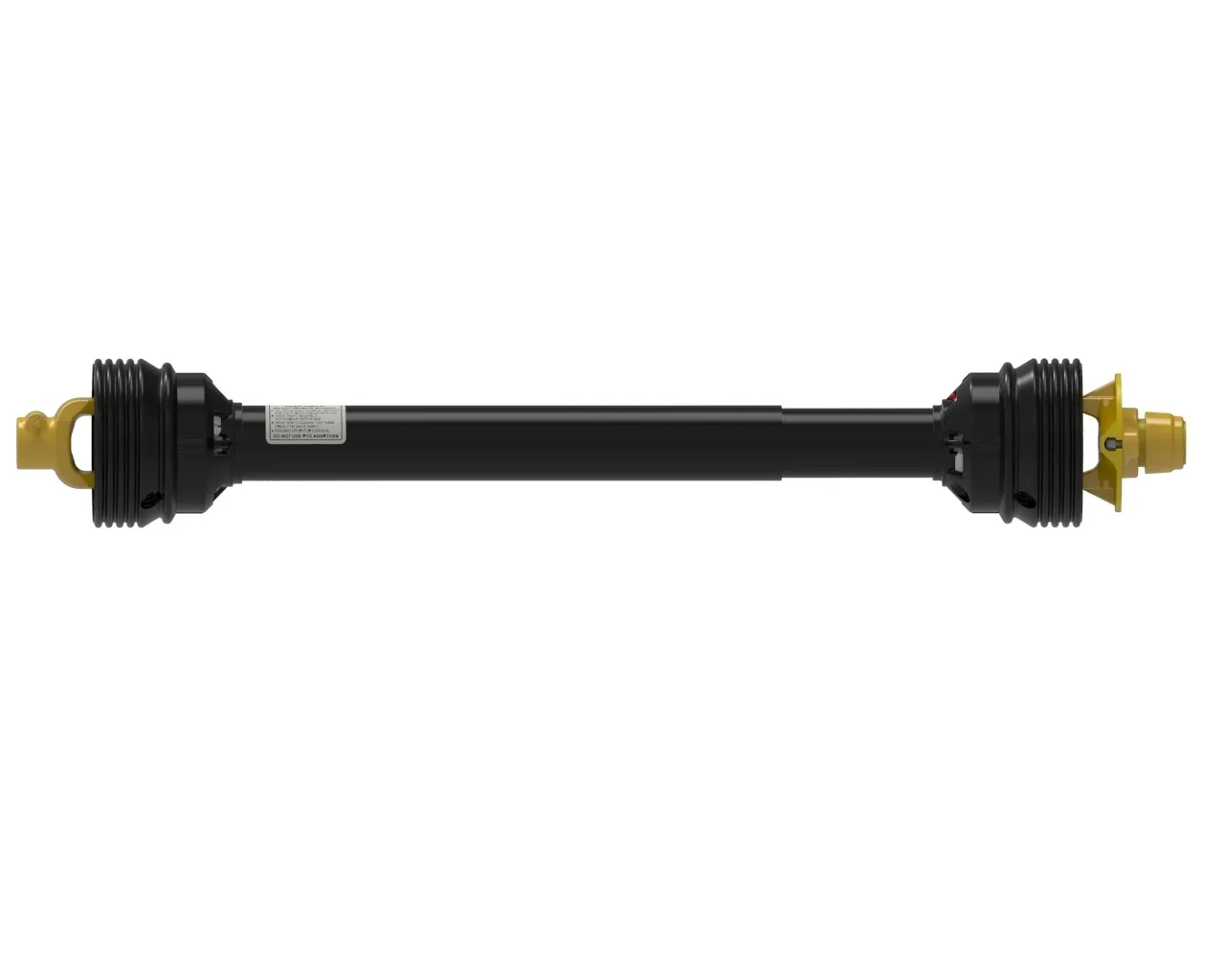
Zinc-Nickel Plating: This is the gold standard for marine corrosion resistance. It outperforms galvanizing and paint. It protects the base steel from the acidic water of the “Black Rivers” (Rio Negro) and the saline water of the estuaries.
Water-Resistant Grease: We factory-fill the U-joints with Calcium Sulfonate grease. Unlike Lithium grease which emulsifies (mixes) with water and washes out, Calcium grease thickens in the presence of water, maintaining a protective seal around the needle bearings.
Case Study: The River Transport Co-op in Manaus
Client Profile: A cooperative transporting agricultural produce from the interior to the port of Manaus (AM).
The Problem: Their fleet of wooden boats was experiencing frequent propeller shaft vibration and engine mount failures. The rigid couplings they used were transmitting hull flex directly to the engine, breaking engine feet. The vibration was also causing fatigue cracks in the hulls.
The EVER-POWER Solution: We retrofitted the fleet with Series 6 “River-Master” Cardan Shafts.
The Result: The Cardan shafts absorbed the misalignment caused by hull flexing. Vibration was reduced by 70%. Engine mount failures stopped completely. The operators reported a smoother ride and less noise. Additionally, the Zinc-Nickel plating meant the shafts were still rust-free after a full year of operation in the humid Amazon climate.
Maintenance: The “Skipper’s” Check
A boat breakdown in the middle of a river is not an option.
- Bilge Check: Keep the shaft clear of bilge water. Although plated, constant submersion will eventually degrade the grease.
- Grease Often: The humid environment promotes condensation inside the bearings. Grease the U-joints weekly to push out moisture. Use Marine Grease.
- Check Set Screws: Vibration loosens everything on a boat. Check the set screws or clamp bolts on the yokes regularly to ensure the shaft doesn’t slide off.
Frequently Asked Questions (FAQ)
Can I use a car driveshaft in my boat?
Do I need a thrust bearing?
What happens if the prop hits a log?
Agri-Market Trends: Hybrid Rivers
There is a growing interest in Electric Propulsion for river transport to reduce diesel pollution in sensitive biomes like the Pantanal. EVER-POWER is already developing High-Speed Precision Shafts to connect electric motors to propeller drives, ensuring silent, vibration-free operation for the future of eco-tourism and sustainable transport.
 JA
JA  EN
EN  ES
ES  RU
RU  FR
FR  DE
DE  PT
PT  AR
AR  IT
IT  ZH
ZH