
The Power Conduit: PTO Shafts for Modern 4WD Tractors
Unleashing the Potential of Your Fleet. From the Heavy Clays of Paraná to the Sandy Soils of Western Bahia, Connecting High-Horsepower Tractors to High-Capacity Implements.
Field Notes: The Evolution of the “Trator Traçado”
The agricultural landscape of Brazil has undergone a massive transformation in the last two decades. The average horsepower of the farm tractor has skyrocketed. The classic 75HP 2WD tractor has been replaced by the Four-Wheel Tractor (4WD) or Front Wheel Assist (TDA – Tração Dianteira Auxiliar) machines ranging from 150HP to 400HP. Brands like Valtra (BH Series), John Deere (7J/8R Series), Massey Ferguson (7700 Series), and New Holland (T7/T8 Series) dominate the fields.
With this increase in power comes a proportional increase in the stress placed on the PTO Driveline (Eixo Cardan).
The Brazilian Challenge:
1. Higher Torque Densities: Modern implements—giant grain carts (bazucas), 30-row vacuum planters, and heavy-duty rotary hoes—demand immense torque transfer. A standard agricultural shaft designed for 1990s technology will twist like a pretzel under the load of a modern 250HP tractor.
2. Continuous Duty Cycles: In the “Safrinha” (second harvest) window, timing is everything. Tractors run 24 hours a day. The PTO shaft must endure continuous high-speed rotation without overheating the U-joints or melting the safety guard bearings.
3. Dynamic Geography: While Mato Grosso is flat, regions like Paraná and Rio Grande do Sul are rolling. Tractors operate on contours and terraces (curvas de nível). This constantly changes the angle of the PTO shaft, introducing cyclic loads that cause fatigue failure in lesser steel.
The “Generic” Trap: Many farmers attempt to save money by using generic “yellow shaft” replacements bought at the local auto parts store. These shafts often lack the specific heat treatment required for modern high-torque engines. They fail mid-harvest, costing tens of thousands of Reais in downtime.
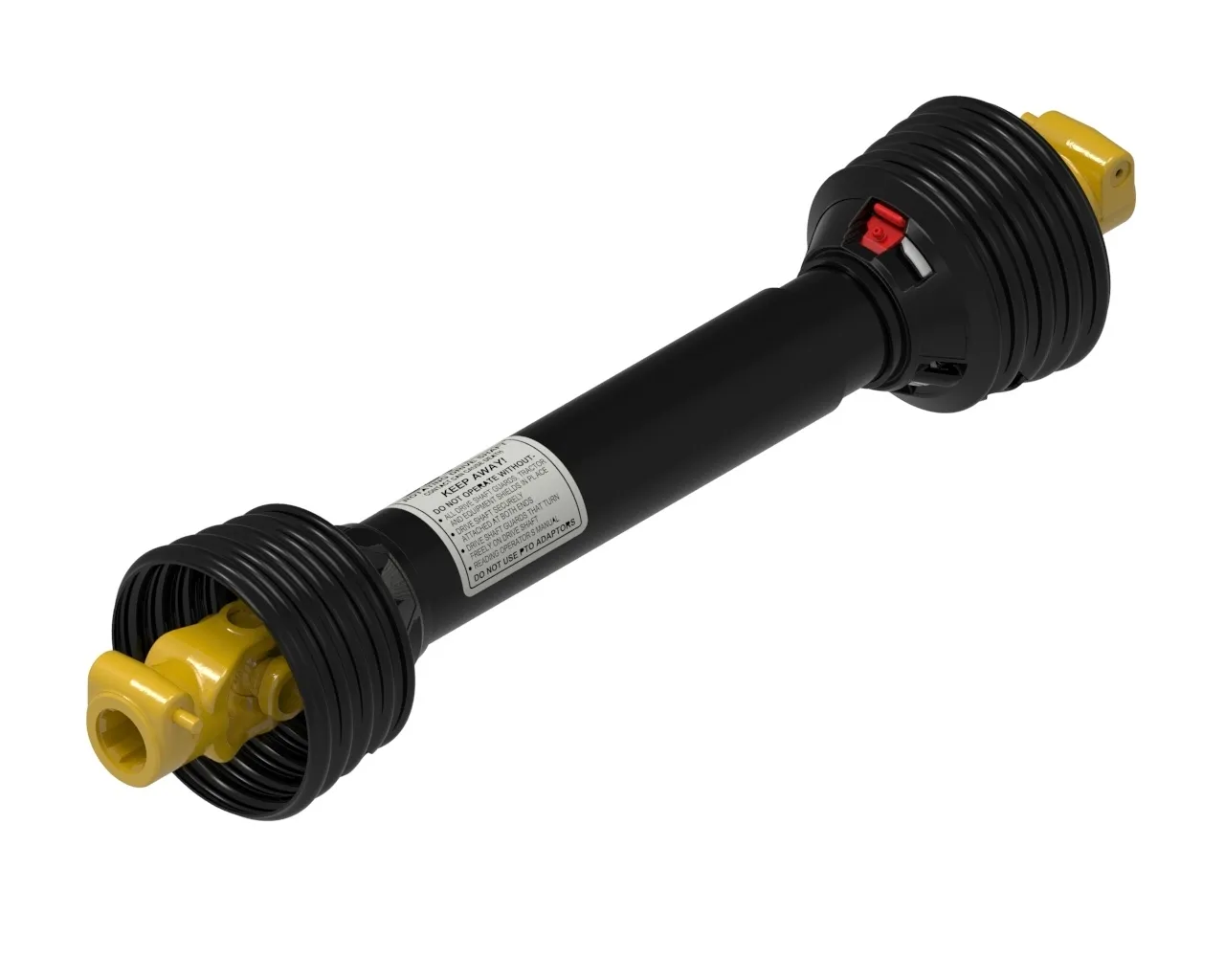
The EVER-POWER Solution: We present the Series 10 “Agri-Master” Driveline. This is an OEM-spec component designed to match the output of Brazil’s heavy tractor fleet. We utilize Forged Alloy Steel Yokes Und Case-Hardened Cross Trunnions. Our tubing is not standard pipe; it is Cold Drawn Precision Profiling (Star or Spline) that provides 30% more surface contact area than triangular tubes, ensuring the shaft transmits power without binding or twisting under heavy load.
Technical Specifications & Engineering Parameters
Modern 4WD tractors require shafts that meet international ISO standards for high-power transmission. Below are the specs for our Heavy Agriculture Series.
| Parameter ID | Specification Category | Technical Value / Standard |
|---|---|---|
| 01 | Series Classification | Series 6 (Medium) / Series 8 (Heavy) / Series 10 (Extra Heavy) |
| 02 | Nominal Torque (540 RPM) | 830 Nm (S6) / 1,240 Nm (S8) / 1,850 Nm (S10) |
| 03 | Nominal Torque (1000 RPM) | 640 Nm (S6) / 980 Nm (S8) / 1,450 Nm (S10) |
| 04 | Max Shock Load Rating | 5,800 Nm (Series 10 Peak Load) |
| 05 | Tractor Interface | 1-3/8″ Z6, 1-3/8″ Z21, or 1-3/4″ Z20 (High HP) |
| 06 | Implement Interface | 1-3/8″ Z6, 1-3/4″ Z6, 1-3/4″ Z20, or Flange |
| 07 | Closed Length (Lz) | 710 mm – 1,810 mm (Customizable for long hitches) |
| 08 | Tube Profile | Star Profile S5/S6 or Involute Spline |
| 09 | Tube Material | 42CrMo4 High Tensile Steel |
| 10 | Cross Kit Dimensions | 30.2x92mm (S6) / 35×106.5mm (S8) / 42x104mm (S10) |
| 11 | Bearing Type | Professional Grade Needle Roller (Regreasable) |
| 12 | Safety Device | Friction Clutch (FV), Overrunning (RL), or Cam Clutch (K64) |
| 13 | Operating Angle | Max 25° (Standard) / 80° (Wide Angle CV) |
| 14 | Wide Angle (CV) | Available on Tractor side, Implement side, or Both |
| 15 | Guard Material | Impact Modified HDPE (Yellow/Black) |
| 16 | Guard Certification | NR-12 / ISO 5674 (Mandatory in Brazil) |
| 17 | Schmierung | Lithium Complex NLGI 2 (Blue High Temp) |
| 18 | Oberflächenbehandlung | Zinc-Nickel Plating or Epoxy Powder Coat |
| 19 | Telescoping Overlap | Min 1/2 of tube length (Heavy Duty Standard) |
| 20 | Locking Mechanism | Collar Lock (Ball) or Taper Pin |
| 21 | Gewicht | 25 kg – 80 kg |
| 22 | Anmeldung | Grain Cart / Planter / Heavy Rotary Hoe / Baler |
| 23 | Garantie | 1 Year (Structure) / 1000 Hours |
| 24 | Origin Compatibility | AGCO, CNH, John Deere, Agrale, LS Tractor |
The Physics of Connection: Torque, Angles, and Inertia
Connecting a 300HP tractor to an implement is about managing energy flow. The physics dictate the design.
1. The Spline Interface (A Conexão Estriada)
High-horsepower tractors use different PTO stubs to handle the load.
1-3/8″ Z6 (540 RPM): Standard for up to 100 HP.
1-3/8″ Z21 (1000 RPM): Standard for up to 150 HP.
1-3/4″ Z20 (1000 RPM): The Heavy Duty standard for 200HP+.
The Risk: Using an adapter (redução) to step down a 1-3/4″ shaft to a 1-3/8″ implement is a recipe for disaster. The adapter introduces run-out (wobble) and becomes a weak point that shears under load.
The Solution: Interchangeable Yokes. Our Series 10 shafts feature modular yokes. If you change tractors, you simply unbolt the yoke and install the correct size (e.g., swapping from Z21 to Z20) without using dangerous adapters. This ensures a solid, concentric connection that preserves the tractor’s PTO bearings.

2. The Headland Turn (A Manobra de Cabeceira)
4WD tractors often have a larger turning radius, but modern steering geometries allow for tight turns. When towing a sprayer or planter, the angle between tractor and implement can exceed 45 degrees.
The Physics: A standard U-joint creates “non-uniform velocity” (pulsing) when angled. At 45 degrees, this pulsing is violent enough to shake the dentures out of the operator! It destroys input gearboxes.
The Solution: Der Wide-Angle Constant Velocity (CV) Joint. Located at the tractor end, the CV joint centers itself to divide the angle equally, delivering smooth, vibration-free power up to 80 degrees. This allows the operator to keep the PTO engaged while turning at the headlands, significantly increasing field efficiency and protecting the drivetrain.
3. Starting High Inertia Loads
Implements like large square balers or heavy rotary cutters act like giant flywheels.
The Conflict: When the tractor engages the PTO (especially with electric-hydraulic modulation), the shock of spinning up that mass is immense. Conversely, when the tractor stops, the flywheel momentum tries to push the tractor forward or twist the shaft.
The Solution: Overrunning Clutches (Roda Livre) Und Friction Clutches. The friction clutch slips during the harsh startup to protect the shaft. The overrunning clutch allows the implement to coast to a stop safely without back-driving the tractor transmission.

Operational Context: The “Workhorses” of the Farm
The 4WD tractor is the universal soldier. The PTO shaft must adapt to varied missions.
Scenario A: The Grain Cart (Bazuca Graneleira)
Context: A 30-ton grain cart receiving soy from the combine. The tractor must run alongside the combine and then speed to the truck.
Challenge: High Torque Start. Starting the unloading auger when the cart is full of wet corn requires massive torque (Series 10 territory).
Requirement: Solid Spline Profile. We recommend solid splined bars for grain carts. Tube profiles can twist under the “dead load” startup. A shear bolt provides emergency protection against stones in the auger.
Scenario B: The Vacuum Planter (Plantadeira a Vácuo)
Context: A 24-row planter. The PTO drives the vacuum fan and hydraulic alternator.
Challenge: Constant Speed. The vacuum pressure must be perfectly stable for accurate seed singulation. Any PTO vibration causes vacuum flutter and skipped seeds.
Requirement: Precision CV Joint. A Constant Velocity joint is mandatory. It ensures the fan speed remains constant even when the tractor turns slightly on contour lines, guaranteeing perfect planting precision.

Scenario C: The Heavy Rotary Hoe (Enxada Rotativa)
Context: Preparing soil for vegetables or breaking up sugarcane stubble.
Challenge: Shock & Vibration. The tines hit compacted soil and roots 10 times a second.
Requirement: Automatic Cam Clutch. A friction clutch can burn out if it slips too much in heavy soil. An automatic Cam Clutch (Cut-Out Clutch) disengages completely upon overload and re-engages when RPM drops, providing audible feedback to the operator to slow down.
Interchangeability & Systems Integration
Brazil has a diverse fleet. Our shafts are designed to fit them all.
Fitment Guide:
EVER-POWER shafts are engineered replacements for:
- John Deere™ (6M / 7J / 8R): We offer specific crossover yokes to fit US-spec implements on metric tractors, and vice-versa.
- AGCO™ (Valtra / Massey Ferguson): Fully compatible with the standard DIN splines used on the BH and MF series (Dyna-6/VT).
- CNH™ (Case IH / New Holland): Heavy-duty replacement shafts for Puma, Magnum, T7, and T8 series.
- Brazilian Implements: Jan, Stara, Tatu Marchesan, Baldan, Ipacol. Our shafts match the input gearbox specs of these domestic giants.
*Disclaimer: OEM names are for reference only. EVER-POWER is an independent manufacturer.
Compliance with Brazilian Regulatory Standards (NR-12)
NR-12 (Norma Regulamentadora 12) is the Brazilian standard for Machinery Safety. It is extremely strict regarding rotating parts.
The “Full Shield” Mandate
An exposed PTO shaft is a fatal hazard. In Brazil, labor inspectors can shut down a farm for non-compliant machinery.
EVER-POWER Tractor Shafts utilize:
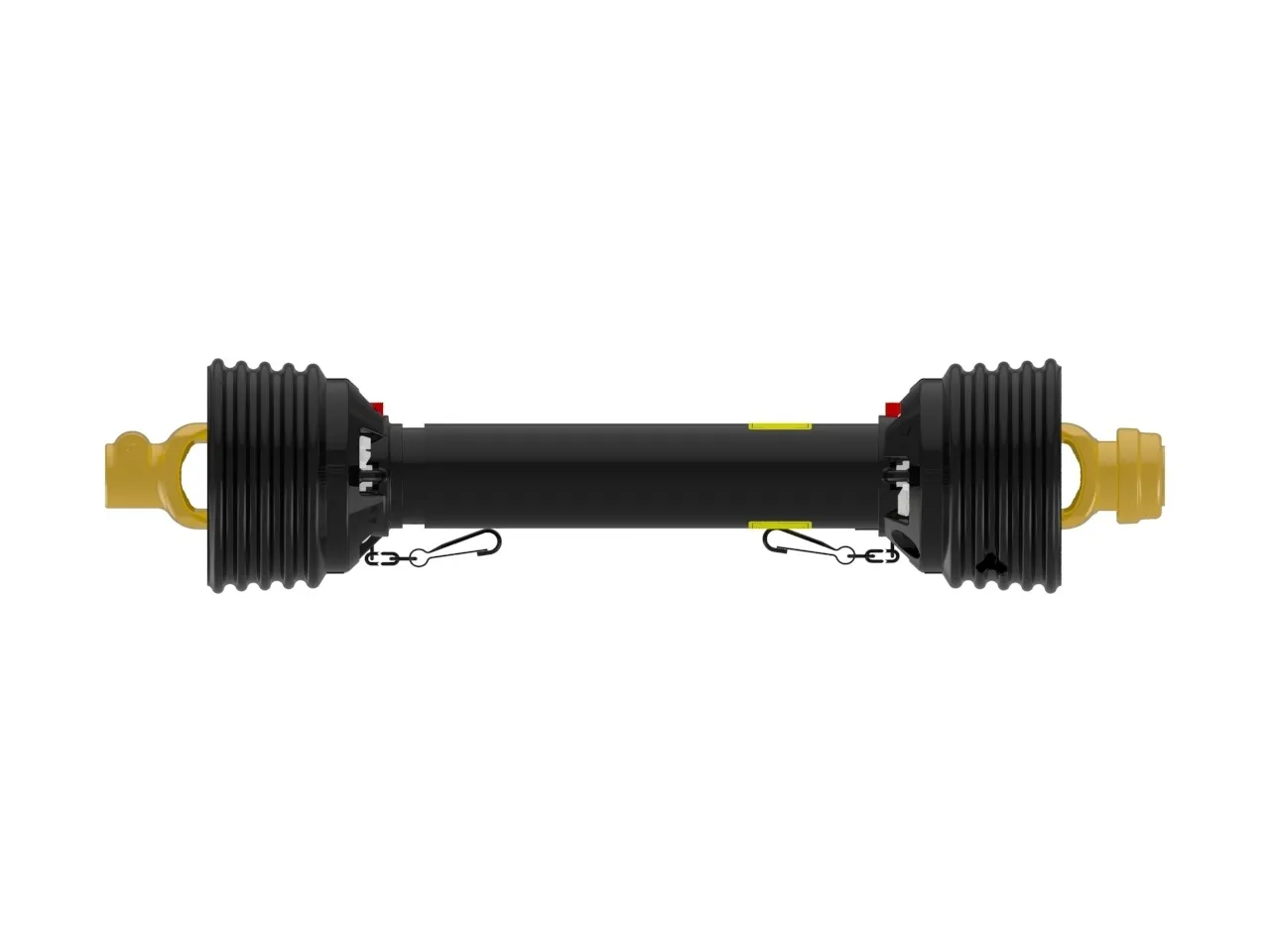
- Full Length Guarding: The yellow plastic tubes cover the entire steel shaft, telescoping with it.
- Extended Cones: The cones on the ends extend over the universal joints. No metal should be visible when connected.
- “Easy-Access” Greasing: Our guards have aligned access holes or sliding sections that allow the operator to grease the U-joints without removing the safety shield. This encourages maintenance while maintaining safety.
- Restraint Chains: We provide robust chains to anchor the guard to the tractor and implement. These prevent the guard from spinning. A spinning guard is a failed guard.
Material Science: Built for the Tropics
Brazilian agriculture involves heat, dust, and long hours.
High-Temp Grease: European grease often liquefies in Mato Grosso heat (40°C+). We use a Lithium Complex Blue Grease with a drop point of 260°C. It stays in the bearing caps even during heavy tillage operations.
Carburized Cross Kits: The journals of our cross kits are carburized (case hardened) to provide a hard, wear-resistant surface for the needle rollers, while the core remains tough to absorb shock loads from rocks and stumps.
UV-Stabilized Guards: The Brazilian sun is harsh. Standard plastics become brittle and crack in one season. Our guards are doped with high levels of UV stabilizers to ensure they remain flexible and safe for years of outdoor exposure.
Case Study: The Soybean Mega-Farm in Sorriso
Client Profile: A 10,000-hectare soybean and corn producer in Sorriso (MT) running a fleet of John Deere 8R tractors.
The Problem: The farm was experiencing frequent PTO shaft failures on their 30-ton grain carts (bazucas) during the rush of the harvest. The standard shafts were twisting at the tubes, and the cross kits were overheating. Downtime was costing R$ 50,000 per hour in lost harvest capacity.
The EVER-POWER Solution: We replaced the OEM shafts with Series 10 “Agri-Master” Shafts featuring Solid Spline Bars and Sintered Iron Friction Clutches.
The Result: The solid spline bars eliminated the twisting failure mode entirely. The heavy-duty clutches allowed for soft starts of full carts without burning out. The maintenance interval for greasing was extended due to the high-capacity cross kits. The farm completed the harvest with zero PTO-related downtime on the grain carts.
Maintenance: The Daily Ritual
A 4WD tractor operator’s day starts with grease.
- 8-Hour Interval: Grease the U-joints every 8 hours of operation (daily). This flushes out contaminants and replenishes the film.
- Tube Lubrication: Separate the shaft halves once a week. Clean the tubes and apply fresh grease. Dry tubes create friction that can prevent the shaft from telescoping, pushing the gearbox off the implement.
- Clean the Locking Collar: Dust and chaff can jam the locking collar mechanism. Clean it with WD-40 or diesel and lube it lightly to ensure it snaps positively onto the tractor PTO stub. A shaft falling off during operation is a catastrophic event.
Frequently Asked Questions (FAQ)
How do I measure for a replacement shaft?
Can I use a 1000 RPM shaft on a 540 RPM tractor?
Why does my guard spin with the shaft?
Agri-Market Trends: High-Speed Planting
The trend in Brazil is towards High-Speed Precision Planting. This requires vacuum fans running at high, constant RPMs while the tractor moves at 12-15 km/h. The PTO shaft is no longer just a “spinner”; it is a precision component. EVER-POWER is leading the market with Balanced, Low-Vibration CV Shafts that ensure the pneumatic systems of modern planters operate at peak efficiency, ensuring the perfect stand of soy or corn.
 DE
 EN
 ES
 RU
 FR
 PT
 JA
 AR
 IT
 ZH