
The Power Behind the Hydraulics: PTO Drivelines for Vocational Trucks
Driving the Force of Brazilian Logistics. From “Basculantes” (Tippers) to “Muncks” (Cranes). High-Speed, Precision Balanced Cardan Shafts for Remote Pump Mounting.
Field Notes: The Vital Link in the Chassis
Brazil relies on road transport (“Rodoviarismo”) for moving its immense agricultural and industrial output. From the grain harvests of Mato Grosso heading to the ports of Santos and Paranaguá, to the timber operations in Paraná, the heavy truck is king.
While the engine moves the load, the PTO System (Tomada de Força) does the work at the destination. Whether lifting a 40-ton dump bed (Caçamba), compressing garbage in a refuse truck, or operating a timber crane, hydraulic power is essential.
The Mounting Challenge: Modern truck transmissions (ZF TraXon, Volvo I-Shift, Scania Opticruise) are compact and surrounded by chassis cross-members, exhaust after-treatment systems (Euro 5/6), and air tanks. Often, there is no physical space to mount a large hydraulic pump directly to the PTO output on the gearbox.
The Solution: Remote Mounting. The pump is mounted midway along the chassis frame, where there is space. The critical link connecting the transmission PTO to this remote pump is the Truck PTO Driveline (Eixo Cardan da Tomada de Força).
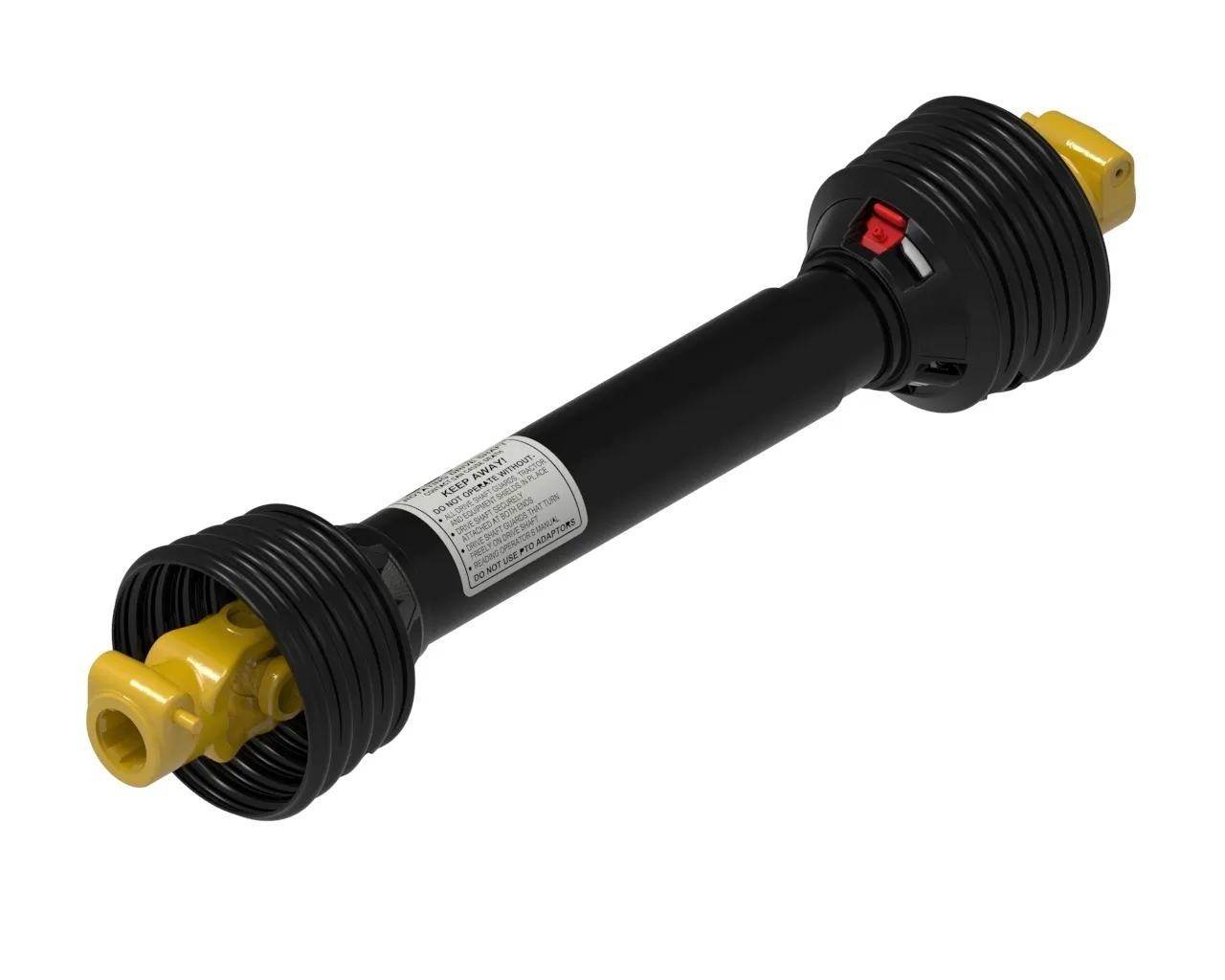
The Engineering Hurdle: Unlike agricultural shafts that run at a steady 540 RPM, truck PTO shafts often run at varying speeds (from 600 to 2500 RPM depending on engine speed and PTO gear ratio). They operate at steep angles due to chassis constraints and are exposed to road grime, salt, and intense vibration. A failure here disables the truck’s working capability entirely.
Technical Specifications & Engineering Parameters
Truck drivelines typically follow DIN (European) or Spicer (American) standards, differing significantly from agricultural splines. Below are the specs for our Vocational Truck Series.
| Parameter ID | Specification Category | Technical Value / Standard |
|---|---|---|
| 01 | Series Classification | Series 1310 / 1350 (Spicer) or DIN 90 / DIN 100 |
| 02 | Nominal Torque (Continuous) | 250 Nm – 1,200 Nm (Pump Drive) |
| 03 | Max Shock Load Rating | 2,500 Nm (Start-up / Valve Closure) |
| 04 | Transmission Interface | ISO 7646 (4-Bolt Flange) or SAE B/C Spline |
| 05 | Pump Interface | ISO 4-Bolt, SAE B (7/8″-13T), SAE C (1.25″-14T) |
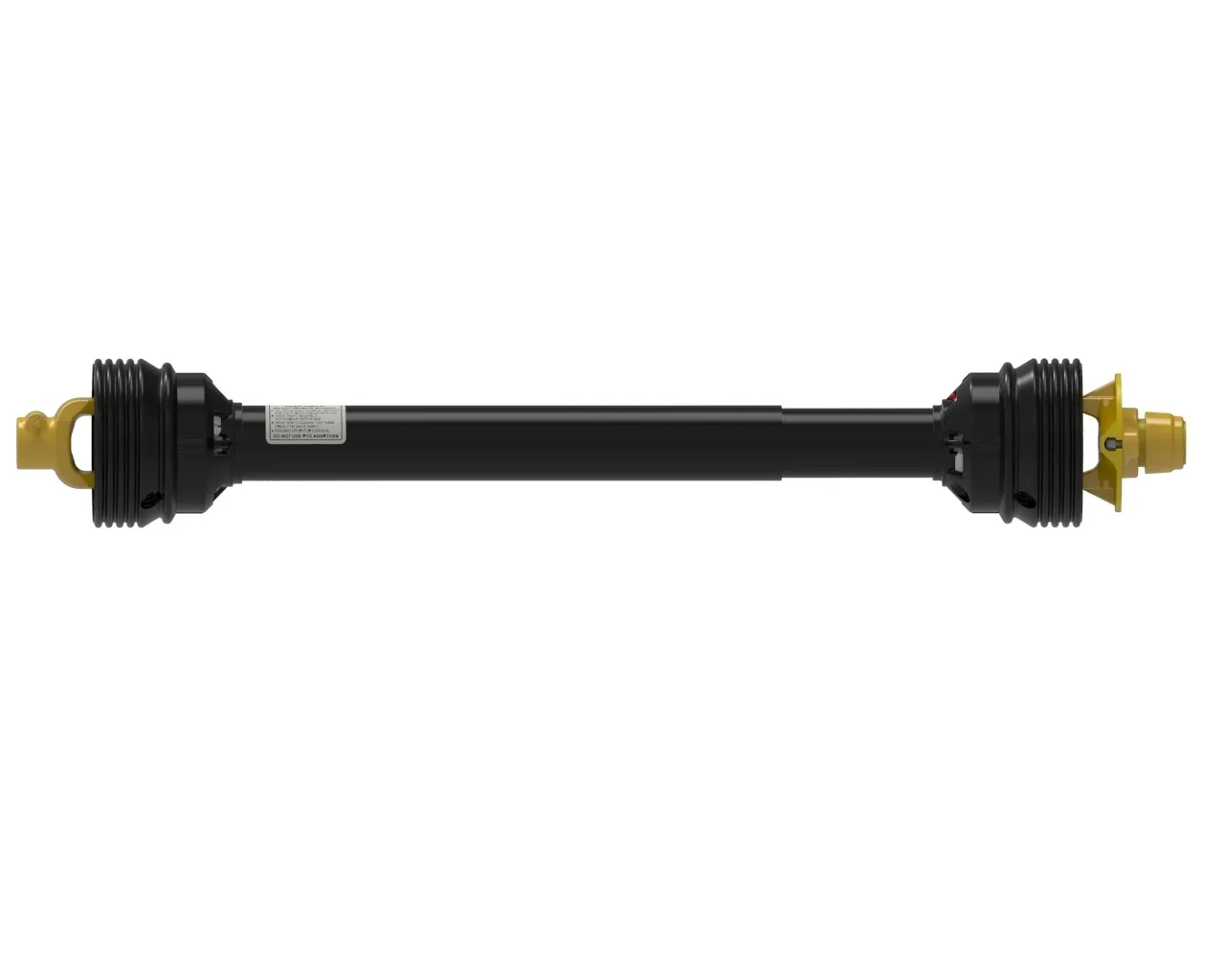
| 06 | Closed Length (Lz) | 250 mm – 1,500 mm (Highly variable customization) |
| 07 | Tube Profile | Solid Spline Bar (Short) or DOM Tubing (Long) |
| 08 | Tube Material | High Tensile Carbon Steel (Balanced) |
| 09 | Cross Kit Dimensions | 27×81.8mm (1310) / 30.2x92mm (1350) / 35x96mm |
| 10 | Bearing Type | Sealed Life Needle Roller (Maintenance Free options) |
| 11 | Balancing Standard | G6.3 @ 2000 RPM (Critical for high speed) |
| 12 | Operating Angle | Max 8° continuous (Short runs) / 15° intermittent |
| 13 | Phasing | Parallel Phasing (Mandatory for smooth velocity) |
| 14 | Guard Material | Steel Tunnel (Chassis) or Plastic Sleeve (Shaft) |
| 15 | Tratamento de superfície | Epoxy Paint or Zinc Plating (Road Salt Resistance) |
| 16 | Lubrificação | Lithium Complex EP2 (High Speed/Temp) |
| 17 | Slip Travel | 40mm – 120mm (Chassis flex compensation) |
| 18 | Flange Standards | DIN 90, DIN 100, Spicer 1310, Spicer 1350 |
| 19 | Peso | 5 kg – 18 kg |
| 20 | Aplicativo | Tipper (Basculante), Crane (Munck), Compactor |
| 21 | Garantia | 1 Year / 100,000 km |
| 22 | Origin Compatibility | Tak, Hyva, Parker, Chelsea, Bezares, OMFB |
The Physics of Remote Pumping: Geometry and Vibration
Installing a remote pump is not just about connecting point A to point B. It requires strict adherence to kinematic principles to prevent vibration that destroys pump seals.
1. The Cancellation of Velocity Fluctuation (Cancelamento de Fase)
Cardan joints (U-joints) do not transmit constant velocity when angled. They speed up and slow down twice per revolution.
The Physics: If the input flange and output flange are not parallel, or if the yokes are not “in phase” (aligned), this velocity fluctuation compounds.
The Effect: The hydraulic pump receives a pulsing RPM. This creates hydraulic “ripple” or noise, heats up the oil, and hammers the pump’s input shaft seal, leading to leaks.
The Solution: Precision Phasing. Our truck shafts are welded in fixtures that guarantee perfect yoke alignment. We also provide technical guides to bodybuilders (implementadores) to ensure the pump mounting bracket is parallel to the transmission PTO output face.

2. Chassis Flex and Slip (O Curso do Entalhado)
Truck chassis are designed to twist and flex, especially in off-road applications like mining or forestry.
The Stress: As the truck frame twists over a bump, the distance between the transmission and the remote pump changes.
The Risk: If the shaft cannot telescope (slip), it will either pull the pump bearings out or ram the pump shaft through the housing.
The Solution: Glidecoated Splines. We use nylon-coated (Rilsan) splines in our premium truck shafts. This reduces friction, allowing the shaft to expand and contract effortlessly even under full torque load, isolating the pump from chassis stress.
3. High-Speed Balancing (Balanceamento Dinâmico)
Unlike a tractor PTO (540 RPM), a truck PTO might run at 1500 RPM to drive a high-flow pump.
The Vibration: Centrifugal force at 1500 RPM makes any imbalance dangerous. A vibrating shaft can loosen the bolts on the PTO unit, causing oil leaks from the transmission.
The Requirement: G6.3 Balancing. Every EVER-POWER truck shaft is spun on a balancing machine. Weights are welded to the tube to ensure zero vibration, protecting the expensive transmission PTO unit (Tomada de Força).
Operational Context: The Brazilian Fleet
The application determines the duty cycle and the robustness required.
Scenario A: The Grain Tipper (Bitrem Graneleiro Basculante)
Context: Unloading 50 tons of soy in seconds. The pump runs at high pressure but for short durations (Intermittent Duty).
Challenge: Peak Torque. The initial lift of a fully loaded trailer requires maximum pressure (250 bar). The driveline sees a massive torque spike.
Requirement: Series 1350 / DIN 100. We recommend upgrading to larger U-joints (30.2mm cups) to handle the startup spike without brinelling the bearings.
Scenario B: The Forestry Crane (Munck Florestal)
Context: Loading timber logs. The pump runs continuously for hours while the operator controls the crane.
Challenge: Heat and Wear. Continuous rotation generates heat in the U-joints. Vibration causes operator fatigue.
Requirement: Precision Balanced Tube. A perfectly balanced shaft is crucial to prevent vibration from traveling up the chassis into the operator seat. We also use high-temp lithium grease to ensure bearing longevity during long shifts.
Scenario C: The Walking Floor (Piso Móvel)
Context: Unloading biomass or wood chips. The hydraulic system pulses as the floor slats move back and forth.
Challenge: Cyclic Loading. The pressure fluctuates rhythmically.
Requirement: Tight Spline Tolerance. Any “slop” or backlash in the shaft spline will be amplified by the pulsing load, leading to rapid wear (“chattering”). We use precision-machined splines with minimal clearance for these applications.
Interchangeability & Systems Integration
The truck world is standardized but diverse. We bridge the gap between global transmission brands and pump manufacturers.
Fitment Guide:
EVER-POWER Truck shafts connect:
- Transmissions (PTO Output):
- ZF (TraXon / Ecosplit): Usually ISO 4-Bolt (DIN 90/100).
- Volvo (I-Shift): Often DIN 100 or SAE 1410 Flange.
- Eaton Fuller: Usually SAE 1310 or 1350 Flange.
- Scania (Opticruise): Specific Scania Flange or DIN ISO.
- Hydraulic Pumps (Input):
- Hyva / Parker / OMFB: ISO 4-Bolt inputs or SAE B splines.
- Takarada / Hidromas: Standard Brazilian fitments.
*Disclaimer: OEM names are for reference only. EVER-POWER is an independent manufacturer.
Compliance with Brazilian Regulatory Standards (NR-12)
NR-12 applies to trucks when they are operating stationary machinery.
The “Under-Chassis” Hazard
Mechanics and operators often work near the running gear. An exposed shaft spinning at 1000 RPM is lethal.
EVER-POWER Truck Shafts utilize:
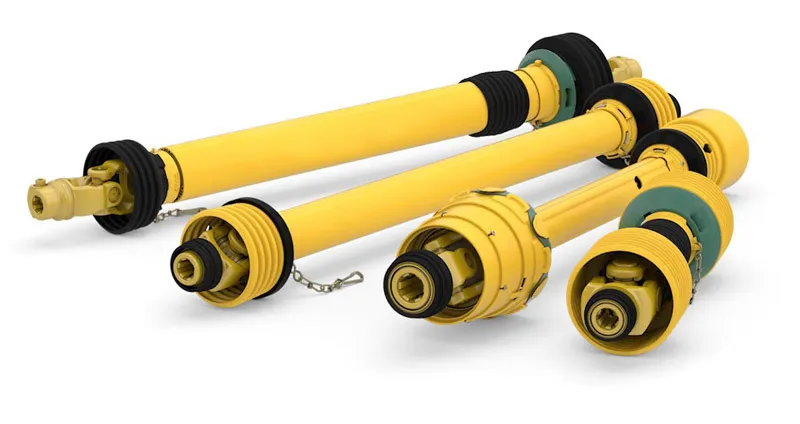
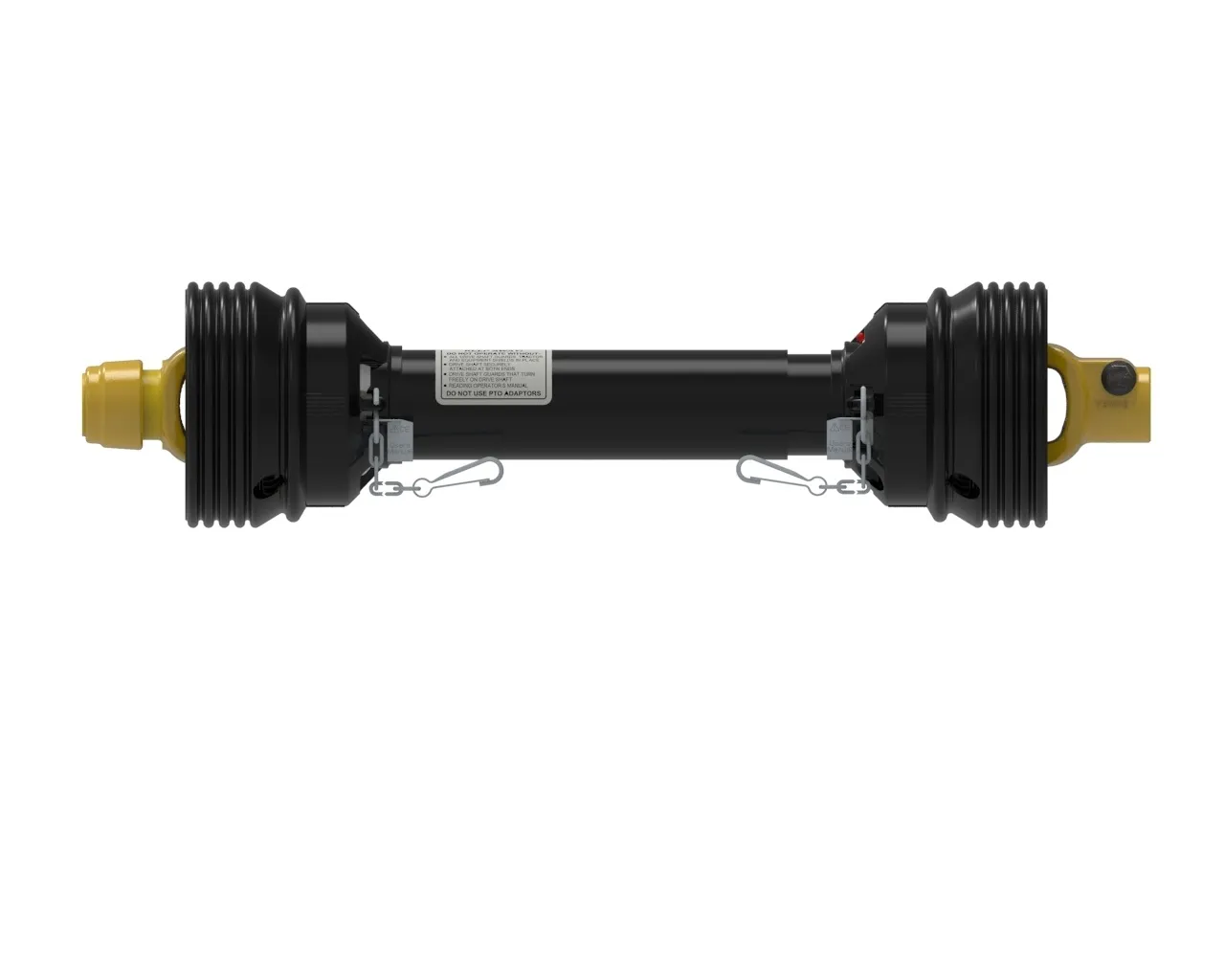
- Yellow Safety Sleeves: While many truck shafts are sold “naked,” we offer NR-12 compliant versions with non-rotating yellow plastic guards, identical to agricultural safety standards, for fleets that prioritize maximum worker safety.
- Smooth Welds: For naked shafts, we ensure welds are smooth and free of burrs to reduce snagging risks.
- Set Screw Security: For keyed pump shafts, we use double set screws and thread-locker to prevent yokes from flying off.
Material Science: Road-Ready Durability
Truck components live in a harsh environment of road spray, mud, and chemicals.
Corrosion Protection: Standard paint often peels due to gravel impact. We offer Epoxy Powder Coating ou Zinc-Nickel Plating for our premium lines. This is especially important for trucks operating in coastal areas or carrying corrosive fertilizers.
Forged Steel Yokes: We do not use cast iron. All our yokes are Drop Forged Steel. Cast iron is brittle and can shatter under the shock load of a stone jamming a dump body tailgate. Forged steel bends but rarely snaps.
Case Study: The Sugar Mill in Ribeirão Preto
Client Profile: A large sugar mill (Usina) in Ribeirão Preto (SP) operating a fleet of Volvo FMX trucks with “Vinhatreiros” (Vinasse Tankers).
The Problem: The fleet was experiencing premature failure of the hydraulic pumps used for spraying vinasse. The failure mode was input shaft seal leakage and bearing collapse. The cause? Vibration. The local bodybuilder had installed simple, unbalanced PTO shafts at steep angles to clear the air tanks.
The EVER-POWER Solution: We supplied custom-length Series T Balanced Shafts. We also worked with their engineering team to lower the pump mounting brackets, reducing the operating angle from 12 degrees to 5 degrees.
The Result: The vibration in the cab disappeared. The pump seal failures dropped to near zero. The lifespan of the pumps extended from 6 months to over 2 years. The ROI on the high-quality balanced shafts was achieved in the first month by avoiding pump replacements.
Maintenance: The “Hidden” Component
The PTO shaft is often hidden under the catwalk or behind tanks, leading to neglect.
- The 3-Month Rule: Grease the U-joints and the Slip Yoke every 3 months or every oil change. The slip yoke is critical; if it seizes, it will destroy the transmission PTO case.
- Flange Check: Check the 4 bolts on the PTO and Pump flanges. Vibration loosens them. Use Loctite Blue and torque to spec. A loose flange will ovalize the holes and ruin the PTO output.
- Phase Check: If the shaft was taken apart for service, ensure it was put back together with the yokes in phase (ears aligned). An out-of-phase shaft vibrates violently.
Frequently Asked Questions (FAQ)
Can I mount the pump directly to the PTO (Direct Mount)?
How do I measure the correct length for a truck PTO shaft?
What happens if my U-joint angles are different?
Agri-Market Trends: High-Speed Hydraulics
The trend in Brazil is towards faster unloading speeds for tippers and walking floors to reduce turnaround time at the port. This requires higher flow pumps running at higher RPMs. EVER-POWER is releasing High-Speed Rated Drivelines capable of sustaining 2500 RPM continuously, supporting the next generation of high-efficiency logistics equipment.
 PT
PT  EN
EN  ES
ES  RU
RU  FR
FR  DE
DE  JA
JA  AR
AR  IT
IT  ZH
ZH