
The Pulse of the Paddy: PTO Shafts for Intelligent Rice Transplanters
Powering the “Golden Grain” in Singapore’s Agritech Hubs. High-Frequency, Ultra-Smooth Drivelines for Walk-Behind, Ride-On, and Autonomous High-Speed Transplanters.
Field Notes: Precision in the Mud
While Singapore is land-scarce, its role as a global Agritech Innovation Hub drives the development and testing of advanced rice cultivation technologies. In research plots like Lim Chu Kang and vertical farming initiatives, the traditional back-breaking work of planting rice has been replaced by Mechanical Transplanters (插秧机). These range from simple 4-row walk-behind units to sophisticated 8-row, GPS-guided high-speed riding machines.
The mechanical heart of a transplanter is the Planting Arm Mechanism. These arms must pick a single seedling from a mat and insert it into the mud at a precise depth and spacing, typically at a rate of 300 to 500 times per minute. The PTO shaft driving this mechanism faces a unique contradiction:
The PTO Challenge:
1. High Frequency, Low Load: Unlike a tiller that breaks soil, a transplanter shaft transmits relatively low torque but at high rotational consistency. Any “flutter” or vibration in the shaft translates directly to “missing hills” (skipped planting) or “floating seedlings” (improper depth).
2. Amphibious Environment: The machine operates in 10-30cm of water and mud. The PTO shaft is constantly splashed with gritty paddy water. If seals fail, the bearings corrode instantly.
3. Compact Geometry: On walk-behind and high-speed riding units, the engine and the planting unit are close together. The PTO shaft is often short, requiring wide articulation angles during turns to maintain the planting rhythm without binding.
In 2024, testing at a Singaporean agritech facility revealed that “Micro-Vibration” from unbalanced generic PTO shafts was disrupting the sensors on autonomous transplanters, causing GPS steering errors.
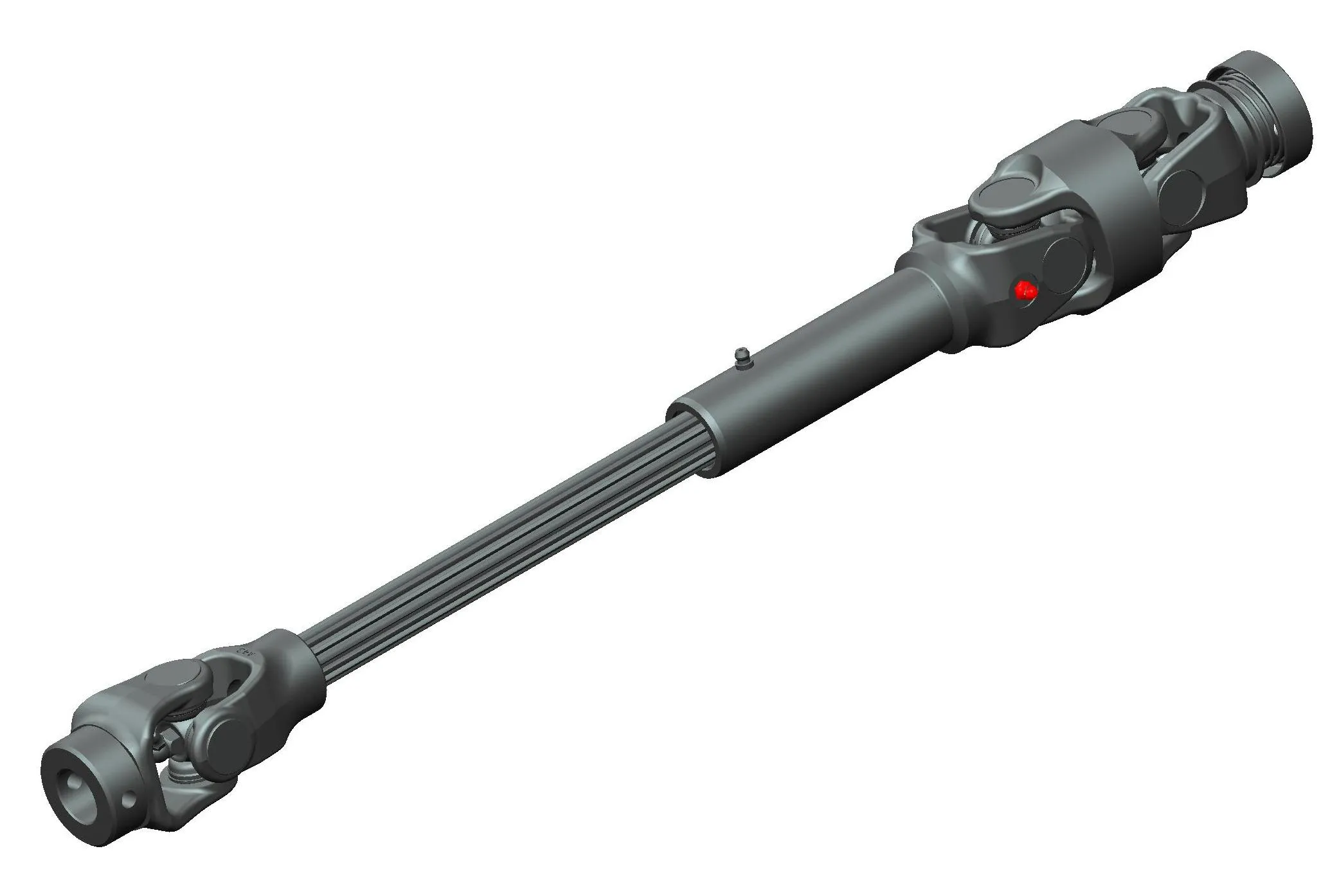
The EVER-POWER Solution: We engineer the Series 4 “Paddy-Precision” Driveline. This is not a standard agricultural shaft. It features G6.3 Dynamic Balancing to eliminate vibration that interferes with planting accuracy. We utilize Waterproof Cassette Seals on the cross bearings to keep mud out. For the high-speed autonomous models, we incorporate Constant Velocity (CV) Joints to ensure the planting arms maintain a perfect rhythm even when the machine is turning at the headland.
Technical Specifications & Engineering Parameters
Transplanters require “Instrument Grade” power transmission. The focus is on smoothness, sealing, and compact design.
| Parameter ID | Specification Category | Technical Value / Standard |
|---|---|---|
| 01 | Series Classification | Series 2 (Walk-Behind) / Series 4 (High-Speed Ride-On) |
| 02 | Nominal Torque (540 RPM) | 270 Nm (S2) / 460 Nm (S4) |
| 03 | Nominal Torque (1000 RPM) | 210 Nm (S2) / 380 Nm (S4) |
| 04 | Balancing Standard | ISO 1940-1 G6.3 (Vibration Free) |
| 05 | Tractor Interface | 1-3/8″ Z6 or 1-1/8″ Z6 (Compact Japanese Spec) |
| 06 | Implement Interface | 1-3/8″ Z6, Keyed (25mm), or Flange |
| 07 | Closed Length (Lz) | 510 mm – 810 mm (Ultra-Short Designs) |
| 08 | Tube Profile | Precision Lemon Profile (Low Lash) |
| 09 | Tube Material | ST52 Cold Drawn Seamless Steel (Plated) |
| 10 | Cross Kit Dimensions | 23.8mm x 61.3mm (S2) / 27mm x 74.6mm (S4) |
| 11 | Bearing Type | Triple-Lip Cassette Seal (Mud Proof) |
| 12 | Safety Device | Shear Bolt (SB) or Overrunning Clutch (RL) |
| 13 | Alternative Safety | Friction Clutch (Small Diameter) |
| 14 | Operating Angle | Max 30° (Standard) / 50° (Wide Angle) |
| 15 | Guard Material | UV Stabilized HDPE (Safety Yellow) |
| 16 | Guard Certification | MOM / ISO 5674 Compliant |
| 17 | Lubrificação | Calcium Sulfonate (Marine Grade) |
| 18 | Tratamento de superfície | Zinc-Nickel Plating (Corrosion Barrier) |
| 19 | Telescoping Overlap | Min 200mm (Stability in short shafts) |
| 20 | Locking Mechanism | Collar Lock (Ball) or Push Pin |
| 21 | Peso | 8 kg – 15 kg |
| 22 | Aplicativo | Walk-Behind Transplanter / High-Speed Riding Transplanter |
| 23 | Garantia | 1 Year (Water Ingress Protection) |
| 24 | Origin Compatibility | Kubota, Yanmar, Iseki, Mitsubishi, Kukje |
The Physics of the “Planting Finger”: Synchronization
The mechanical magic of a transplanter lies in the rotary-to-linear motion conversion. The PTO shaft is the metronome of this process.
1. The Zero-Lash Requirement (Folga Zero)
The planting arms are timed to pick a seedling from the moving tray and deposit it into the soil.
The Physics: At a planting speed of 1.5 m/s, a timing error of 0.1 seconds results in a 15cm displacement of the seedling.
The Cause: If the PTO shaft has “lash” (rotational play between the inner and outer tubes), the planting arms will “stutter” or lag behind the forward speed of the machine.
The Solution: Precision Lemon Tubing. We use cold-drawn tubes with extremely tight tolerances. This ensures that the rotational motion from the engine is transmitted instantly and positively to the planting unit, guaranteeing that the hill spacing (Zhu Ju) is exact to the millimeter.

2. Waterproofing the Kinetic Chain
The PTO shaft on a transplanter operates in the “Splash Zone.”
The Threat: Paddy water contains fine silt and organic acids. When a standard U-joint heats up during operation and is then splashed with cool water, the rapid cooling creates a vacuum, sucking the dirty water past single-lip seals.
The Failure: The water emulsifies the grease, leading to rapid corrosion and needle bearing failure within weeks.
The Solution: Triple-Lip Cassette Seals + Marine Grease. Our “Paddy-Precision” shafts use the same sealing technology as our marine drives. We factory-fill them with Calcium Sulfonate grease (Green/Tan), which is hydrophobic and does not wash out, providing a permanent barrier against the paddy environment.

3. High-Speed Balance for Intelligent Farming
Modern “Intelligent” transplanters use GPS and gyroscopes to maintain straight lines.
The Issue: A vibrating PTO shaft transmits noise through the chassis. This mechanical noise can confuse the delicate IMU (Inertial Measurement Unit) sensors, causing the steering to jitter.
The Solution: Dynamic Balancing. We balance our Series 4 shafts to ISO G6.3 standards. This eliminates harmonic vibration, ensuring the machine chassis provides a stable platform for the onboard computers and sensors to operate correctly.
Operational Context: Singapore’s Urban & Research Paddies
The equipment serves the niche but high-tech needs of Singapore’s agricultural sector.
Scenario A: High-Speed Riding Transplanter (6/8 Rows)
Context: Large-scale research plots or commercial production in Lim Chu Kang. Focusing on labor efficiency.
Machine: Yanmar or Kubota High-Speed Diesel Transplanter.
Challenge: Turning. The machine turns rapidly at the headland. The planting unit lifts, creating a steep PTO angle.
Requirement: Wide-Angle CV Joint. To keep the planting arms cycling (to clear mud) or simply to prevent binding during the lift, a CV joint is essential. It prevents the “knocking” sound associated with steep U-joint angles.
Scenario B: Walk-Behind Transplanter (4 Rows)
Context: Smaller educational plots or heritage farming displays.
Machine: Compact petrol-driven walk-behind unit.
Challenge: Compactness. The distance between the engine and the planting case is very short (<400mm).
Requirement: Ultra-Short Series 2 Shaft. We manufacture specialized short-coupled shafts that allow for proper telescoping even in the tight confines of a walk-behind machine frame.
Scenario C: Tray Nursery & Soil Loading
Context: The support machinery that prepares the seedling trays before they reach the field.
Machine: Soil Mixer and Tray Filler.
Challenge: Dust. Dry soil dust is abrasive.
Requirement: Dust-Proof Sealing. Just like the water seals, our dust seals prevent fine soil particles from destroying the bearings of the stationary mixer drives.
Interchangeability & OEM Systems Integration
We support the specific Japanese standards used in rice machinery.
Fitment Guide:
Rice machinery often uses different standards than Western tractors. EVER-POWER offers:
- Kubota™ / Yanmar™ / Iseki™: These brands often use a smaller 1-1/8″ (28.5mm) 6-Spline PTO on their transplanters (unlike the standard 1-3/8″). We stock these specific yokes.
- Kukje™ / Tong Yang™ (Korean): Compatible with standard Series 4 drivelines.
- Nantong™ / Zoomlion™ (Chinese): We provide metric keyed or splined adapters for cost-effective replacement on imported machinery.
- Quick Couplers: Specialized ball-lock collars designed for the tight spaces of transplanter gearboxes.
*Disclaimer: OEM names are for reference only. EVER-POWER is an independent manufacturer.
Compliance with Singapore Standards (MOM / WSH)
Workplace Safety and Health (WSH) is strict. Walk-behind transplanters place the operator in immediate proximity to the drive.
The “Close-Quarters” Safety Protocol
An unguarded shaft inches from an operator’s legs in a muddy, slippery field is a high risk.
EVER-POWER Transplanter Shafts utilize:
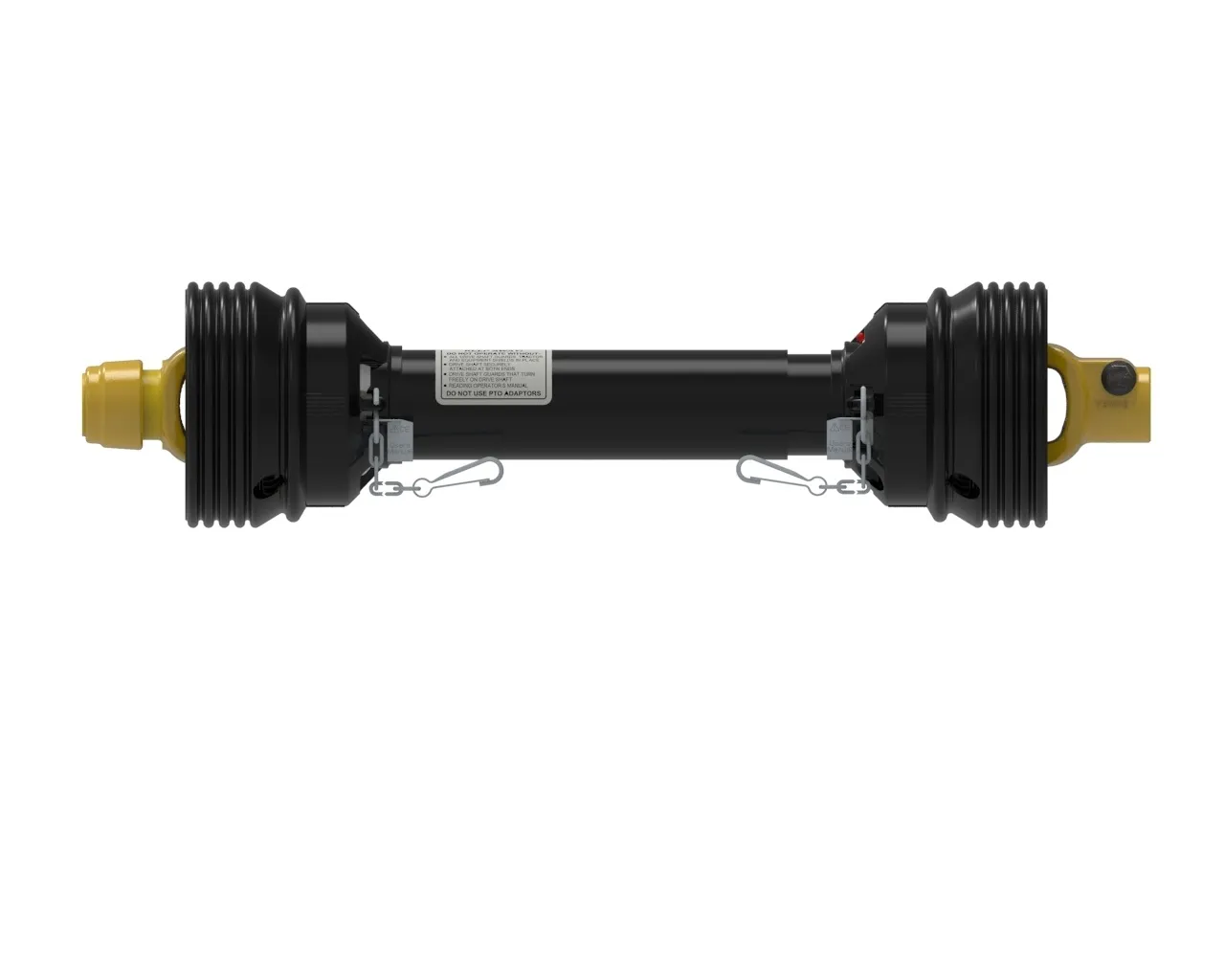
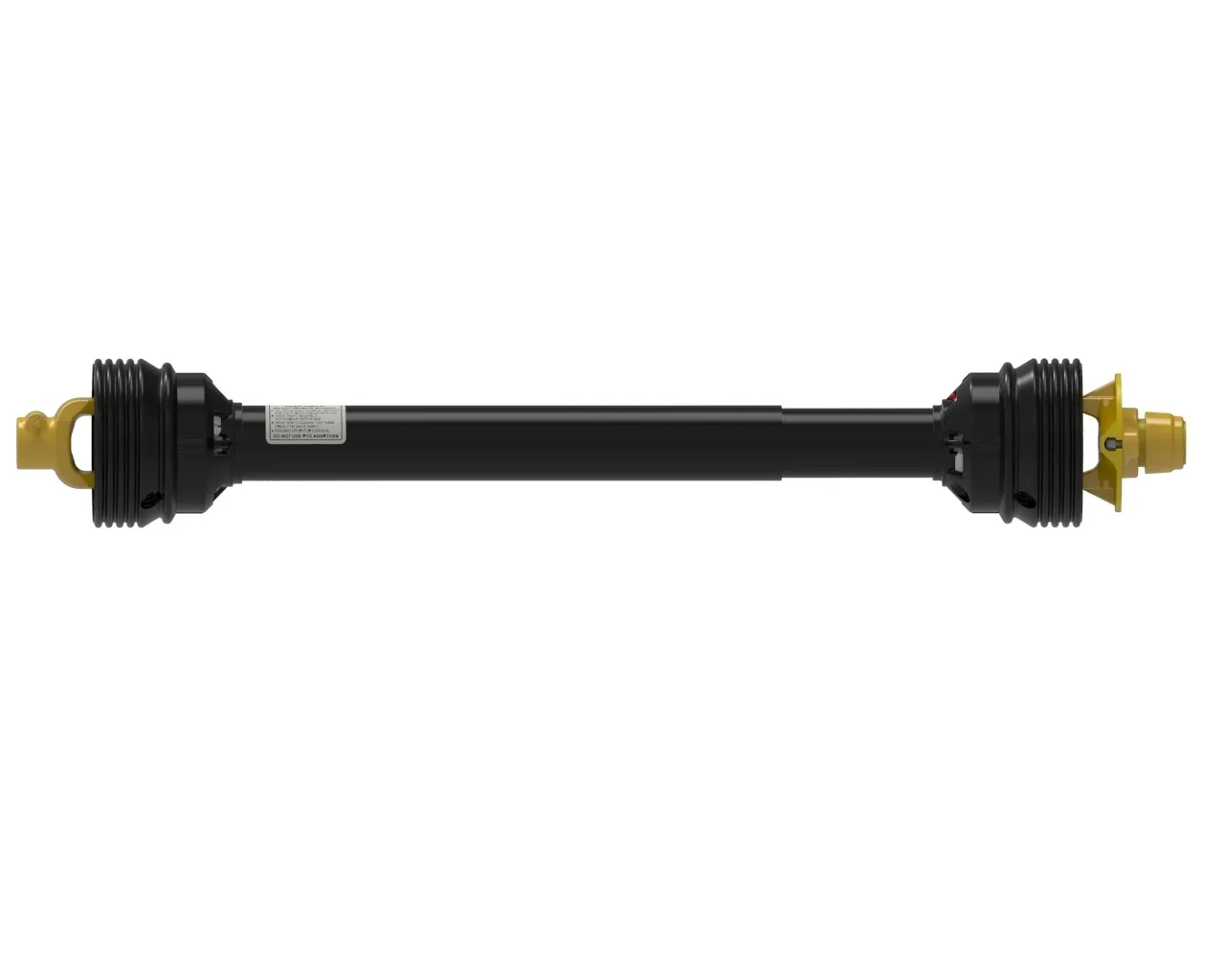
- Seamless Guarding: The yellow plastic tubes cover the entire steel shaft. The guard does not rotate.
- Smooth Profile: The guard exterior is smooth HDPE plastic. Mud does not stick to it easily, and it is easy to wash down.
- Integrated Yoke Shields: The bell housing at the ends covers the U-joints completely, preventing rice stalks or clothing from wrapping around the joint.
Material Science: Rust Never Sleeps
The paddy environment is one of the most corrosive for machinery.
Zinc-Nickel Plating: We do not use paint on transplanter shafts. Paint hides rust until it’s too late. We use Zinc-Nickel plating, which offers electrochemical protection. Even if scratched, the zinc sacrifices itself to save the steel tube. This ensures the telescoping action remains free and easy, preventing the dreaded “seized shaft.”
Rilsan Coating (Optional): For premium high-speed units, we coat the inner profile tube with Nylon (Rilsan). This reduces friction, eliminates rust bonding, and dampens vibration, ensuring the planting arm timing remains perfect for the machine’s life.
Case Study: The Smart Rice Plot in Kranji
Client Profile: A collaborative research farm testing autonomous 8-row transplanters in Kranji.
The Problem: The autonomous unit was suffering from “steering jitter.” The GPS system kept over-correcting. Engineers traced the noise to a standard aftermarket PTO shaft that was vibrating at high RPM, confusing the IMU sensors on the chassis. The shaft also showed signs of rust seizure after just one season.
The EVER-POWER Solution: We supplied a Series 4 “Paddy-Precision” Shaft. It featured G6.3 dynamic balancing, Zinc-Nickel plating, and a Wide-Angle CV joint.
The Result: The vibration vanished. The autonomous steering became smooth and accurate, holding lines within 2cm tolerance. The planting arms operated silently and rhythmically. After the season, the Zinc-Nickel plated tubes showed no sign of corrosion and telescoped effortlessly. The project managers adopted this spec for their entire fleet.
Maintenance: The “Paddy” Protocol
Mud is abrasive. Proper care extends life.
- Daily Wash & Grease: After hosing down the machine, grease the U-joints immediately. This pushes any water out of the seals before it can sit overnight and cause pitting.
- Tube Care: Once a week, separate the shaft halves. Wipe the old, gritty grease off the tubes and apply fresh marine grease. This prevents the “grinding paste” effect that wears out profile tubes.
- Check the Guard: Ensure the yellow guard spins freely. If mud packs inside the guard, it can cause the guard to rotate with the shaft, creating a safety hazard.
Frequently Asked Questions (FAQ)
My transplanter uses a smaller PTO shaft. Do you have it?
Why does the planting arm jerk?
Can I use a standard painted shaft in a rice paddy?
Agri-Market Trends: Unmanned Transplanting
Singapore is pioneering “Dark Farms” where rice transplanting is fully autonomous. These robots require components with zero maintenance needs. EVER-POWER is developing “Lube-for-Life” Sealed Shafts using ceramic hybrid bearings and advanced polymers to meet the demands of the next generation of unmanned paddy machinery.
 PT
PT  EN
EN  ES
ES  RU
RU  FR
FR  DE
DE  JA
JA  AR
AR  IT
IT  ZH
ZH