
The Hardware Behind the Software: PTO Drivelines for Digital Farming
Field Notes: When Hardware Crashes Software
Modern agriculture has undergone a digital revolution. The tractor cab in Mato Grosso or The Corn Belt is no longer just a seat and a steering wheel; it is a mobile command center filled with Farm Management Computers, GPS receivers, and Auto-Steer gyroscopes. These systems rely on clean data to map yields, control variable rate seeding, and steer the machine with centimeter precision.
However, there is a physical enemy to this digital precision: Mechanical Harmonics.
The Problem: A standard, agricultural-grade PTO shaft is often unbalanced and has loose tolerances. When spinning at 1000 RPM, it generates a specific vibration frequency. This vibration travels through the tractor chassis and into the cab.
1. Sensor Drift: The vibration confuses the IMU (Inertial Measurement Unit) of the auto-steer system, causing the tractor to “snake” in the field.
2. Component Fatigue: Continuous micro-vibrations loosen the solder joints on PCBs (Printed Circuit Boards) inside the expensive ISOBUS terminals.
3. Data Corruption: Variable Rate controllers rely on precise feedback from the implement. If the PTO shaft speed fluctuates due to poor geometry (CV error), the computer calculates the wrong application rate.
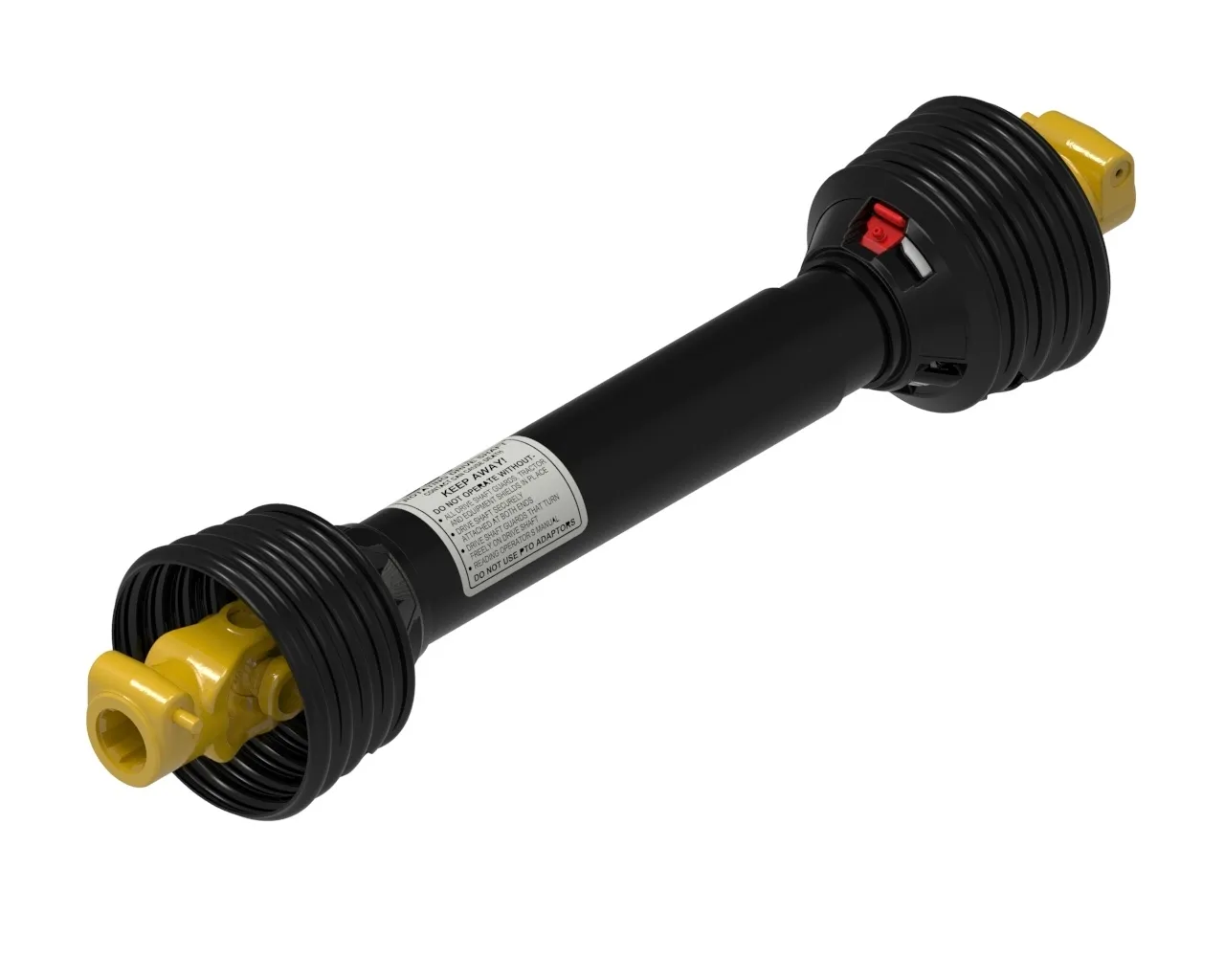
The EVER-POWER Solution: We engineered the Series 10 “Data-Link” Precision Driveline. This is the bridge between mechanical power and digital control. It features G6.3 Dynamic Balancing (turbine grade) to eliminate chassis vibration. We use Coated Star Profile Tubing to dampen high-frequency noise and prevent static electricity buildup (which can zap ECUs). This shaft is designed to be “invisible” to the sensors, allowing the Farm Management Computer to do its job without interference.
Technical Specifications & Engineering Parameters
For “Smart Farming,” the PTO shaft must meet tighter tolerances than standard tillage tools. Below are the specs for our Digital Agriculture Series.
| Parameter ID | Specification Category | Technical Value / Standard |
|---|---|---|
| 01 | Series Classification | Series 8 (Precision Planters) / Series 10 (High Cap Spreaders) |
| 02 | Nominal Torque (540 RPM) | 1,240 Nm (S8) / 1,850 Nm (S10) |
| 03 | Nominal Torque (1000 RPM) | 980 Nm (S8) / 1,450 Nm (S10) |
| 04 | Balancing Standard | ISO 1940-1 Grade G6.3 (Mandatory for Electronics) |
| 05 | Tractor Interface | 1-3/8″ Z21 or 1-3/4″ Z20 (Zero-Lash Spline) |
| 06 | Implement Interface | 1-3/4″ Z20, Flange, or Torque Sensor Ready |
| 07 | Closed Length (Lz) | 1,010 mm – 1,510 mm (Customizable) |
| 08 | Tube Profile | Rilsan Coated Star (Vibration Damping) |
| 09 | Tube Material | 42CrMo4 Precision Drawn Steel |
| 10 | Cross Kit Dimensions | 35mm x 106.5mm (S8) / 42mm x 104mm (S10) |
| 11 | Bearing Type | Precision Ground Needle Roller |
| 12 | Safety Device | Cam Clutch (K64) or Friction Clutch (Sensor Compatible) |
| 13 | Operating Angle | Max 80° (CV Joint – Constant Velocity) |
| 14 | Guard Material | Anti-Static HDPE (Prevents ECU interference) |
| 15 | Guard Certification | NR-12 / ISO 5674 |
| 16 | Lubrification | Synthetic Long-Life (Blue) |
| 17 | Traitement de surface | Zinc-Nickel Plating (Conductive Grounding) |
| 18 | Telescoping Overlap | Min 400mm (Enhanced Rigidity) |
| 19 | Clutch Reset | Automatic (Cam) or Slipping (Friction) |
| 20 | Poids | 45 kg – 80 kg |
| 21 | Application | Variable Rate Planter / Fertilizer Spreader / Sprayer |
| 22 | Garantie | 2 Years (Balance & Structure) |
| 23 | Origin Compatibility | John Deere (GreenStar), Case IH (AFS), Trimble, Topcon |
The Physics of Interference: Vibration and Static
How does a spinning steel shaft affect a computer? The interaction is both mechanical and electrical.
1. Harmonic Vibration and IMUs (Giroscópios)
Auto-steer systems use an IMU (Inertial Measurement Unit) to detect the tractor’s roll, pitch, and yaw. These sensors are incredibly sensitive accelerometers.
The Conflict: An unbalanced PTO shaft spinning at 1000 RPM creates a vibration frequency of ~16.6 Hz. If the shaft is bent or the tubes are loose, it creates a second harmonic at ~33 Hz.
The Glitch: These frequencies often overlap with the sampling rate of the IMU. The computer interprets the PTO vibration as the tractor sliding sideways on a hill. It sends a steering correction signal to the hydraulic valves. The tractor twitches or weaves, ruining the straight planting line.
The Solution: Dynamic Balancing. We balance our Series 10 shafts to remove these parasitic frequencies, ensuring the IMU reads only the terrain, not the driveline.

2. Static Electricity (Eletricidade Estática)
A plastic safety guard spinning inside a stationary plastic tube creates a Van de Graaff generator effect—massive static electricity buildup.
The Discharge: In dry conditions, this static charge builds up until it arcs to the tractor chassis.
The Damage: Modern tractors use CAN-BUS wiring. A static arc near a sensor cable sends a high-voltage spike through the data network, frying ECUs or causing “Ghost Codes” (false error messages) on the cab display.
The Solution: Anti-Static Materials & Grounding. Our guards are made with carbon-impregnated HDPE to dissipate static. We also ensure the metal shaft has a continuous ground path through the bearings to the tractor ground, preventing arc buildup.
3. Torque Sensing and “Smart” Implements
Future agriculture involves the implement telling the tractor how fast to go (Tractor Implement Management – TIM). This relies on measuring torque at the PTO.
The Requirement: The shaft must be torsionally rigid. If the tube twists like a spring (hysteresis), the torque data lags behind reality.
The Solution: Star Profile & Splined Bars. We use profiles with high torsional stiffness. This ensures that the torque measured by the sensor reflects the actual load at the implement instantly, allowing the computer to adjust engine RPM in milliseconds.

Operational Context: The Connected Farm
The shaft is the physical link in the digital chain.
Scenario A: Precision Planting (Plantio de Precisão)
Context: A 24-row central fill planter with a PTO-driven vacuum fan and hydraulic alternator.
Challenge: Vacuum Stability. The vacuum level determines seed singulation (one seed per hole).
The Link: If the PTO shaft has velocity fluctuation (due to bad angles), the fan speed pulses. The vacuum pulses. Seeds drop off the disk or double up.
Requirement: CV Shafts. A Constant Velocity shaft ensures the fan runs at a dead-steady RPM even when the tractor turns, ensuring 99.9% seed placement accuracy displayed on the cab monitor.
Scenario B: Variable Rate Spreading (Taxa Variável)
Context: A fertilizer spreader adjusting rates based on a prescription map.
Challenge: Data Sync. The computer assumes a specific spread width based on PTO RPM (disk speed).
Requirement: Zero-Slip Engagement. We use precision splines (Z20) that have no rotational play. This ensures the disks spin exactly at the speed the computer thinks they are spinning, guaranteeing the fertilizer goes exactly where the map says it should.
Interchangeability & Systems Integration
Our shafts are designed to fit the global standards used by major Ag-Tech manufacturers.
Fitment Guide:
EVER-POWER Smart shafts are validated for:
- John Deere™ (CommandCenter): Compatible with the PTO output of 7R, 8R, and 9R series tractors running GreenStar.
- CNH Industrial™ (AFS/PLM): Designed to handle the high-power boost modes of Case IH Magnum and New Holland T8 tractors without vibration.
- AGCO™ (Fendt/Valtra/MF): Precision splines to match the Vario/CVT transmission PTO stubs.
- ISOBUS Implements: Amazone, Kuhn, Horsch, Stara. We provide the mechanical link that matches the digital precision of these machines.
*Disclaimer: OEM names are for reference only. EVER-POWER is an independent manufacturer.
Compliance with Brazilian Regulatory Standards (NR-12)
NR-12 protects the operator. In modern farming, it also protects the technology.
The “Sensor-Safe” Guarding
A flapping, broken guard can sever sensor wires.
EVER-POWER Smart Shafts utilize:
- Rigid Guard Tubes: Our guards do not warp or flap. They maintain a concentric shape to avoid hitting hydraulic hoses or electrical harnesses bundled near the hitch.
- Precision Bearings: The guard rides on bearings to ensure smooth, non-rotating performance that doesn’t generate heat or static.
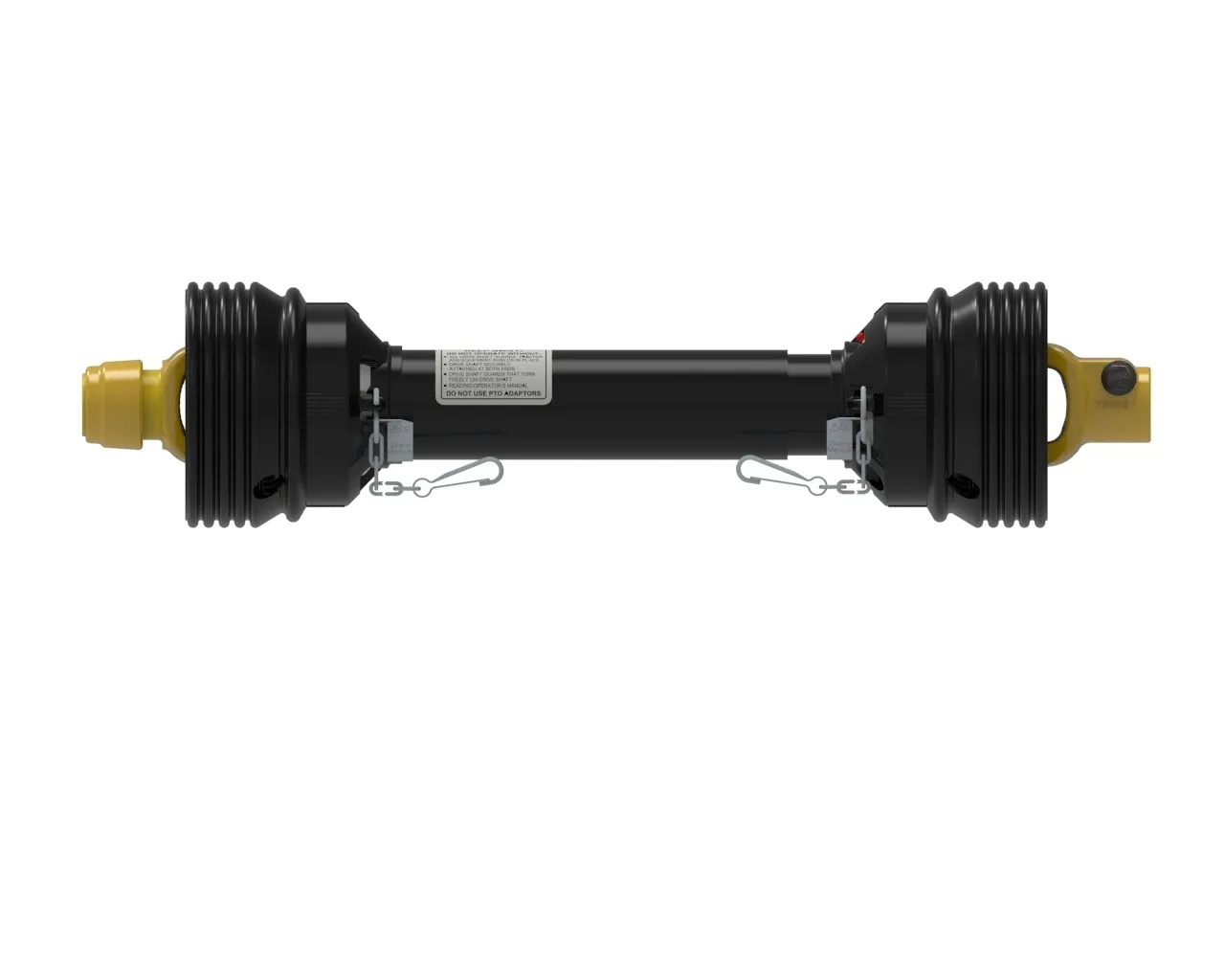
- Secure Anchoring: We use carabiner-style clips for chains to ensure they don’t detach and snag on sensor cables.
Material Science: The “Silent” Steel
We use materials that absorb noise and vibration.
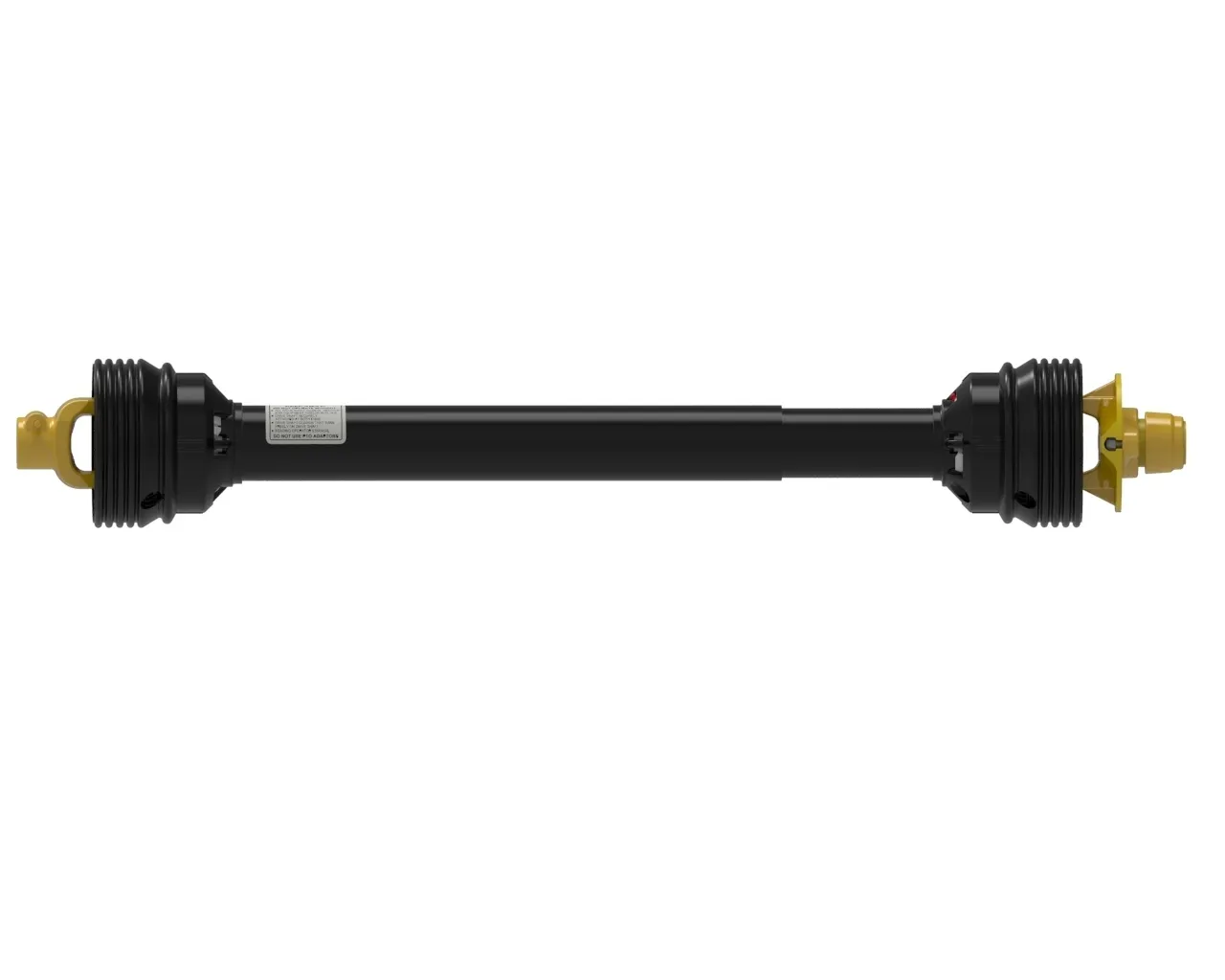
Rilsan Coating: We coat the male star profile with Rilsan (Polyamide 11). This creates a plastic-on-steel sliding interface. It reduces friction by 50% and, more importantly, acts as a vibration damper, absorbing the high-frequency “ringing” of the gears before it reaches the tractor cab.
Zinc-Nickel Plating: Electronics hate rust. Rust dust is conductive. We plate our shafts to ensure they remain clean and do not shed conductive particles into the sensitive rear connector area of the tractor.
Case Study: The Cotton Farm in Bahia
Client Profile: A high-tech cotton producer in Luís Eduardo Magalhães (BA) running John Deere 8R tractors with 24-row vacuum planters.
The Problem: The operators reported “Auto-Steer Drift.” The tractor would occasionally jerk 10cm off the line. Diagnostics showed no GPS signal loss. However, the IMU error logs showed massive vibration spikes. The PTO shafts on the planters were worn and vibrating at 1000 RPM.
The EVER-POWER Solution: We replaced the planter drivelines with Series 10 “Data-Link” Balanced Shafts with Rilsan coating.
The Result: The cab vibration was eliminated. The IMU sensor readings stabilized. The “snake” in the planting line disappeared. The farm manager noted that the planting speed could be increased by 1 km/h while maintaining perfect straightness, thanks to the stability of the guidance system.
Maintenance: Protecting the Data Stream
To keep the computer happy, keep the mechanics tight.
- Phase Check: When reassembling the shaft, ensure the arrows align. An out-of-phase shaft creates velocity fluctuation that will confuse flow controllers and rate sensors.
- Clean Splines: Keep the tractor PTO stub and shaft yoke splines clean. Grit here creates run-out (wobble). Clean and lightly grease with Moly paste.
- Static Grounding: Ensure the safety chains are connected to bare metal on the chassis, not painted surfaces, to provide a path for static dissipation.
Foire aux questions (FAQ)
Does a PTO shaft really affect my GPS?
Can I use a standard shaft for a precision planter?
What is the benefit of the coated tube?
Agri-Market Trends: The Sensor Shaft
The future is the “Smart Shaft”. EVER-POWER is currently testing prototypes with embedded torque and temperature sensors. These shafts will communicate wirelessly with the tractor’s ISOBUS terminal, warning the operator of overloads or lack of grease before a failure occurs, fully integrating the driveline into the digital farm ecosystem.
 FR
 EN
 ES
 RU
 DE
 PT
 JA
 AR
 IT
 ZH