
The Pulse of the Mill: PTO Shafts for Rice Processing Equipment
Powering the “Engenho” in Rio Grande do Sul. High-Durability Drivelines for Mobile Hullers, Polishers, and Sorters in the Brazilian Rice Belt.
Field Notes: The “Silica” Challenge in Uruguaiana
Brazil is the largest rice producer outside of Asia, with the state of Rio Grande do Sul (cities like Pelotas, Uruguaiana, and Cachoeira do Sul) accounting for the vast majority of the harvest. While large industrial mills use electric power, many medium-sized farms and remote cooperatives rely on Tractor-PTO Driven Rice Mills (Engenhos de Arroz Acoplados). These mobile or stationary units perform hulling (descascamento) and polishing (polimento) right at the silo.
The Environment: A rice mill is a hostile environment for machinery.
1. Silica Dust: Rice husks contain high levels of silica. The dust generated during milling is essentially powdered glass. It is incredibly abrasive and penetrates standard seals instantly.
2. Inertia: Rice mills use heavy flywheels and high-speed drums to strip the husk. Starting and stopping this mass requires careful torque management.
3. Stationary Vibration: Unlike a moving tractor, a stationary setup creates “standing wave” vibrations. If the PTO shaft is not perfectly balanced, it will shake the mill apart over a 10-hour shift.
In the 2023 season, we diagnosed a recurring issue with “Input Shaft Shearing” on mobile mills in the South. Operators were using rigid PTO shafts. When they disengaged the PTO after a session, the heavy flywheel of the polisher kept spinning, while the tractor PTO brake engaged. The result? The shaft twisted like a fuse.
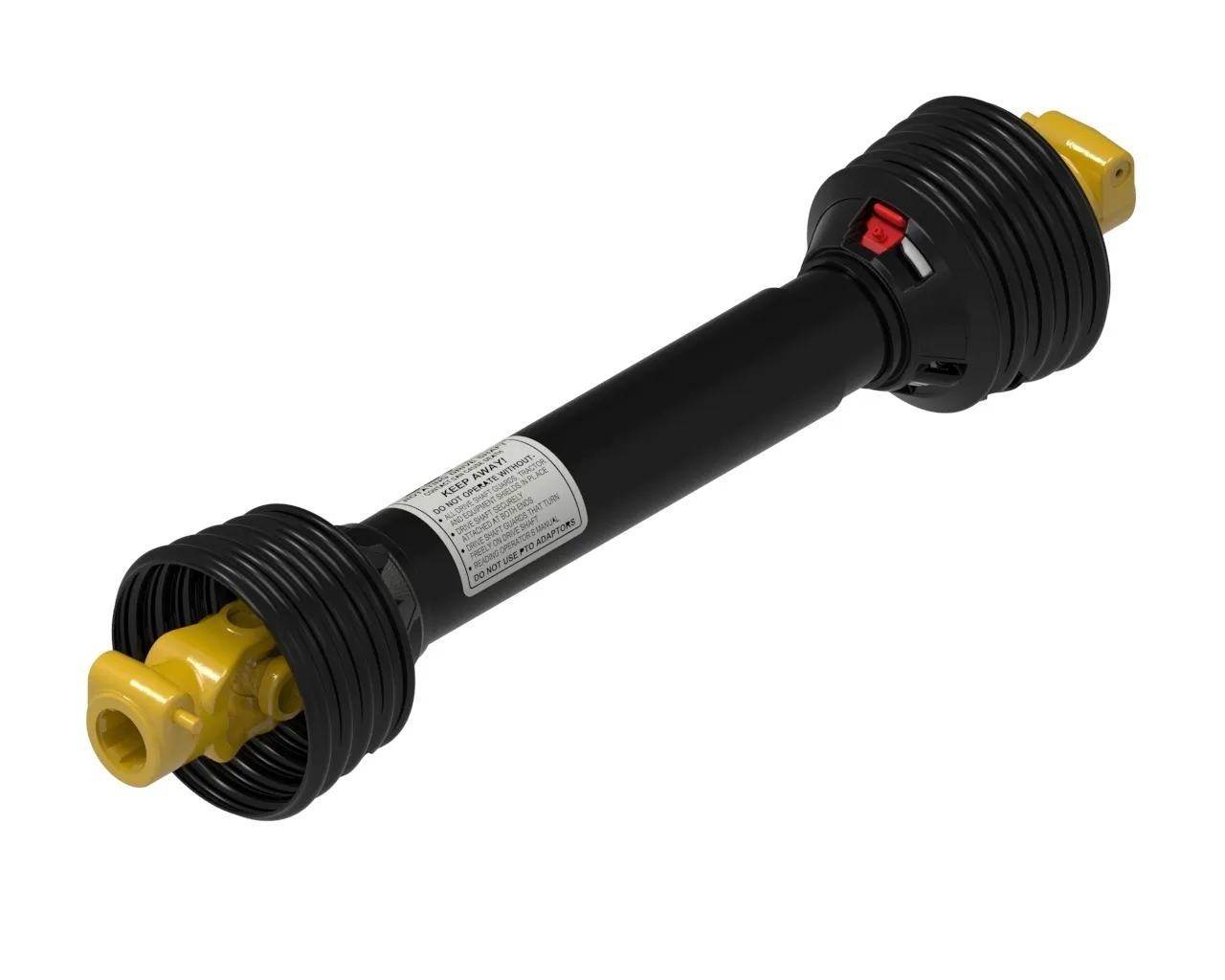
The EVER-POWER Solution: We mandated the use of the Series 6 “Grain-Master” Driveline with Overrunning Clutch (RL). This shaft integrates a freewheel mechanism that allows the mill’s heavy internal components to spin down gradually when the tractor stops, protecting the transmission. Furthermore, we utilized Quad-Lip Cassette Seals on the cross kits to create an impenetrable barrier against the abrasive rice husk dust.
Technical Specifications & Engineering Parameters
Stationary processing equipment requires shafts that prioritize balance and sealing over extreme angles. Below are the specs for our Agro-Processing Series.
| Parameter ID | Specification Category | Technical Value / Standard |
|---|---|---|
| 01 | Series Classification | Series 4 (Cleaners) / Series 6 (Hullers/Polishers) |
| 02 | Nominal Torque (540 RPM) | 460 Nm (S4) / 830 Nm (S6) |
| 03 | Nominal Torque (1000 RPM) | 380 Nm (S4) / 640 Nm (S6) |
| 04 | Balancing Standard | ISO 1940-1 Grade G6.3 (Mandatory for stationary) |
| 05 | Tractor Interface | 1-3/8″ Z6 (Standard) |
| 06 | Implement Interface | 1-3/8″ Z6 or 35mm/40mm Keyed (Mill Input) |
| 07 | Closed Length (Lz) | 810 mm – 1,210 mm (Standard Stationary Span) |
| 08 | Tube Profile | Star Profile (S5/S6) – Low Vibration |
| 09 | Tube Material | ST52 Cold Drawn Precision Steel |
| 10 | Cross Kit Dimensions | 27mm x 74.6mm (S4) / 30.2mm x 92mm (S6) |
| 11 | Bearing Type | Cassette Sealed Needle Roller (Dust Proof) |
| 12 | Safety Device | Overrunning Clutch (RL) – Essential |
| 13 | Operating Angle | Max 10° (Alignment is critical) |
| 14 | Vibration Damping | Optional Rubber Element Yoke |
| 15 | Guard Material | Dust-Repellent HDPE (Yellow) |
| 16 | Guard Certification | NR-12 / ISO 5674 |
| 17 | Lubrification | High-Temp Lithium Complex (Red) |
| 18 | Traitement de surface | Zinc-Nickel Plating (Humidity Resistance) |
| 19 | Telescoping Overlap | Min 200mm (Required for stability) |
| 20 | Clutch Reset | Automatic (Freewheel) |
| 21 | Poids | 22 kg – 40 kg |
| 22 | Application | Rice Huller / Polisher / Pre-Cleaner |
| 23 | Garantie | 2 Years (Balance & Structure) |
| 24 | Origin Compatibility | Zaccaria, Pinhalense, Kepler Weber, Pagé |
The Physics of Processing: Friction and Inertia
A rice mill transforms rough paddy (arroz em casca) into white rice through mechanical friction and abrasion.
1. The Flywheel Effect (Inércia Rotacional)
To maintain consistent polishing speed, rice mills utilize heavy cast-iron pulleys and drums.
The Physics: When you turn off the tractor, the engine stops in seconds due to compression. The mill, however, wants to keep spinning for minutes due to momentum.
The Conflict: If the PTO shaft is rigid, the mill tries to “drive” the tractor. This creates massive reverse torque.
The Solution: The Overrunning Clutch (Roda Livre). This unidirectional device transmits power from the tractor to the mill. But when the tractor slows down, it clicks and freewheels, allowing the mill to coast to a stop safely. This is non-negotiable for mill protection.

2. The “Silica” Abrasion
Rice husk ash is 90% silica. It is an industrial abrasive.
The Intrusion: During operation, a fine cloud of silica dust envelops the PTO shaft. This dust seeks out grease.
The Wear: If dust enters the U-joint caps, it turns the grease into a grinding paste. Bearings fail in days.
The Defense: Cassette Seals. Unlike standard O-rings, cassette seals have multiple lips and an internal labyrinth filled with grease. This pushes dust out as the shaft spins, keeping the inner needle rollers pristine.
3. Harmonic Vibration (Ressonância)
Stationary tractors often run at a specific RPM (e.g., 540E) to save fuel.
The Risk: If the PTO shaft has loose telescoping tubes (“slop”), it can develop a harmonic rattle at that specific speed. This vibration travels into the mill, causing the sieves (peneiras) to crack and the sorting calibration to drift.
The Solution: Star Profile Tubing. The 6-point contact of the Star profile provides superior concentricity and rigidity compared to triangular tubes, dampening vibration and ensuring smooth power delivery to the sensitive sorting decks.
Operational Context: From Paddies to Processing
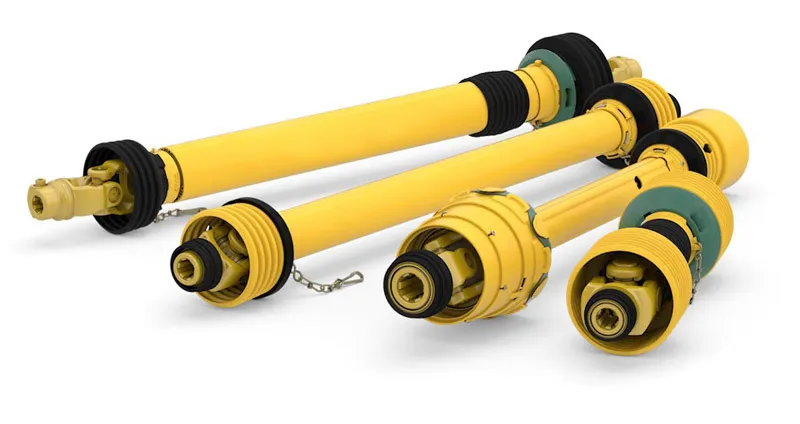
The equipment varies from small farm-scale units to larger mobile industrial processors.
Scenario A: The Mobile Mill (Engenho Móvel)
Context: A service provider in Camaquã traveling between farms to process rice on-site.
Challenge: Misalignment. Every setup is different. The tractor might be on uneven ground relative to the mill trailer.
Requirement: Wide-Angle (CV) Joints. While usually reserved for turning, a CV joint here allows the mill to operate smoothly even if the tractor is parked at an awkward 15-20 degree angle due to muddy terrain, without inducing velocity fluctuations that ruin the polishing finish.
Scenario B: The Pre-Cleaner (Pré-Limpeza)
Context: Removing straw and stones before drying.
Challenge: Shock Loads. Stones entering the system can jam the bucket elevators or fans.
Requirement: Shear Bolt. For simple pre-cleaners, a Shear Bolt yoke is the best protection. If a rock jams the fan, the bolt shears instantly, saving the fan blades. It is simple, cheap, and effective for this specific stage.
Interchangeability & OEM Replacement
Brazil has a legendary domestic industry for grain processing machinery.
Fitment Guide:
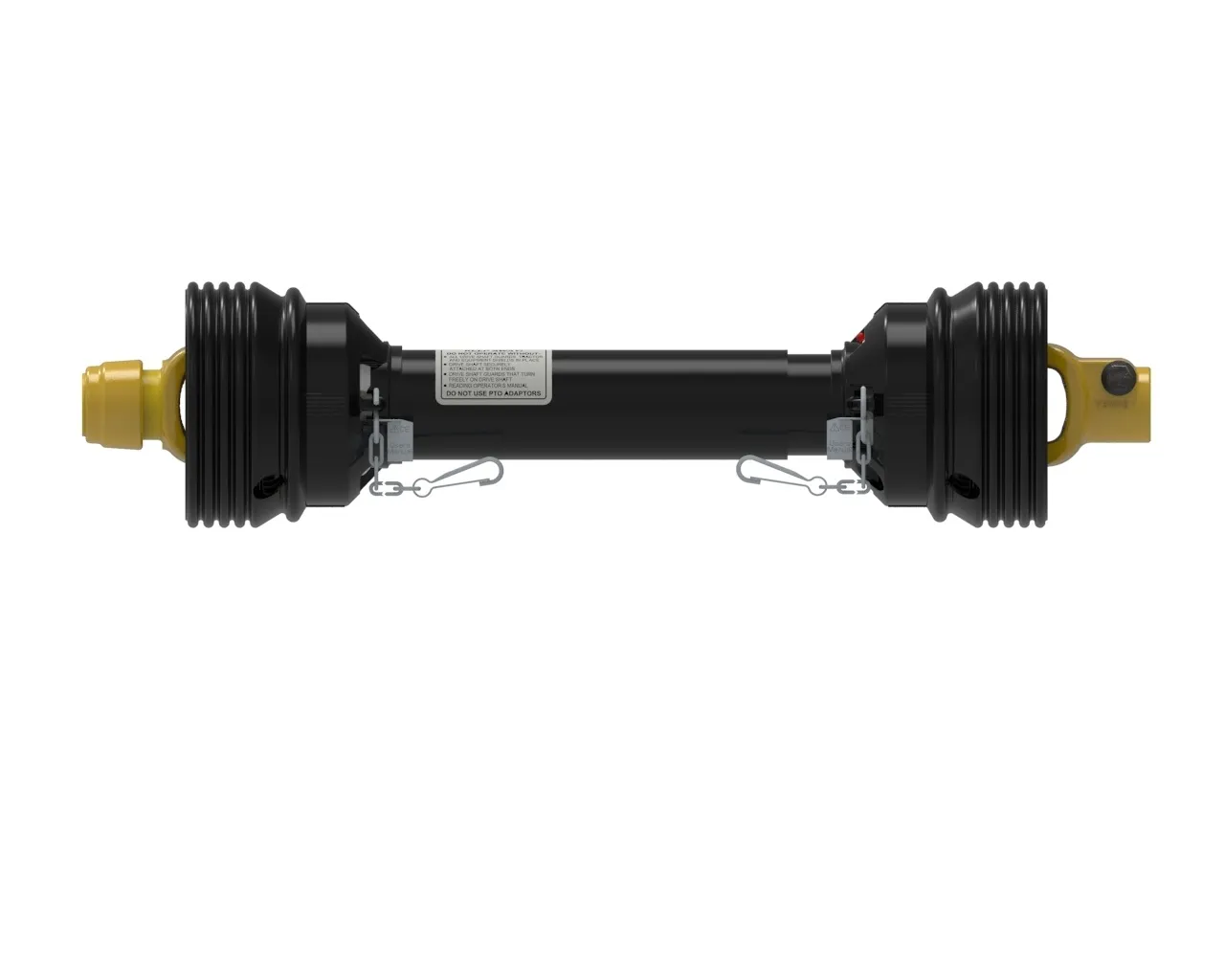
EVER-POWER Series 6 shafts are engineered replacements for:
- Zaccaria™ (ZX / RZ Series): Direct replacement for the main drive. We offer the specific keyed input yokes (35mm or 40mm) often found on their mobile units.
- Pinhalense™: Compatible with their combined pre-cleaner and huller units.
- Kepler Weber™ / Pagé™: Heavy-duty shafts for mobile grain augers and silo unloading systems.
- Indústrias Colombo™: PTO shafts for their bean and grain processing line.
*Disclaimer: OEM names are for reference only. EVER-POWER is an independent manufacturer.
Compliance with Brazilian Regulatory Standards (NR-12)
NR-12 is strictly enforced in agro-industry. Stationary machines are high-risk because workers often move around them while running.
The “Stationary” Safety Protocol
A spinning shaft in a processing shed is a “drawing-in” hazard.
EVER-POWER Rice Mill Shafts utilize:
- “Dead-Man” Guards: The yellow shield sits on high-quality bearings. It does not rotate. If a worker leans against it, it remains static.
- Full Cone Coverage: The guard cones extend over the entire Overrunning Clutch assembly. Exposed rotating clutch bodies are illegal under NR-12.
- Security Chains: Robust chains anchor the guard to the mill frame. In stationary applications, these must be checked daily.
Material Science: Humidity and Rust
Rice is grown in water. The processing environment is often humid (Southern Brazil winters).
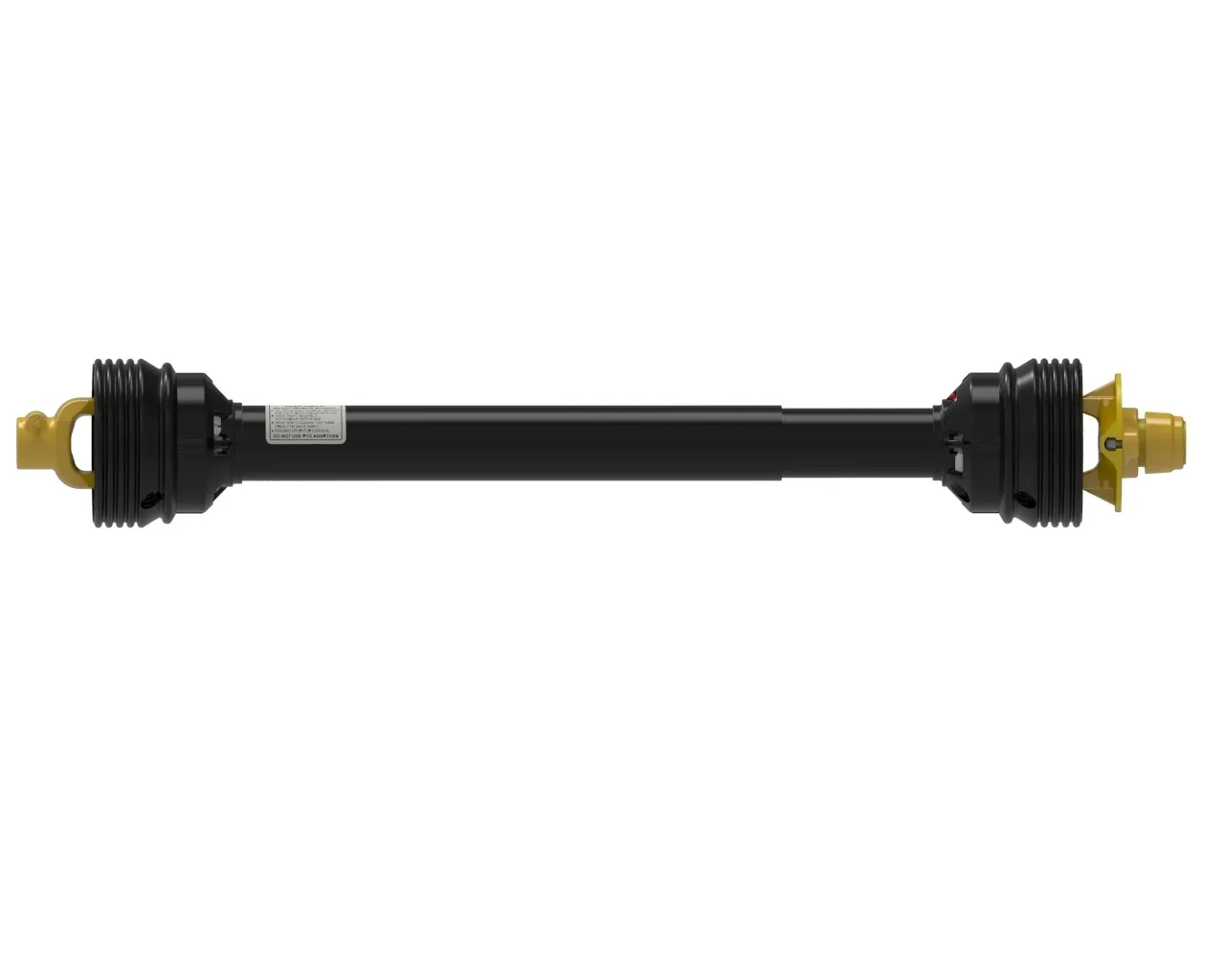
Zinc-Nickel Plating: Mobile mills are often stored outdoors. Standard painted shafts rust, and the tubes seize. We use Zinc-Nickel Plating on the telescoping tubes. This provides sacrificial corrosion protection, ensuring the shaft can still telescope freely after months of storage in damp conditions.
Hardened Yokes: To resist the constant vibration of stationary work, our yokes are induction hardened at the cross holes to prevent “wallowing out” over thousands of hours of operation.
Case Study: The Cooperative in Cachoeira do Sul
Client Profile: A small rice growers’ cooperative in Cachoeira do Sul (RS) sharing a mobile Zaccaria mill.
The Problem: The cooperative was replacing the mill’s input gearbox bearings twice a season. The diagnosis was vibration. They were using a cheap, unbalanced agricultural shaft. The vibration at 540 RPM was acting like a hammer on the gearbox seals.
The EVER-POWER Solution: We supplied a Series 6 Balanced Shaft with Overrunning Clutch.
The Result: The vibration disappeared immediately. The mill ran quieter. The Overrunning Clutch also eliminated the “lurch” on the tractor when shutting down. Gearbox bearing failures dropped to zero over the next two years. The cooperative estimated the ROI was achieved in just 3 months due to reduced maintenance costs.
Maintenance: The “Silica” Protocol
Dealing with abrasive dust requires discipline.
- Wipe Before Grease: You must wipe the grease zerk clean before attaching the gun. If not, you push silica dust into the bearing, destroying it.
- Grease the RL Clutch: The Overrunning Clutch has internal pawls. If the grease dries out, the pawls stick, and the clutch won’t engage (no drive). Grease it lightly every 20 hours.
- Guard Integrity: In a dusty mill, plastic can degrade. Check that the guard spins freely on its bearings. If it drags, it can melt from friction heat.
Foire aux questions (FAQ)
My tractor vibrates when driving the mill. Why?
Can I use a friction clutch instead of an overrunning clutch?
How do I verify the shaft length for a stationary setup?
Agri-Market Trends: Energy Efficiency
As electricity costs rise in Brazil, many farms are returning to PTO power for seasonal processing to utilize existing tractor assets. However, efficiency is key. An unbalanced or worn PTO shaft can waste up to 5% of engine power in vibration and heat. EVER-POWER’s precision shafts ensure that every drop of diesel goes into polishing rice, not shaking the machine.
 FR
FR  EN
EN  ES
ES  RU
RU  DE
DE  PT
PT  JA
JA  AR
AR  IT
IT  ZH
ZH