
Preserving the Harvest: PTO Shafts for Fruit & Vegetable Grading Lines
The Hidden Protector of Quality. Vibration-Free Drivelines for Mobile Packing Houses, Wash Tanks, and Sorters in the Vale do São Francisco and São Paulo Green Belt.
Field Notes: The “Field Packing” Revolution
In the fruit export corridors of Brazil—such as the mango orchards of Petrolina (PE), the melon fields of Mossoró (RN), and the tomato farms of Goianápolis (GO)—efficiency is everything. To reduce transport damage and logistical costs, many producers utilize Mobile Grading/Washing Units (Classificadores Móveis). These are trailer-mounted factories towed by tractors directly into the field.
These machines wash, dry, wax, and sort produce on-site. They rely on the tractor’s PTO to drive the conveyor belts, water pumps, air blowers, and rotating brushes.
The Problem: Fruit is incredibly sensitive to vibration. Bruising (machucado) is the number one cause of rejection for export quality.
Standard agricultural PTO shafts are designed for rough work like tillage. When used on a precision grading machine, they often induce a “stutter” or harmonic vibration into the conveyor belt. This micro-shaking causes fruit to rub against each other or bounce on the sorting table, leading to invisible subsurface bruising that rots during shipping.
Furthermore, these machines are wet environments. Chlorine water, waxing agents, and field dust create a corrosive slurry that seizes standard steel telescoping tubes, transferring axial thrust to the delicate sorting gearboxes.
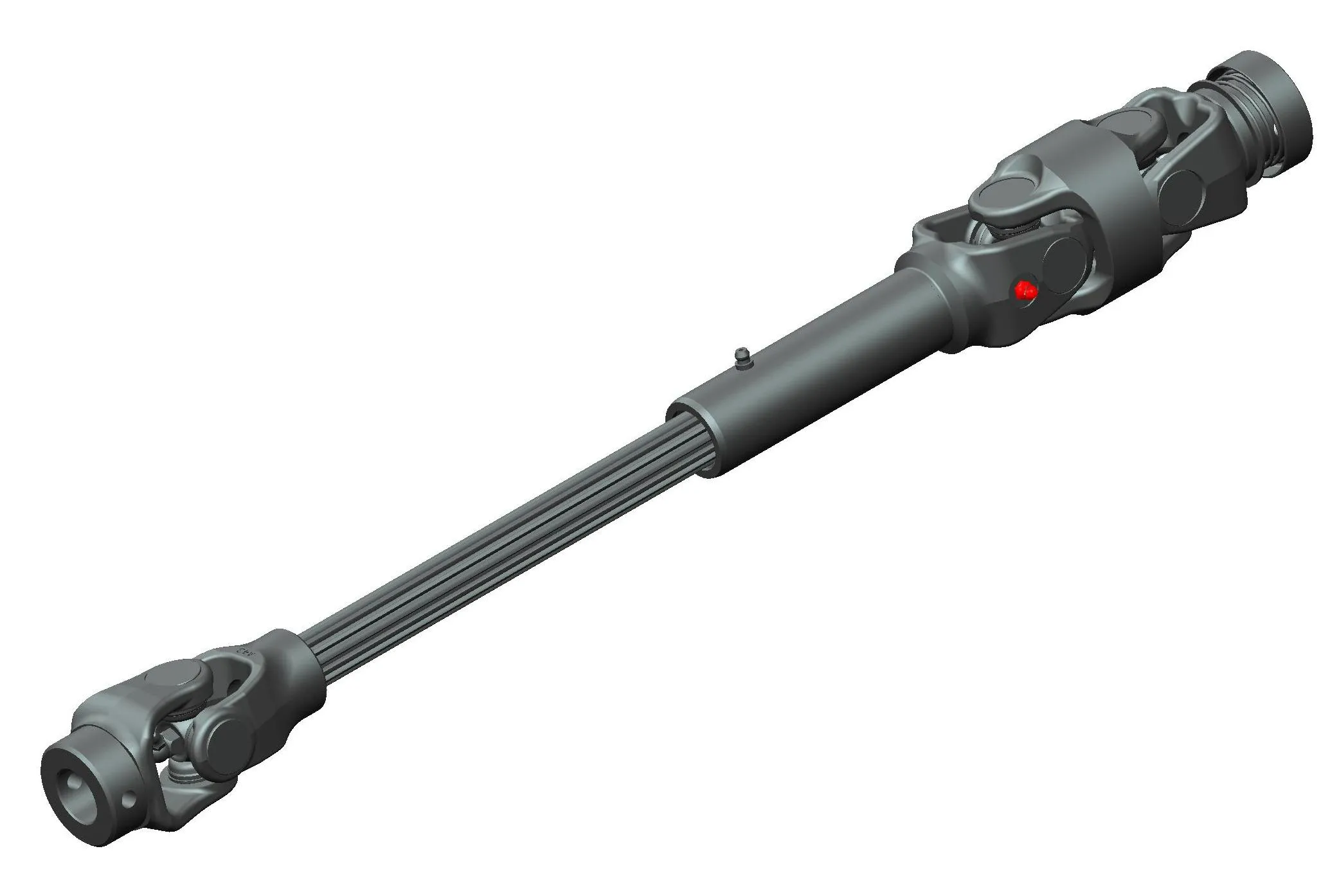
The EVER-POWER Solution: We engineered the Series 4 “Harvest-Flow” Precision Driveline. This shaft prioritizes Rotational Uniformity over brute force. We use Cold-Drawn Lemon Profile Tubing with tight tolerances to eliminate radial play (slop). Every shaft is electronically balanced to reduce vibration. Additionally, we employ Zinc-Nickel Plating on all surfaces. This “food-safe” finish replaces standard paint (which chips and contaminates produce) and prevents rust in the wet wash-down environment.
Technical Specifications & Engineering Parameters
Grading equipment typically requires Series 4 shafts (up to 35-40 HP load) but with Series 6 level precision and sealing. Below are the specs for our Post-Harvest Series.
| Parameter ID | Specification Category | Technical Value / Standard |
|---|---|---|
| 01 | Series Classification | Series 4 (Standard Sorter) / Series 6 (High Volume) |
| 02 | Nominal Torque (540 RPM) | 460 Nm (S4) / 830 Nm (S6) |
| 03 | Nominal Torque (1000 RPM) | 380 Nm (S4) / 640 Nm (S6) |
| 04 | Balancing Standard | G6.3 Dynamic Balance (Crucial for Smoothness) |
| 05 | Tractor Interface | 1-3/8″ Z6 (Standard) |
| 06 | Implement Interface | 1-3/8″ Z6 or 30mm/35mm Keyed (Gearbox Input) |
| 07 | Closed Length (Lz) | 810 mm – 1,210 mm (Standard Stationary Span) |
| 08 | Tube Profile | Lemon (Size 4) – Low Friction / Self-Centering |
| 09 | Tube Material | ST52 Cold Drawn Precision Steel (Plated) |
| 10 | Cross Kit Dimensions | 27mm x 74.6mm (S4) / 30.2mm x 92mm (S6) |
| 11 | Bearing Type | Stainless Steel Cap / Sealed Needle (Optional) |
| 12 | Safety Device | Shear Bolt (SB) – Conveyor Protection |
| 13 | Operating Angle | Max 15° (Stationary alignment is critical) |
| 14 | Surface Finish | Zinc-Nickel Plating (Hygiene/Corrosion) |
| 15 | Guard Material | Chemical Resistant HDPE (Yellow) |
| 16 | Guard Certification | NR-12 / ISO 5674 |
| 17 | Lubrificazione | Food Grade Grease (H1) Compatible |
| 18 | Axial Force | Low Friction Coating (prevents gearbox loading) |
| 19 | Telescoping Overlap | Min 200mm (Required for stability) |
| 20 | Clutch Reset | Manual (Bolt replacement) |
| 21 | Peso | 12 kg – 25 kg |
| 22 | Applicazione | Fruit Sorter / Vegetable Washer / Field Packer |
| 23 | Warranty | 2 Years (Corrosion & Structure) |
| 24 | Origin Compatibility | Mepel, Matão, Jacto, Local Fabrications |
The Physics of Handling: Torque vs. Smoothness
In grading machinery, the PTO shaft drives a complex system of belts, chains, and fluid pumps.
1. The “Conveyor Ripple” Effect
Conveyors carrying fruit must move at a perfectly constant speed.
The Issue: If a PTO shaft operates at a steep angle without a CV joint, or if the yokes are not “in phase” (aligned), it creates Non-Uniform Velocity. The output shaft speeds up and slows down twice per revolution.
The Consequence: This pulsing torque travels to the conveyor rollers. The belt “ripples.” Round fruit (oranges, melons) will bounce on the belt. This micro-bouncing bruises the skin.
The Solution: Precision Phasing and Alignment. Our shafts are assembled with strict phase alignment checks. We also provide clear instructions on tractor positioning to keep angles under 10 degrees, ensuring the belt glides smoothly like a fluid.

2. The Wash-Down Corrosion Cycle
Grading lines are washed daily with chlorinated water to prevent mold.
The Problem: Water enters the telescoping tubes. If the shaft is painted steel, it rusts internally overnight.
The Failure: The next morning, the tubes are “rust-welded” together. When the operator starts the tractor, the shaft cannot telescope to absorb vibration. This transmits massive axial thrust into the sorting machine’s input gearbox, blowing the seals and contaminating the fruit with oil.
The Solution: Plating, Not Painting. We use Zinc-Nickel plating on the sliding surfaces. It does not flake like paint and provides a self-lubricating surface that resists seizing even in high-chlorine environments.
3. The Start-Up Shock
Long conveyor lines loaded with tons of produce have high static friction.
The Risk: Engaging the PTO too fast can snap the drive chains inside the grader.
The Defense: The Shear Bolt Yoke (Pino Fusível). We equip these shafts with a Grade 5.8 (softer) shear bolt. It acts as a mechanical fuse. If the conveyor is jammed with a fallen crate or overloaded, the bolt shears instantly, saving the expensive internal chains and sprockets of the machine.

Operational Context: Field Packing in Brazil
The “Packing House in the Field” concept brings unique challenges.
Scenario A: Melon Harvest (Mossoró – RN)
Context: Hot, dry, dusty fields. Mobile sorting wagons.
Challenge: Dust Intrusion. Fine dust gets into the U-joint bearings.
Requirement: Sealed Bearings. We use cross kits with triple-lip seals to keep the fine abrasive dust out. Clean grease is essential. We also use High-Temp Grease because the ambient temperature often exceeds 40°C, and standard grease would liquefy and spin out.
Scenario B: Tomato/Vegetable Washing (Goianápolis – GO)
Context: Heavy water usage. Muddy field conditions.
Challenge: Hygiene and Rust. The machine is constantly wet. Paint chips from standard shafts can fall into the tomato crates, causing rejection by supermarkets.
Requirement: Plated Finish. Our Zinc-Nickel finish is bonded to the metal. There is no paint to chip off. It looks like stainless steel and can be washed with detergents without degrading, meeting the HACCP protocols of major buyers.

Interchangeability & OEM Replacement
We support the diverse fleet of grading equipment used in Brazil.
Fitment Guide:
EVER-POWER Series 4 shafts are engineered replacements for:
- Mepel™ (Mobile Packing Units): Direct replacement for the main drive shaft.
- Matão™ (Equipment): Compatible with their fruit washing and waxing lines.
- Máquinas Jacto™ (Cleaners): Replacement shafts for nozzle pumps and conveyor drives.
- Custom/Regional Fabricators: We offer keyed yokes (25mm, 30mm, 35mm) to fit the industrial gearboxes used by local machine shops in the Northeast.
*Disclaimer: OEM names are for reference only. EVER-POWER is an independent manufacturer.
Compliance with Brazilian Regulatory Standards (NR-12)
NR-12 is absolutely critical for grading machines. Unlike a tractor in a field, a grading machine has 10-20 workers standing right next to it, sorting fruit by hand. The PTO shaft often runs at waist height near workers.
The “Zero-Tolerance” Safety Zone
A spinning shaft near manual laborers is a lethal hazard.
EVER-POWER Grader Shafts utilize:
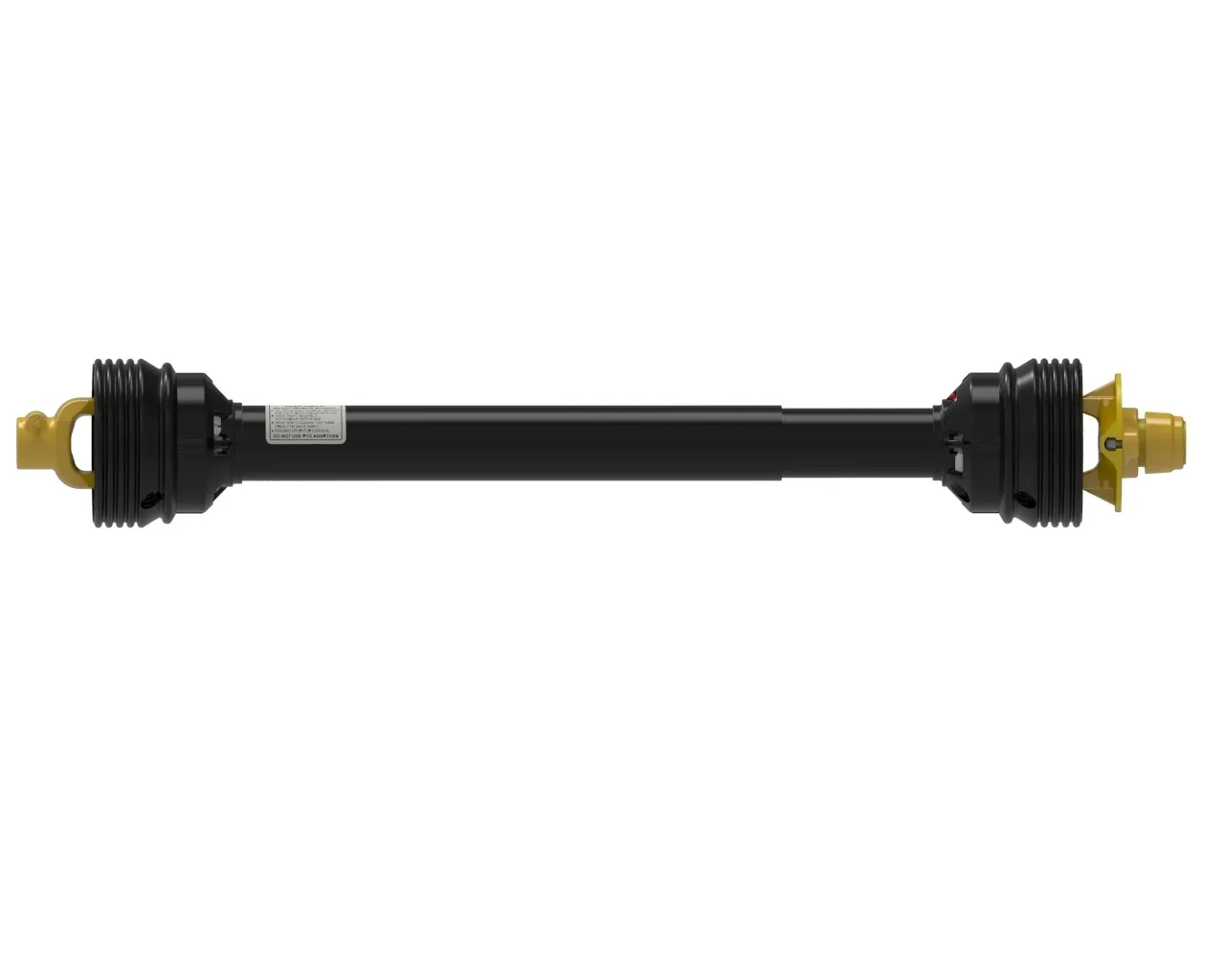
- Stationary Guard Technology: The yellow shield sits on low-friction bearings. It does not rotate. If a worker’s apron or hand brushes against it, the guard stays static.
- Full Cone Coverage: The guard cones extend over the entire U-joint and the shear bolt mechanism. No rotating metal is visible.
- Mandatory Chains: We provide short, robust chains to anchor the guard to the machine frame. For stationary work, these must be secured.
Material Science: Hygiene First
In food processing, the material must not contaminate the product.
No Paint Policy: Traditional yellow paint is a contaminant. Our premium shafts for this sector use Passivated Zinc-Nickel. It provides a clean, metallic finish that withstands pressure washing and does not flake.
Food-Grade Grease Compatible: While we ship with standard lithium grease, our seals are compatible with H1 Food Grade greases if the facility requires a switch for HACCP compliance.
Case Study: The Mango Exporter in Petrolina
Client Profile: A major mango exporter in the São Francisco Valley (PE/BA) using mobile packing sheds in the field.
The Problem: The packing line was experiencing “micro-stops” and jerky belt movement. This was causing the mangoes to roll and bump, leading to a 5% rejection rate due to bruising. The cause was traced to a worn, rusted PTO shaft that was seizing during operation, transmitting engine vibration to the belt.
The EVER-POWER Solution: We installed Series 4 Balanced Shafts with Zinc-Plated Tubes.
The Result: The belt movement became fluid and smooth. The vibration disappeared. The rejection rate due to mechanical bruising dropped to near zero. The zinc plating prevented rust despite the daily wash-down with chlorinated water. The exporter estimated the shaft paid for itself in saved fruit within 2 days of operation.
Maintenance: The “Clean Room” Protocol
Treat the PTO shaft like food processing equipment.
- Grease after Wash: Immediately after washing the machine, grease the U-joints. This pushes water out of the bearings.
- Tube Hygiene: Once a week, pull the shaft apart. Wipe the tubes clean of old, blackened grease (which may contain metal dust). Apply a thin layer of fresh grease. This keeps the action smooth and clean.
- Guard Check: In a stationary setup with workers nearby, inspect the plastic guard daily. Any crack or missing chain is an immediate Stop Work condition under NR-12.
Frequently Asked Questions (FAQ)
My grading belt moves in jerks. Is it the PTO?
Can I use a painted shaft for food processing?
How do I align the tractor for a stationary machine?
Agri-Market Trends: Electric Hybrids
The future of mobile packing houses is Hybrid Power. Tractors are increasingly driving PTO Generators, which then power electric motors on the belts. This decouples the mechanical vibration from the fruit completely. EVER-POWER is ready with high-precision Generator Shafts (Series 6 Balanced) to support this transition to electric-drive sorting lines.
 IT
IT  EN
EN  ES
ES  RU
RU  FR
FR  DE
DE  PT
PT  JA
JA  AR
AR  ZH
ZH