
The Art of the Clean Cut: PTO Shafts for Tea Harvesters
Precision Drivelines for the “Vale do Ribeira”. Ensuring High-RPM Stability for Tractor-Mounted Trimmers and Self-Propelled Tea Pickers.
Field Notes: Precision Harvesting in Registro (SP)
Brazil’s tea production, concentrated in the Ribeira Valley (Vale do Ribeira) around the city of Registro (São Paulo), is a niche but highly specialized sector. Unlike grain harvesting where brute force is key, tea harvesting (Colheita de Chá) is about Finesse and Speed.
The objective is to harvest the “flush” (the top two leaves and a bud) without damaging the bush structure. This is achieved using reciprocating cutter bars (barras de corte) that operate at very high frequencies. Whether using a tractor-mounted side trimmer or a specialized self-propelled harvester (often adapted from Japanese designs like Ochiai or Kawasaki), the power source is critical.
The Problem: A standard agricultural PTO shaft typically used for rototillers is not balanced for the high RPMs required by tea trimmers. In 2023, we consulted with a plantation owner whose tractor-mounted harvester was producing “jagged cuts” (corte serrilhado). The oxidized edges of the jagged leaves were lowering the tea quality grade. The cause? Harmonic Vibration in the PTO shaft. The shaft was “whipping” at 1000 RPM, transmitting vibration to the cutter bar, causing the blades to chatter rather than slice.
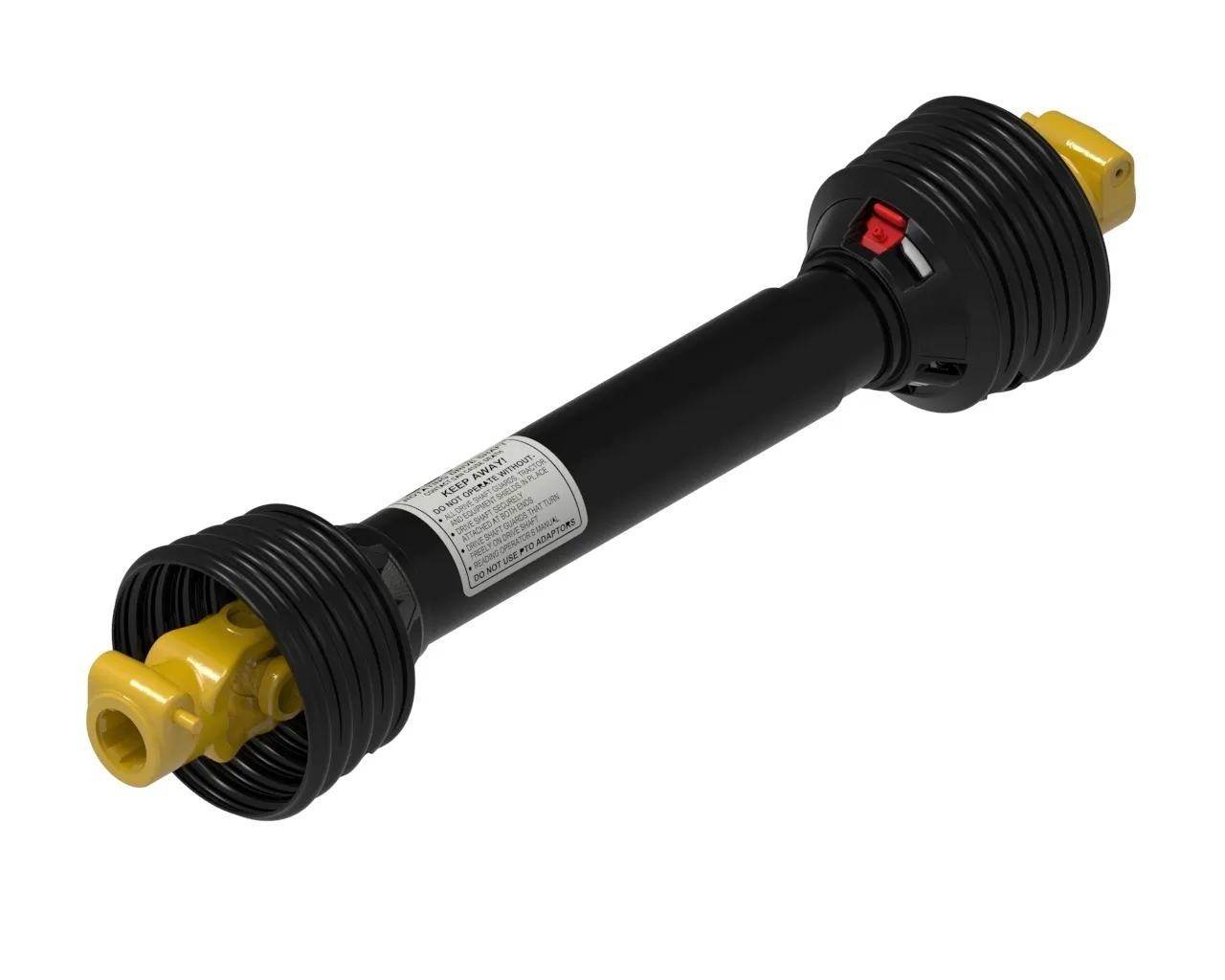
The EVER-POWER Solution: We introduced the Series 4 “Green-Leaf” Precision Shaft. This driveline prioritizes balance over raw torque. It features Cold-Drawn “Lemon” Profile Tubing with extremely tight tolerances to eliminate radial play. Every shaft is electronically balanced to Grade G6.3 standards. This eliminated the vibration, smoothed out the cutter bar action, and restored the premium quality of the harvested leaf.
Technical Specifications & Engineering Parameters
Tea harvesting equipment requires shafts that are lightweight, fast, and agile. They must handle high articulation angles as the trimmer follows the contour of the tea bushes. Below are the specs for our Tea Series.
| Parameter ID | Specification Category | Technical Value / Standard |
|---|---|---|
| 01 | Series Classification | Series 2 (Handheld/Light) / Series 4 (Tractor Mounted) |
| 02 | Nominal Torque (540 RPM) | 270 Nm (S2) / 460 Nm (S4) |
| 03 | Nominal Torque (1000 RPM) | 210 Nm (S2) / 380 Nm (S4) |
| 04 | Max Rotational Speed | 1,200 RPM (High Speed Balanced) |
| 05 | Tractor Interface | 1-3/8″ Z6 (Standard) or 1-3/8″ Z21 (High Speed) |
| 06 | Implement Interface | Keyed Bore (25mm/30mm) or Splined (Input Gearbox) |
| 07 | Closed Length (Lz) | 810 mm – 1,510 mm (Extended reach for side arms) |
| 08 | Tube Profile | Lemon (Size 2/4) – Low Friction / Low Lash |
| 09 | Tube Material | ST52 Cold Drawn Precision Steel |
| 10 | Cross Kit Dimensions | 23.8mm x 61.3mm (S2) / 27mm x 74.6mm (S4) |
| 11 | Bearing Type | High-Speed Sealed Needle Roller |
| 12 | Safety Device | Friction Clutch (FV) or Shear Bolt (SB) |
| 13 | Torque Setting | 400 Nm – 900 Nm (Light setting to protect blades) |
| 14 | Operating Angle | Max 30° (Continuous) / 50° (Short duration) |
| 15 | Wide Angle (CV) | Recommended for side-mounted trimmers |
| 16 | Guard Material | UV Stabilized HDPE (High Visibility Yellow) |
| 17 | Guard Certification | NR-12 / ISO 5674 |
| 18 | Lubrificazione | High-Speed Lithium Complex (Blue) |
| 19 | Trattamento della superficie | Zinc-Nickel Plating (Humidity Resistance) |
| 20 | Telescoping Overlap | Min 300mm (Critical for boom extension) |
| 21 | Clutch Reset | Automatic (Friction) |
| 22 | Peso | 10 kg – 18 kg (Lightweight design) |
| 23 | Applicazione | Tea Plucker / Side Trimmer / Skiffing Machine |
| 24 | Warranty | 2 Years (Balance & Structure) |
| 25 | Origin Compatibility | Ochiai, Kawasaki, Yanmar, Local Adaptations |
The Physics of the “Wobble Box”: Speed vs. Vibration
The cutting mechanism of a tea harvester is driven by a “Wobble Box” (Caixa de Oscilação) which converts the rotary motion of the PTO into the linear reciprocating motion of the blades.
1. The RPM Challenge
To get a clean cut on a tender tea stem, the blade velocity must be high. This means the input PTO speed is often set to 1000 RPM or geared up.
The Physics: Centrifugal force increases with the square of the speed ($F = mr\omega^2$). A tiny imbalance in a PTO shaft that is unnoticeable at 540 RPM becomes a violent hammer at 1000 RPM.
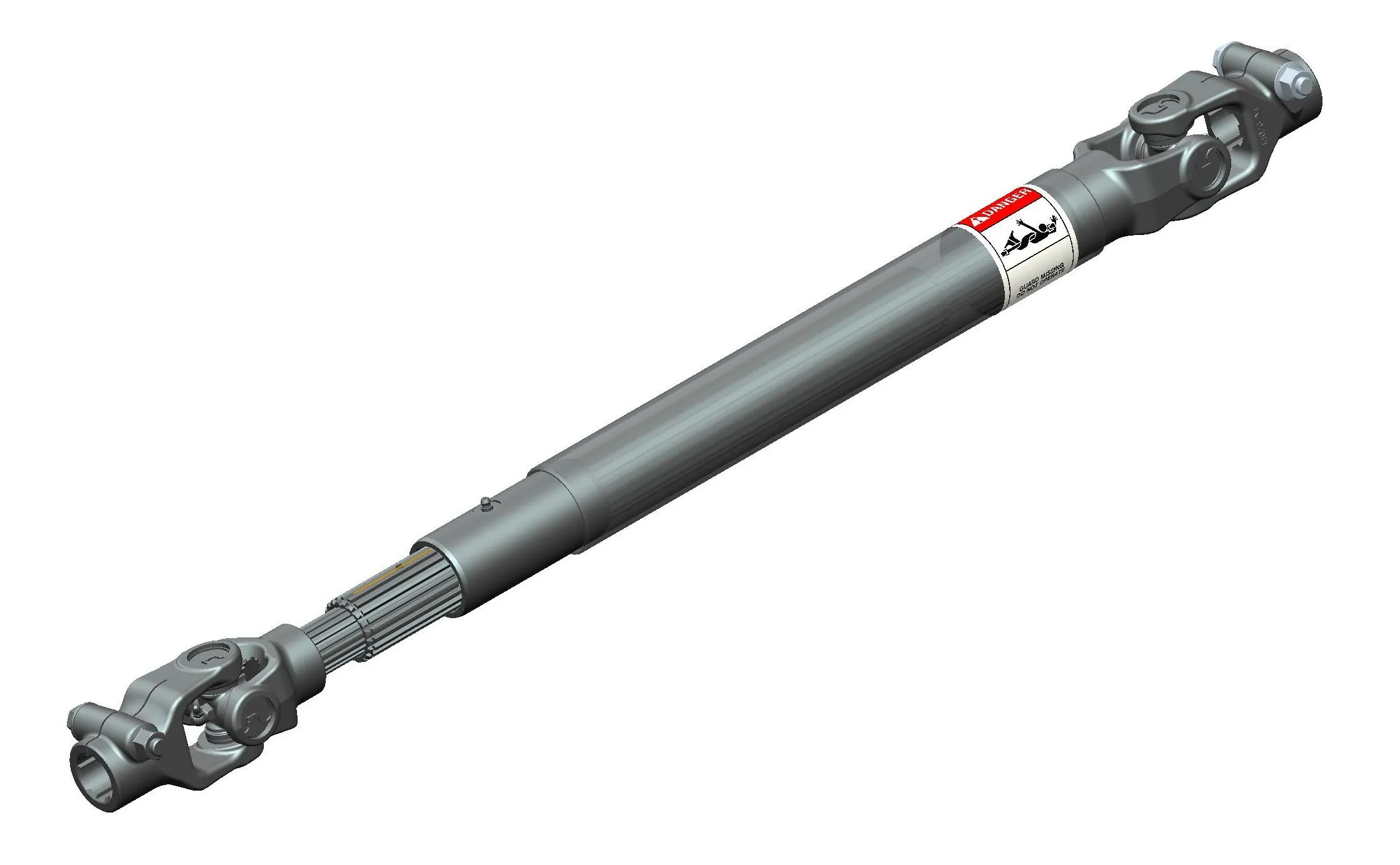
The Solution: Dynamic Balancing. We spin-balance every Series 4 Tea Shaft. We add welded weights to the tube (similar to a car tire) to ensure the center of mass is perfectly aligned with the axis of rotation. This protects the delicate bearings of the wobble box from high-frequency vibration failure.
2. The Articulating Boom (Braço Articulado)
Tractor-mounted harvesters use a side boom to reach over the tea rows. As the tractor drives along uneven ground or terraces, the boom moves up and down.
The Geometry: This movement constantly changes the length and angle of the PTO shaft.
The Risk: If the telescoping tubes have high friction (due to rust or poor quality), the shaft transmits axial thrust to the gearbox, pushing it sideways.
The Solution: Low-Friction Coated Tubes. We use tubes coated with Molybdenum Disulfide or Rilsan to ensure effortless telescoping even under torque. This “floating” action isolates the cutter head from the tractor’s movements, ensuring a level cut height.
Operational Context: The Hills of the Atlantic Forest
Tea in Brazil grows in the rolling hills of the Atlantic Forest biome. The terrain dictates the machinery.
Scenario A: The Side-Mounted Trimmer (Tratorizado)
Setup: A narrow tractor (“Cafeeiro” type) with a frame supporting a cutter bar on the side.
Challenge: Turning Geometry. When the tractor turns at the end of a row, the angle between the tractor PTO and the side-mounted gearbox becomes acute.
Requirement: Wide-Angle (CV) Joints. To allow continuous operation while maneuvering around the curved contours of tea plantations, a CV joint is often required. It prevents the “velocity fluctuation” that causes the cutter blades to speed up and slow down twice per revolution, which yields an uneven cut.
Scenario B: The Self-Propelled High-Clearance (Automotriz)
Setup: A specialized machine that straddles the row.
Challenge: Space and Safety. The operator sits directly above or next to the drive mechanism.
Requirement: Compact Safety Guards. Space is tight. Bulky guards catch on tea branches. We use streamlined, slim-profile guards that meet NR-12 safety standards without snagging on the valuable crop.

Interchangeability & OEM Replacement
The machinery in the Ribeira Valley is a mix of imported Japanese tech and robust Brazilian fabrication.
Fitment Guide:
EVER-POWER Series 4 shafts are engineered to fit:
- Ochiai™ / Kawasaki™ (Harvesters): We offer metric keyed yokes (25mm, 30mm) to fit the input shafts of Japanese-designed gearboxes commonly found on these machines.
- Yanmar™ / Kubota™ (Tractors): Standard 1-3/8″ Z6 splines for the PTO output of compact tractors used in tea and coffee.
- Local Fabrication (Oficinas de Registro): Universal fitment for custom-built side trimmers and skiffing machines.
*Disclaimer: OEM names are for reference only. EVER-POWER is an independent manufacturer.

Compliance with Brazilian Regulatory Standards (NR-12)
NR-12 is paramount. In tea harvesting, operators are often closer to the working implements than in broadacre farming.
The “Proximity” Hazard
Assistants often walk behind or beside the machine to check the collection bags.
EVER-POWER Tea Shafts utilize:
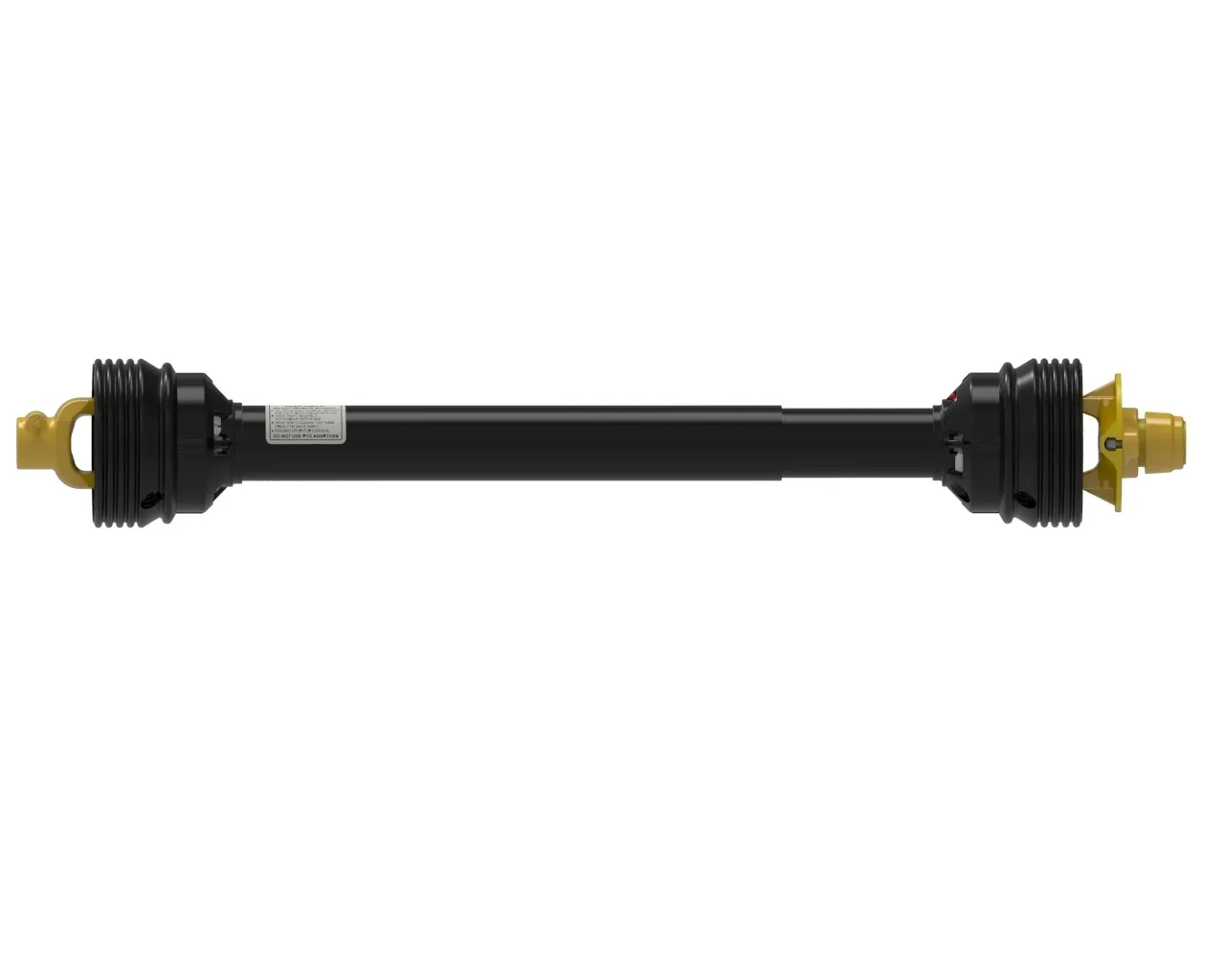
- Full Shielding: The yellow guard covers the entire shaft, including the yokes.
- “Dead-Man” Bearings: The guard rides on bearings. If an operator’s clothing brushes against it, the guard stops rotating instantly while the shaft spins inside.
- Secure Chains: We use high-quality chains to anchor the guard. In the vibration of a tea field, cheap chains fall off. Ours stay put.
Material Science: The Humidity Factor
Tea grows where it rains. The Ribeira Valley is humid and misty.
Zinc-Nickel Plating: A painted shaft will rust quickly in this environment, especially the telescoping tubes. Once rusted, they bind. We use Zinc-Nickel Plating on our Series 4 shafts. This provides superior corrosion resistance compared to paint or black oxide. It ensures the tubes slide freely year after year, preventing axial loads on the wobble box.
Sealed Bearings: The moist environment encourages condensation inside bearings. Our cross kits use Triple-Lip Seals to keep the grease in and the moisture out.
Case Study: The Estate in Pariquera-Açu
Client Profile: A specialty tea producer in Pariquera-Açu (SP) exporting to Europe.
The Problem: The estate uses a tractor-mounted trimmer for “Skiffing” (light pruning). They were experiencing frequent breakage of the knife drive connecting rod. Analysis showed that the PTO shaft (a cheap tiller shaft) was vibrating at the 800 RPM operating speed, causing fatigue stress on the connecting rod.
The EVER-POWER Solution: We supplied a Series 4 Balanced Shaft with a Friction Clutch.
The Result: The vibration disappeared. The connecting rod failures stopped. Additionally, the Friction Clutch saved the cutter bar twice in the first month when the operator accidentally hit thick old wood branches—the clutch slipped instead of the blades breaking. The farm manager reported a smoother cut surface on the bushes, promoting faster regrowth.
Maintenance: The “Precision” Protocol
High speed requires high maintenance discipline.
- Balance Check: If you damage the outer tube (dent it), the shaft becomes unbalanced. Replace the shield immediately. A wobbling shield causes vibration.
- Grease Frequency: At high RPM, centrifugal force pushes grease away from the center of the cross. Grease the U-joints every 8 hours.
- Phase Alignment: If you separate the shaft, ensure the yokes are aligned (In Phase) when reassembling. Out-of-phase assembly causes extreme velocity fluctuation that will destroy a tea cutter gearbox in minutes.
Frequently Asked Questions (FAQ)
My cutter bar makes a rattling noise. Is it the PTO?
Should I use a clutch or a shear bolt?
Can I use a standard yellow shaft from the hardware store?
Agri-Market Trends: Gourmet Tea Mechanization
The Brazilian tea market is shifting towards higher quality “Gourmet” teas. This requires even more precise mechanical harvesting to mimic hand-plucking. The next generation of harvesters utilizes Electric-Hybrid drives where the PTO powers a generator. EVER-POWER is ready with ultra-smooth, balanced generator drive shafts to support this electrification of the tea fields.
 IT
IT  EN
EN  ES
ES  RU
RU  FR
FR  DE
DE  PT
PT  JA
JA  AR
AR  ZH
ZH