
Taming the Combustion: PTO Shafts for Stationary Engines
Bridging the Gap Between Horsepower and Hydraulic Pressure. Reliable Drivelines for MWM, Perkins, and Cummins Engines in Brazilian Irrigation and Industry.
Field Notes: The Pulse of the “Motor Estacionário”
Brazil’s agricultural and industrial might is often powered not by the grid, but by diesel. In the remote soy fields of Matopiba or the mining sites of Pará, the Stationary Internal Combustion Engine (Motor Estacionário) is the prime mover. These engines, often legendary models from MWM, Perkins, or Mercedes-Benz, drive massive irrigation pumps, hydraulic power packs, and backup generators.
However, connecting a raw diesel engine to a delicate pump or gearbox is an engineering challenge.
The Problem: Torsional Vibration. A piston engine does not produce smooth torque; it produces power in violent pulses (firing strokes).
The Consequence: If a standard, rigid agricultural PTO shaft is connected directly to the engine flywheel without damping, these pulses act like a hammer. They shatter gearbox input shafts, shear keys, and destroy pump impellers. We frequently see “Gearbox Chatter” and premature failure in direct-drive irrigation setups.
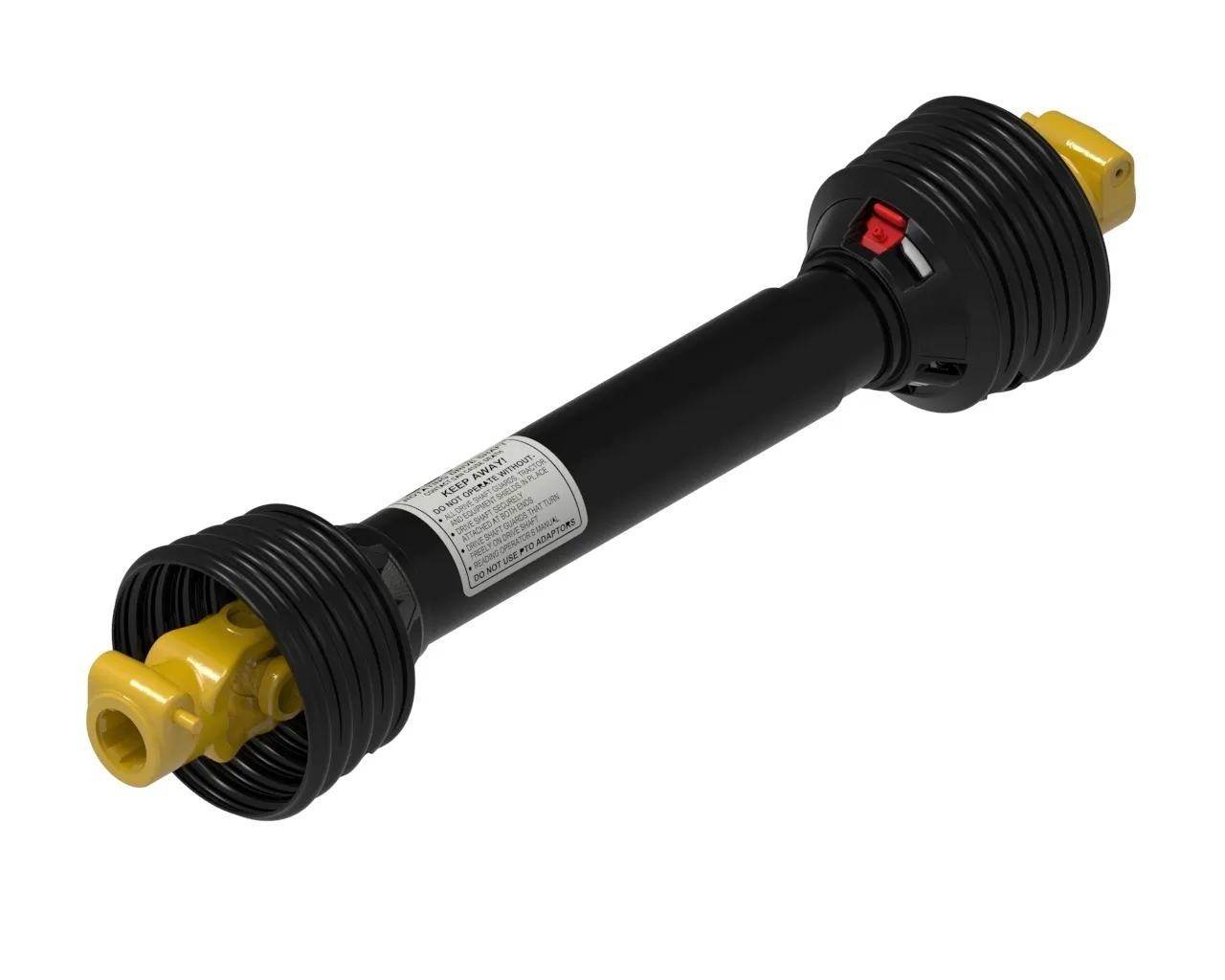
The EVER-POWER Solution: We engineered the Series 10 and 12 “Power-Pulse” Drivelines. These are not tractor shafts. They are designed to interface with SAE Flywheel Housings via Over-Center Clutches or Torsional Couplings. We incorporate Rubber Element Dampers or Viscous Couplers to absorb the engine’s firing spikes, smoothing the power flow before it reaches the driven equipment. This isolation is critical for system longevity.
Technical Specifications & Engineering Parameters
Stationary engine applications move away from “Category” ratings to “SAE” standards and continuous duty cycles. Below are the specs for our Industrial Engine Series.
| Parameter ID | Specification Category | Technical Value / Standard |
|---|---|---|
| 01 | Series Classification | Series 10 (150-250 HP) / Series 12 (250-400 HP+) |
| 02 | Nominal Torque (1800 RPM) | 1,600 Nm (S10) / 3,200 Nm (S12) |
| 03 | Max Shock Load Rating | 7,000 Nm (Start-up / Stall) |
| 04 | Engine Interface | SAE 1, 2, 3 Housing / SAE 6.5, 7.5, 8, 10, 11.5 Flywheel |
| 05 | Output Interface | Flange (DIN/Spicer) or Keyed Cylindrical Shaft |
| 06 | Closed Length (Lz) | 400 mm – 3,000 mm (Highly variable based on skid) |
| 07 | Tube Profile | Splined Solid Bar or Industrial Tubular |
| 08 | Tube Material | 42CrMo4 Heat Treated Alloy Steel |
| 09 | Cross Kit Dimensions | 42mm x 104mm (S10) / 52mm x 133mm (S12) |
| 10 | Bearing Type | Maintenance-Free (sealed) or Regreasable |
| 11 | Damping Element | Rubber/Polyurethane Spider or Centaflex Style |
| 12 | Alignment Tolerance | Max 3° (Permanent misalignment capability) |
| 13 | Duty Cycle | Continuous S1 (24/7 Operation) |
| 14 | Guard Material | Steel or Heavy Gauge Aluminum (Stationary) |
| 15 | Guard Certification | NR-12 / OSHA |
| 16 | Смазка | High-Temp Synthetic (Engine bay heat resistance) |
| 17 | Обработка поверхности | Phosphate or High-Temp Enamel Paint |
| 18 | Balancing | G6.3 @ 2200 RPM (Engine Redline) |
| 19 | Clutch Type | Over-Center (PTO Clutch) or Flange Yoke |
| 20 | Вес | 40 kg – 120 kg |
| 21 | Приложение | Irrigation Pump / Genset / Rock Crusher |
| 22 | Warranty | 1 Year (Industrial) / 5000 Hours |
| 23 | Origin Compatibility | MWM, Perkins, Cummins, Scania, Yanmar |
The Physics of Combustion: Isolation and Alignment
Connecting a stationary engine is fundamentally different from a tractor PTO. The engine is bolted down, but it is “alive.”
1. Torsional Vibration (Vibração Torcional)
Diesel engines generate power in bursts. A 4-cylinder engine fires twice per revolution.
The Physics: This creates a fluctuating torque curve. At certain RPMs (Critical Speeds), these pulses can resonate with the natural frequency of the driveline.
The Risk: Resonance can snap steel shafts like glass or hammer out gearbox bearings in hours.
The Solution: Torsional Couplings. We often integrate a flexible element (rubber block or disc) between the engine flywheel and the PTO shaft. This element acts as a spring/damper, absorbing the peaks of the firing pulses and delivering a smooth “average” torque to the driven machine.
2. Thermal Misalignment (Desalinhamento Térmico)
When you align a cold engine to a pump, it might be perfect.
The Physics: When the engine runs at full load, the block heats up and expands. The crankshaft centerline can rise by 0.5mm to 1.0mm.
The Conflict: This thermal growth creates misalignment in a rigidly coupled system.
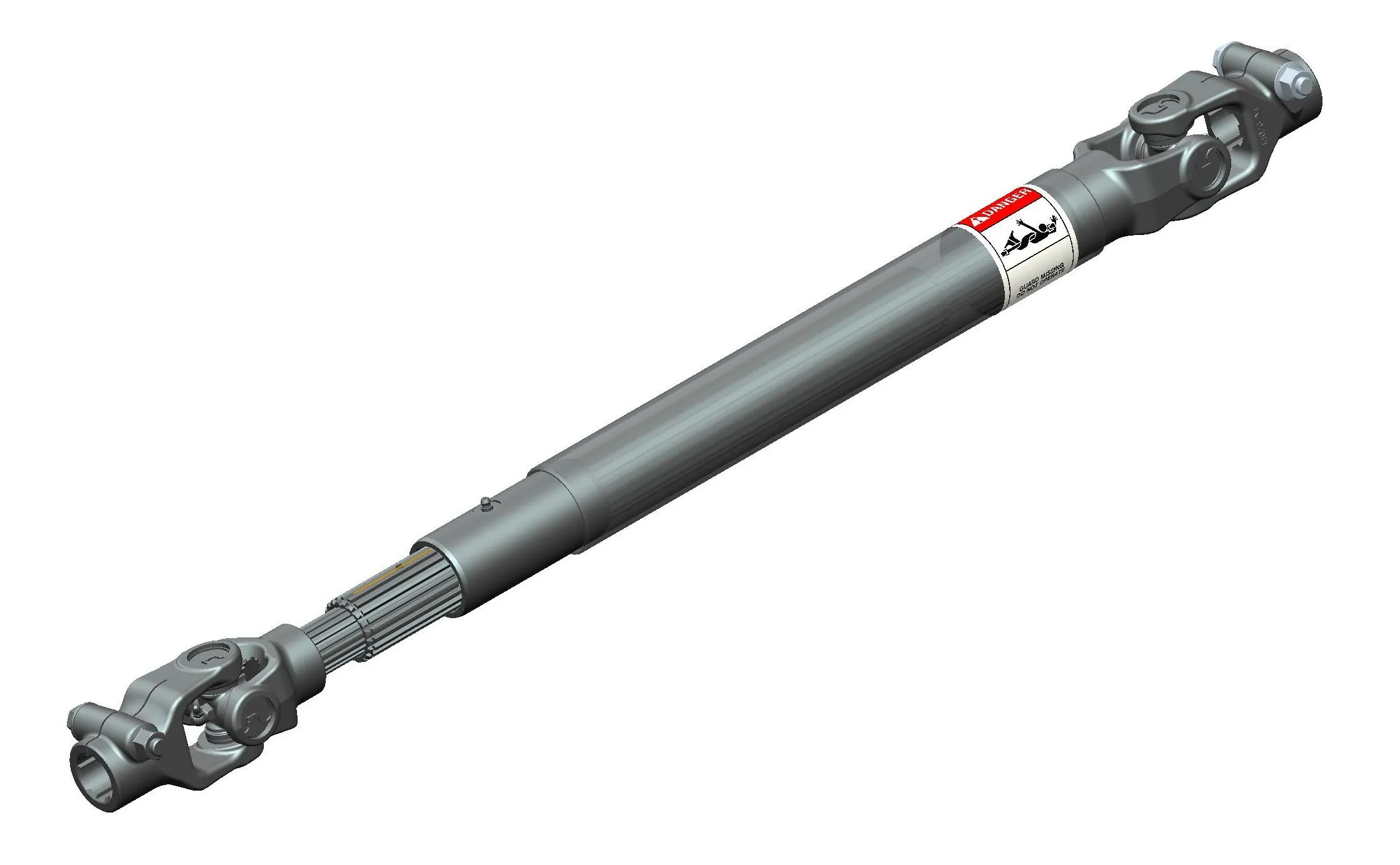
The Solution: Double Cardan or Sliding Splines. A PTO shaft with U-joints is the perfect solution for this. It accommodates the parallel offset caused by thermal expansion without stressing the bearings of either the engine or the pump. Our shafts allow for continuous operation with small offsets that would destroy rigid couplings.
3. The Side-Load Factor (Carga Radial)
Many engines are equipped with a “PTO Clutch” (Tomada de Força com Embreagem) that has an output shaft.
The Risk: If the driveline is heavy or unbalanced, it exerts a radial load (side pull) on the pilot bearing of the PTO clutch.
The Failure: Pilot bearing seizure is a common cause of downtime.
The Solution: Precision Balancing and Support. We balance our Series 10/12 shafts to minimize centrifugal forces. For long spans, we mandate the use of an intermediate Pillow Block Bearing to support the shaft weight, relieving the load on the engine’s PTO unit.

Operational Context: The Brazilian Power Grid
Where the electric grid ends, these engines begin.
Scenario A: Center Pivot Irrigation (Pivô Central)
Context: A diesel gen-set or direct-drive pump powering a large pivot in Western Bahia. Runs 24/7 during the dry season.
Challenge: Continuous Duty. The shaft never stops. Lubrication breakdown is the enemy.
Requirement: Long-Life U-Joints. We use cross kits with extended lubrication reservoirs or oil-bath options. The seals are Viton to withstand the high ambient heat of the engine bay enclosure (often >60°C).
Scenario B: Industrial Wood Chipper (Picador Florestal)
Context: A stationary chipper powered by a 400HP Scania engine.
Challenge: Shock Loads. The chipper drum hits hard logs, sending shockwaves back to the engine.
Requirement: Series 12 with Torque Limiter. We use a massive Series 12 shaft equipped with a multi-plate friction clutch. The clutch is set to slip just before the engine stalls, preventing crankshaft damage from sudden rotor stoppages.

Interchangeability & Systems Integration
We speak the language of SAE standards and Engine OEMs.
Fitment Guide:
EVER-POWER Industrial shafts are engineered to interface with:
- Engine Brands: MWM (Series 229, 10, 12), Perkins, Cummins (B/C Series), Scania, Volvo Penta.
- PTO Clutches: Twin Disc™, Rockford™, WPT Power™. We provide the specific pilot shafts and splines (e.g., 2.25″ Keyed, SAE C Spline).
- Flywheel Couplings: Compatible with Centa™, BoWex™, and Reich™ style flexible elements.
- Pump Flanges: DIN and Spicer flange patterns common on KSB and Imbil pumps.
*Disclaimer: OEM names are for reference only. EVER-POWER is an independent manufacturer.
Compliance with Brazilian Regulatory Standards (NR-12)
NR-12 applies strictly to stationary machinery (maquinário estacionário).
The “Engine Room” Safety
Stationary engines often operate in pump houses where technicians perform maintenance.
EVER-POWER Industrial Shafts utilize:
- Bolt-Down Guards: Unlike tractor guards which float, industrial guards are often bolted to the base frame or engine housing for permanence.
- Access Hatches: Guards feature inspection hatches to allow greasing without removal, ensuring the guard stays ON during operation.
- High-Visibility Colors: Painted Safety Yellow to identify rotating hazards in dim pump rooms.
Material Science: Heat and Fatigue
Stationary engines run hot and long.
High-Temp Grease: The proximity to the engine block and exhaust manifold means the PTO shaft absorbs radiant heat. We use Polyurea or Lithium Complex Grease rated for 180°C+ to prevent “bleed out.”
Fatigue-Resistant Steel: The continuous cyclic loading (millions of cycles per week) requires high-quality steel. We use Shot-Peened Yokes to induce compressive stress on the surface, significantly increasing the fatigue life of the components against the diesel pulses.
Case Study: The Irrigation Project in Barreiras
Client Profile: A large cotton farm in Barreiras (BA) using 12 diesel-powered pivot pumps.
The Problem: They were using direct-coupling (rigid) shafts between the MWM engines and the pumps. The vibration was causing the pump mechanical seals to leak every 500 hours, and gearbox input bearings were failing seasonally. Alignment was difficult to maintain on the skid frames.
The EVER-POWER Solution: We retrofitted the pumps with Series 10 Driveshafts with U-Joints and Torsional Dampers on the flywheel.
The Result: The U-joints accommodated the thermal misalignment. The dampers absorbed the engine firing pulses. Pump seal life extended to over 2,000 hours. The vibration level on the pump skid dropped by 60%. The farm reduced maintenance costs by R$ 80,000 in the first harvest season.
Maintenance: The Continuous Duty Protocol
Engines have oil changes; shafts need care too.
- Grease with Oil Change: Align shaft maintenance with the engine service interval (e.g., every 250 hours). Use high-quality synthetic grease.
- Inspect Rubber Elements: If using a flexible coupling, check the rubber for cracks or disintegration caused by heat and ozone. Replace every 2 years or as needed.
- Check Flange Bolts: Engine vibration loosens bolts. Torque check the flange bolts at every service interval. A loose shaft at 2000 RPM is a bomb.

Frequently Asked Questions (FAQ)
Can I use a tractor PTO shaft on a stationary engine?
How do I adapt an SAE flywheel to a shaft?
Why are U-joints better than rigid couplings?
Agri-Market Trends: Hybrid Power
While electrification is growing, diesel remains king in remote Brazil. The trend is towards Smart Pumping Units that auto-throttle the engine based on pressure. This variable speed operation requires drivelines that are balanced across a wide RPM range, not just at full speed. EVER-POWER is leading with Wide-Band Balanced Shafts to support these efficient variable-speed diesel applications.
 RU
RU  EN
EN  ES
ES  FR
FR  DE
DE  PT
PT  JA
JA  AR
AR  IT
IT  ZH
ZH