
The Architects of Water Retention: PTO Shafts for Paddy Ridge Formers
Precision Engineering for Singapore’s Wetland Ecosystems. Powering the “Bund Makers” Essential for Water Management in Niche Rice Farming and Nature Reserves.
Field Notes: The Geometry of the “Batas” (Bund)
While Singapore is not a major rice exporter, the management of wetlands in areas like Kranji and Sungei Buloh, as well as educational rice plots, requires specialized infrastructure. The key component of any paddy system is the Ridge or Bund (Geng/Batas)—the earthen wall that holds the water in.
Traditionally built by hand (Changkol), modern maintenance relies on the PTO-Driven Ridge Former (Bund Maker). This machine uses active rotary blades to pull mud from the sides and compress it into a trapezoidal wall.
The Engineering Challenge: This application combines three hostile factors:
1. Offset Operation: Ridge formers usually operate offset to the tractor (so the tractor tires don’t crush the new wall). This creates a permanent working angle for the PTO shaft, often exceeding 15 degrees.
2. The “Wet Concrete” Load: Compressing wet clay mud requires high torque. It is a viscous, heavy load that is continuous, unlike the cutting action of a mower.
3. Amphibious Environment: The tractor works in 10-20cm of water. The PTO shaft is constantly splashed with muddy, gritty water. Standard seals fail rapidly, leading to cross bearing corrosion.
In 2023, maintenance reports from local eco-farms highlighted that “Universal Joint Wear” caused by operating at steep angles without CV joints was the primary cause of downtime for ridge forming equipment.

The EVER-POWER Solution: We introduced the Series 6 “Aqua-Ridge” Driveline. To handle the offset geometry, we strongly recommend Constant Velocity (CV) Joints at the tractor end. To combat the mud, we utilize Cassette Seals (Mud Blockers) on the bearings. The entire shaft assembly undergoes Zinc-Nickel Plating to resist the corrosive effects of standing water and organic acids found in wetland soils.
Technical Specifications & Engineering Parameters
Ridge formers are generally mounted on medium-sized utility tractors (35-60 HP). The shaft must handle the unique geometry of offset implement mounting. Below are the specs for our Wetland Series.
| Parameter ID | Specification Category | Technical Value / Standard |
|---|---|---|
| 01 | Series Classification | Series 4 (Light) / Series 6 (Standard) |
| 02 | Nominal Torque (540 RPM) | 460 Nm (S4) / 830 Nm (S6) |
| 03 | Nominal Torque (1000 RPM) | 380 Nm (S4) / 640 Nm (S6) |
| 04 | Max Shock Load Rating | 2,200 Nm (Debris/Root Impact) |
| 05 | Tractor Interface | 1-3/8″ Z6 (Standard) |
| 06 | Implement Interface | 1-3/8″ Z6, Keyed, or Flange Input |
| 07 | Closed Length (Lz) | 810 mm – 1,210 mm (Longer for offset reach) |
| 08 | Tube Profile | Coated Lemon or Star Profile |
| 09 | Tube Material | ST52 Cold Drawn Precision Steel (Plated) |
| 10 | Cross Kit Dimensions | 27mm x 74.6mm (S4) / 30.2mm x 92mm (S6) |
| 11 | Bearing Type | Triple-Lip Cassette Seal (Waterproof) |
| 12 | Safety Device | Friction Clutch (FV) or Shear Bolt (SB) |
| 13 | Operating Angle | Max 25° (Standard) / 80° (Wide Angle CV) |
| 14 | Wide Angle (CV) | Highly Recommended for Offset work |
| 15 | Guard Material | UV Stabilized HDPE (Yellow) |
| 16 | Guard Certification | MOM / ISO 5674 Compliant |
| 17 | Смазка | Calcium Sulfonate (Marine Grease) |
| 18 | Обработка поверхности | Zinc-Nickel Plating (Corrosion Barrier) |
| 19 | Telescoping Overlap | Min 300mm (To accommodate sway) |
| 20 | Locking Mechanism | Collar Lock (Ball) |
| 21 | Вес | 18 kg – 32 kg |
| 22 | Приложение | Paddy Ridge Former / Offset Ditcher / Flail Mower |
| 23 | Warranty | 1 Year (Structure & Corrosion) |
| 24 | Origin Compatibility | Kubota, Yanmar, Niplo, Kobashi, Howard |
The Physics of the “Bund”: Offset and Compression
Building a watertight wall from mud while moving requires precise mechanical coordination.
1. The Offset Geometry Problem (Geometria Deslocada)
To build a ridge, the machine must be positioned beside the tractor’s wheel track, not behind it.
The Physics: This offset creates a compound angle in the driveline. Even when driving straight, the PTO shaft is operating at an angle (often 15-20 degrees sideways).
The Consequence: A standard Cardan joint operating at a constant angle generates continuous vibration (“Second Order Harmonic”). This vibration shakes the implement, loosening bolts and damaging the tractor’s PTO seal.
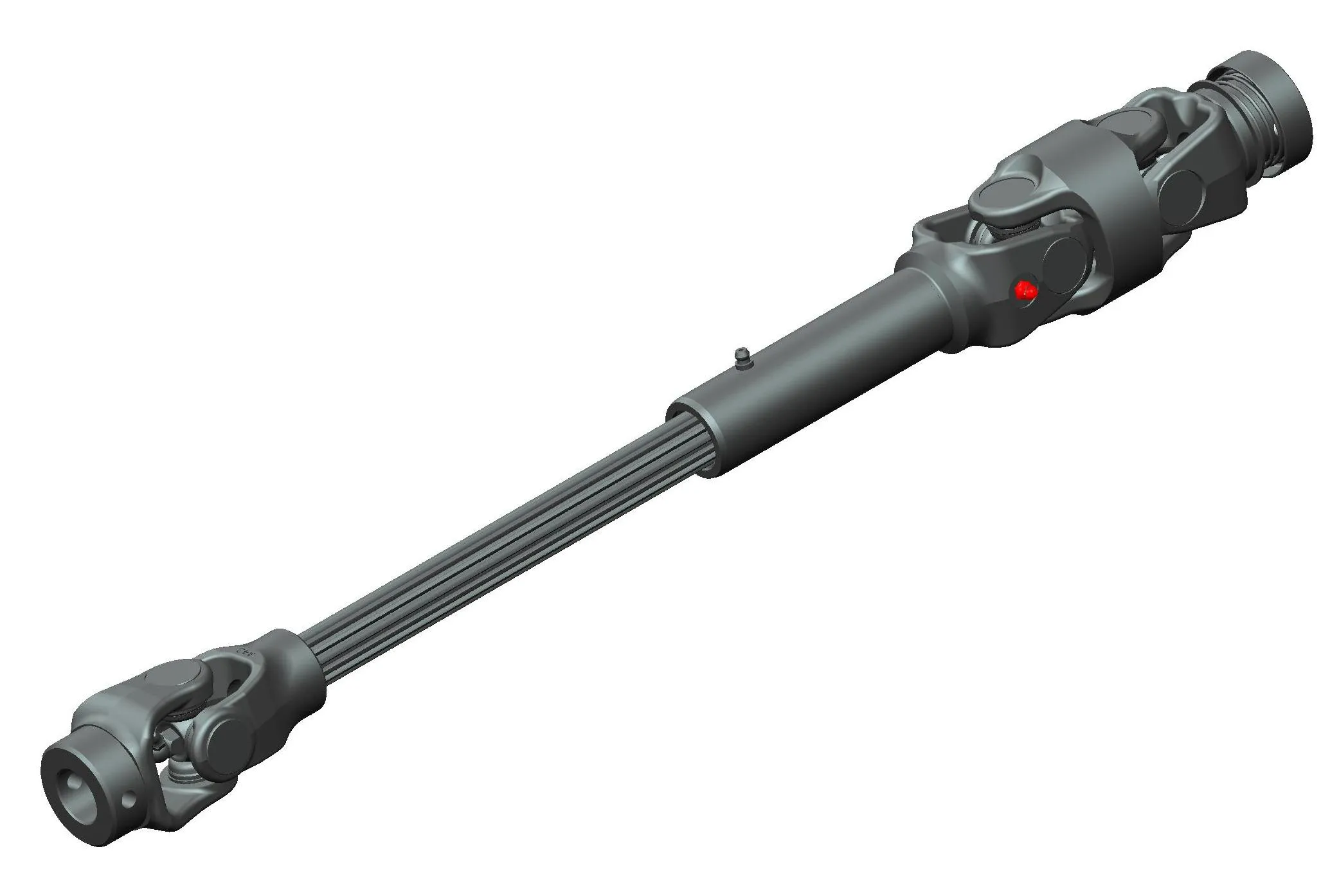
The Solution: Wide-Angle CV Joints. By installing a Constant Velocity joint at the tractor end, we cancel out the velocity fluctuation. The shaft can run smoothly at offset angles up to 80 degrees, allowing for tighter turns at the paddy corners without “chatter.”
2. Compressing “Plastic” Soil
The ridge former doesn’t just cut; it packs. It forces wet clay into a mold.
The Load: This is a high-drag operation. The torque required is consistent and heavy.
The Risk: If the machine hits a dry patch or a buried rock in the old bund, the torque spikes.
The Defense: The Friction Clutch. We prefer friction clutches over shear bolts for this application. Shear bolts are hard to replace when standing in knee-deep mud. A clutch simply slips, heats up, and re-engages, allowing the operator to lift the machine slightly and continue.

3. Water Ingress and Seal Life
The machine works in a splash zone.
The Failure: Hot bearings are submerged in cool water. The air inside contracts, sucking dirty paddy water past standard rubber seals.
The Solution: Cassette Seals & Marine Grease. We use multi-stage cassette seals that provide a physical labyrinth against water. We fill the bearings with Calcium Sulfonate grease (Green/Tan), which creates a hydrophobic barrier and does not emulsify (turn milky) like lithium grease when wet.
Operational Context: Singapore’s Water Management
The equipment is used wherever water retention and soil separation are needed.
Scenario A: Educational Rice Paddies (Kranji/Schools)
Context: Small-scale rice plots for education and heritage preservation. Bunds must be neat and watertight.
Machine: Compact Tractor (30HP) with Single-Side Ridge Former.
Challenge: Tight Turns. Small plots mean frequent cornering.
Requirement: Series 4 CV Shaft. A lightweight CV shaft allows the operator to turn sharply at the corners of the small plots without disengaging the PTO, speeding up the process significantly.
Scenario B: Wetland Restoration (Sungei Buloh)
Context: Creating embankments to manage water levels for migratory birds.
Machine: 60HP Tractor with Heavy Duty Bund Maker.
Challenge: Rough Terrain. The ground is uneven and boggy. The tractor pitches and rolls.
Requirement: Long-Travel Telescoping. As the tractor dips into a hollow, the shaft must extend. We specify shafts with at least 400mm of telescope travel to prevent separation or bottoming out in boggy conditions.

Scenario C: Urban Vegetable Farming (Raised Beds)
Context: Creating raised beds for tapioca or sweet potato to improve drainage during monsoon season.
Machine: Bed Former (similar mechanism).
Challenge: Compaction. Soil is often heavy clay.
Requirement: Series 6 Torque. We use Series 6 shafts to handle the higher horsepower required to pulverize and lift heavy clay into high ridges.
Interchangeability & OEM Systems Integration
We interface with the specialized Japanese and Italian machinery used in this sector.
Fitment Guide:
EVER-POWER shafts are engineered replacements for:
- Niplo™ / Kobashi™ (Japanese): The leaders in ridge forming tech. We stock the specific 1-3/8″ Z6 splines used on their input gearboxes.
- Kubota™ (L / M Series): The standard tractor platform. Our shafts fit flawlessly.
- Yanmar™: Compatible with the PTO outputs of Yanmar utility tractors.
- Local Fabrication: We supply keyed yokes and friction clutches for locally built or modified ridge formers.
*Disclaimer: OEM names are for reference only. EVER-POWER is an independent manufacturer.
Compliance with Singapore Standards (MOM / WSH)
The Ministry of Manpower (MOM) regulations are strict. Wet conditions increase slip hazards, making guarding even more critical.
The “Slip & Fall” Protection
In muddy paddies, operators can easily slip. An unguarded shaft is a fatal hazard.
EVER-POWER Wetland Shafts utilize:
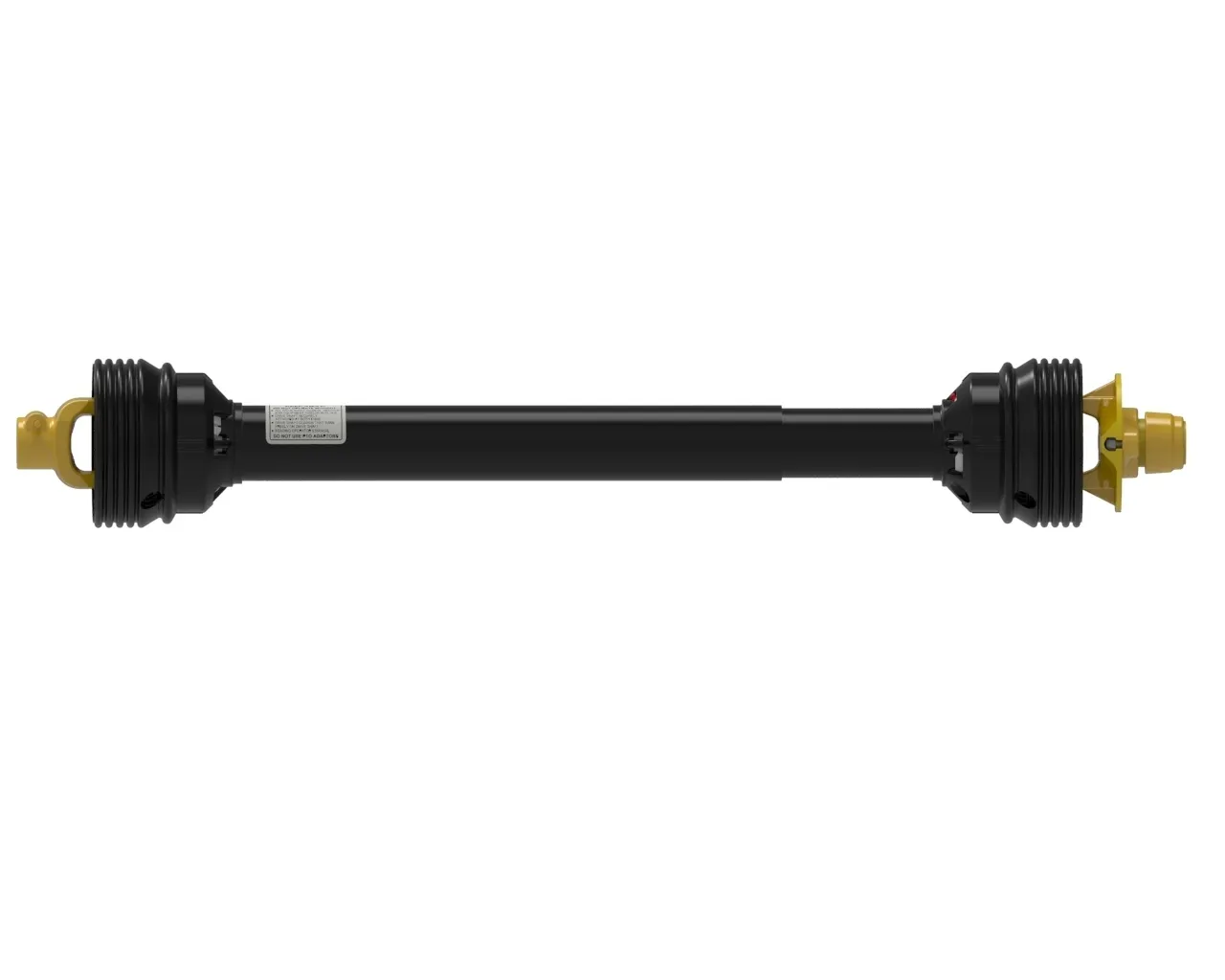
- Full Enclosure Guarding: The yellow plastic tubes cover the entire steel shaft.
- Non-Rotating System: The guard rides on bearings. If a worker falls against it, the guard stops spinning immediately.
- Secure Chains: We use stainless steel chains to anchor the guard. Standard chains rust and break in the wet environment.
- Conical Shields: Extended cones cover the universal joints completely.
Material Science: Resisting the Swamp
Standard steel rots in wetlands. We use superior protection.
Zinc-Nickel Plating: This plating provides 5x the corrosion protection of standard yellow zinc. It protects the telescoping tubes from fusing together with rust, which is the #1 cause of failure in paddy machinery.
Rilsan Coating (Optional): For premium lines, we coat the inner tube with Nylon (Rilsan). This reduces friction and provides an absolute barrier against rust, ensuring the shaft telescopes smoothly for years.
Case Study: The Heritage Rice Project
Client Profile: A community project preserving heritage rice varieties in a semi-urban setting in Singapore.
The Problem: They were using an old ridge former with a rusted, rigid PTO shaft. The vibration from the offset operation was so bad it cracked the tractor’s PTO housing casing. The shaft was also seized, so it hammered the gearbox when the tractor pitched over existing bunds.
The EVER-POWER Solution: We supplied a Series 6 “Aqua-Ridge” CV Shaft with Zinc-Nickel Plating.
The Result: The Constant Velocity (CV) joint eliminated the vibration caused by the offset mounting. The machine ran smoothly and quietly. The plated tubes, lubricated with marine grease, telescoped effortlessly, absorbing the terrain changes. The project managers reported a significant reduction in operator fatigue and zero maintenance issues over the wet season.
Maintenance: The “Wet” Protocol
Water is the enemy. Routine is the defense.
- Post-Wash Greasing: After washing the mud off the tractor, grease the U-joints immediately. This pushes out any water that entered during cleaning.
- Chain Check: Ensure the stainless steel safety chains are secure. A loose guard in a wet environment will spin with the shaft, creating a hazard.
- Tube Lube: Once a month, pull the shaft apart. Wipe the tubes clean of grit and old grease, and apply fresh marine grease. This prevents the “paddy seizure.”
Frequently Asked Questions (FAQ)
Why does my ridge former vibrate so much?
What grease should I use for paddy fields?
Can I use a shear bolt for a ridge former?
Agri-Market Trends: Sustainable Drainage
Singapore is focusing on sustainable water management (ABC Waters). This involves creating naturalized earth banks rather than concrete canals. The demand for precise, reliable bund making machinery is increasing. EVER-POWER is supporting this with Eco-Friendly Lubricated Shafts to minimize environmental impact in water catchment areas.
 RU
 EN
 ES
 FR
 DE
 PT
 JA
 AR
 IT
 ZH