
The Foundation of Fungiculture: PTO Shafts for Mushroom Substrate Production
Driving the Mixers and Compost Turners of Alto Tietê and Castro. Heavy-Duty Power for the Preparation of Substrate for Agaricus, Shiitake, and Oyster Mushrooms.
Field Notes: The “Heavy Mud” of Mogi das Cruzes
Brazil’s mushroom industry (Fungicultura) is concentrated in the high-altitude, humid regions of Mogi das Cruzes (SP) and Castro (PR). While the final growth stages happen in climate-controlled rooms, the critical first step—Substrate Preparation—is a heavy industrial process often powered by tractor PTOs.
The substrate for mushrooms (a mix of bagasse, straw, sawdust, bran, limestone, and water) is extremely dense and viscous. Mixing this material in large PTO-driven horizontal mixers (Misturadores de Substrato) or turning compost windrows requires massive torque at low speeds. It is essentially like mixing wet cement.
The Challenge: Standard agricultural PTO shafts designed for cutting grass cannot handle the “Dead Start” load of a 10-ton mixer filled with wet substrate. We frequently see twisted tubes and sheared yokes. Furthermore, the environment is 100% humidity, often with steam injection for pasteurization, leading to rapid corrosion of standard steel shafts.
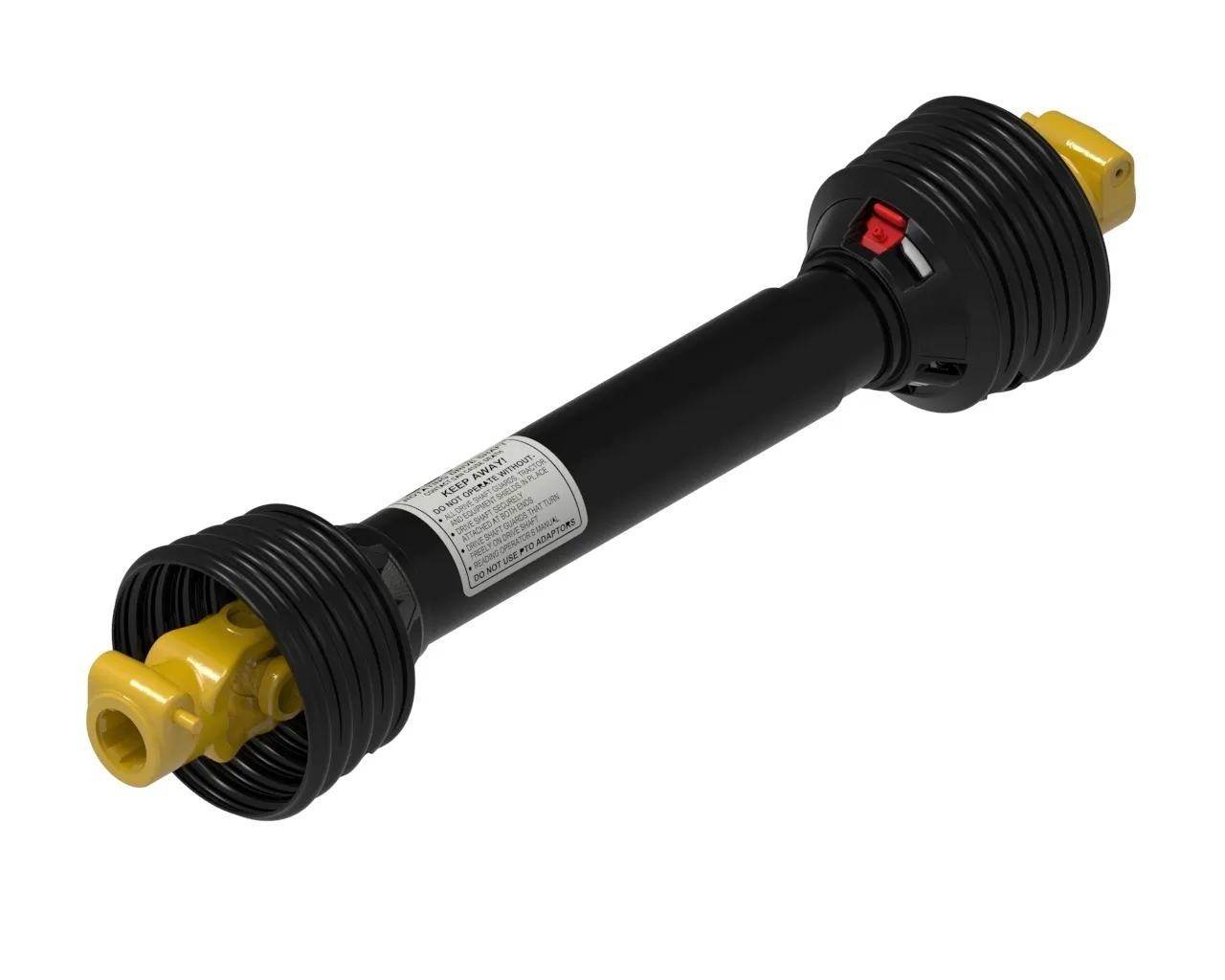
The EVER-POWER Solution: We developed the Series 8 “Myco-Drive” Shaft. This unit features Zinc-Nickel Plating on all components to resist the corrosive, humid atmosphere of the composting yard. We utilize Oversized Friction Clutches (FV55) set to high torque limits (2,500 Nm) to manage the startup inertia of the mixers without burning out, while still protecting the gearbox if a solid object (like a stone or piece of wood) jams the auger.
Technical Specifications & Engineering Parameters
Mushroom equipment operates in a stationary or slow-moving environment but under constant high load. Below are the specs for our Substrate Series.
| Parameter ID | Specification Category | Technical Value / Standard |
|---|---|---|
| 01 | Series Classification | Series 6 (Bagging Machines) / Series 8 (Mixers/Turners) |
| 02 | Nominal Torque (540 RPM) | 830 Nm (S6) / 1,240 Nm (S8) |
| 03 | Nominal Torque (1000 RPM) | 640 Nm (S6) / 980 Nm (S8) |
| 04 | Max Shock Load Rating | 4,500 Nm (Auger Blockage) |
| 05 | Tractor Interface | 1-3/8″ Z6 (Standard) or 1-3/8″ Z21 |
| 06 | Implement Interface | 1-3/8″ Z6, 1-3/4″ Z6, or 40mm Keyed (Gearbox) |
| 07 | Closed Length (Lz) | 810 mm – 1,210 mm (Standard Stationary Length) |
| 08 | Tube Profile | Star Profile (S5/S6) – Multi-Point Contact |
| 09 | Tube Material | ST52 Cold Drawn Precision Steel (Plated) |
| 10 | Cross Kit Dimensions | 30.2mm x 92mm (S6) / 35mm x 106.5mm (S8) |
| 11 | Bearing Type | Cassette Sealed Needle Roller (Moisture Proof) |
| 12 | Safety Device | Friction Clutch (FV) or Shear Bolt (SB) |
| 13 | Torque Setting | 1,800 Nm – 3,000 Nm (High Load) |
| 14 | Operating Angle | Max 25° (Stationary) / 80° (CV – Turners) |
| 15 | Wide Angle (CV) | Required for Towed Compost Turners |
| 16 | Guard Material | Chemical Resistant HDPE (Yellow) |
| 17 | Guard Certification | NR-12 / ISO 5674 |
| 18 | Lubrication | Water Resistant Calcium Sulfonate |
| 19 | Surface Treatment | Zinc-Nickel Plating (Corrosion Resistance) |
| 20 | Telescoping Overlap | Min 250mm (Rigidity) |
| 21 | Clutch Reset | Automatic (Friction) |
| 22 | Weight | 35 kg – 60 kg |
| 23 | Application | Substrate Mixer / Compost Turner / Bagging Line |
| 24 | Warranty | 1 Year (Structure) / 1000 Hours |
| 25 | Origin Compatibility | Local Fabrications, Imported Mixers |
The Physics of the Mix: Viscosity and Torque
The PTO shaft drives the heart of the substrate production line: the horizontal or vertical mixer wagons and the compost turners.
1. The “Dead Start” (Partida com Carga)
Mixers are often stopped fully loaded to add water or supplements. Restarting a mixer containing 8 tons of wet, dense sawdust creates a massive torque spike.
The Stress: The static friction of the wet biomass against the auger walls is immense.
The Solution: Star Profile Tubing. We use heavy-wall Star tubing which offers 6 points of contact for torque transmission, compared to 3 in triangular tubes. This prevents the tube from twisting permanently (plastic deformation) during that critical first second of startup.
2. Compost Turning (Viragem de Composto)
Compost turners (Viradores de Leira) are towed by a tractor and straddle the compost pile. A PTO-driven drum throws the material backward to aerate it.
The Geometry: These machines are long and wide. When the tractor turns at the end of a pile to start the next one, the angle is acute.
The Requirement: Wide-Angle (CV) Joints. A standard U-joint will chatter and break if the PTO is left engaged during the turn. A CV joint allows the drum to keep spinning smoothly while the tractor maneuvers into the next row, maintaining process efficiency.

3. The Humidity Factor
Mushroom farms are wet. Steam pasteurization and constant watering create a corrosive environment.
The Risk: Rust. A rusted PTO shaft will not telescope. If a shaft cannot telescope, it transmits axial loads to the tractor PTO bearings and the implement gearbox, causing seal failure.
The Solution: Zinc-Nickel Plating. We plate the inner and outer tubes. This provides a “self-healing” lubrication layer and prevents the rust-welding that plagues painted shafts in this industry.

Operational Context: From Yard to Bag
The equipment varies from outdoor heavy machinery to indoor stationary units.
Scenario A: The Stationary Mixer (Misturador Estacionário)
Context: A large mixing wagon parked permanently near the pasteurization tunnels, driven by a tractor parked outside.
Challenge: Continuous Duty. The mixer runs for hours.
Requirement: Stationary Safety. Since the tractor is stationary, people often walk near the shaft. We provide Stationary Guarding Systems that do not rotate, with 100% coverage of the yokes to prevent entanglement.
Scenario B: The Bagging Machine (Ensacadeira)
Context: A machine that compresses substrate into plastic bags/logs for Shiitake/Oyster production.
Challenge: Cyclic Compression. The machine uses a piston or screw to ram substrate into the bag. This creates a pulsing load.
Requirement: Friction Clutch. If the substrate is too dry, it can jam the bagger. A friction clutch slips to prevent the machine frame from bending under the pressure.
Interchangeability & Systems Integration
Mushroom equipment in Brazil is often a mix of adapted agricultural mixers and specialized custom machinery.
Fitment Guide:
EVER-POWER Series 8 shafts are compatible with:
- Mixing Wagons (Vagões Forrageiros): Adapted units from brands like Ipacol, Casale, and Kuhn used for substrate mixing.
- Compost Turners (Viradores): Compatible with heavy-duty input gearboxes on machines from brands like JF or imported equivalents.
- Custom Fabrication: We offer keyed yokes (35mm, 40mm, 45mm) for locally built electric-to-PTO conversion units used in packing sheds.
*Disclaimer: OEM names are for reference only. EVER-POWER is an independent manufacturer.
Compliance with Brazilian Regulatory Standards (NR-12)
NR-12 is strictly enforced in the agro-industrial processing sector.
The “Stationary Workplace” Hazard
Unlike a tractor in a field, a mixer in a shed is a factory workstation.
EVER-POWER Shafts utilize:
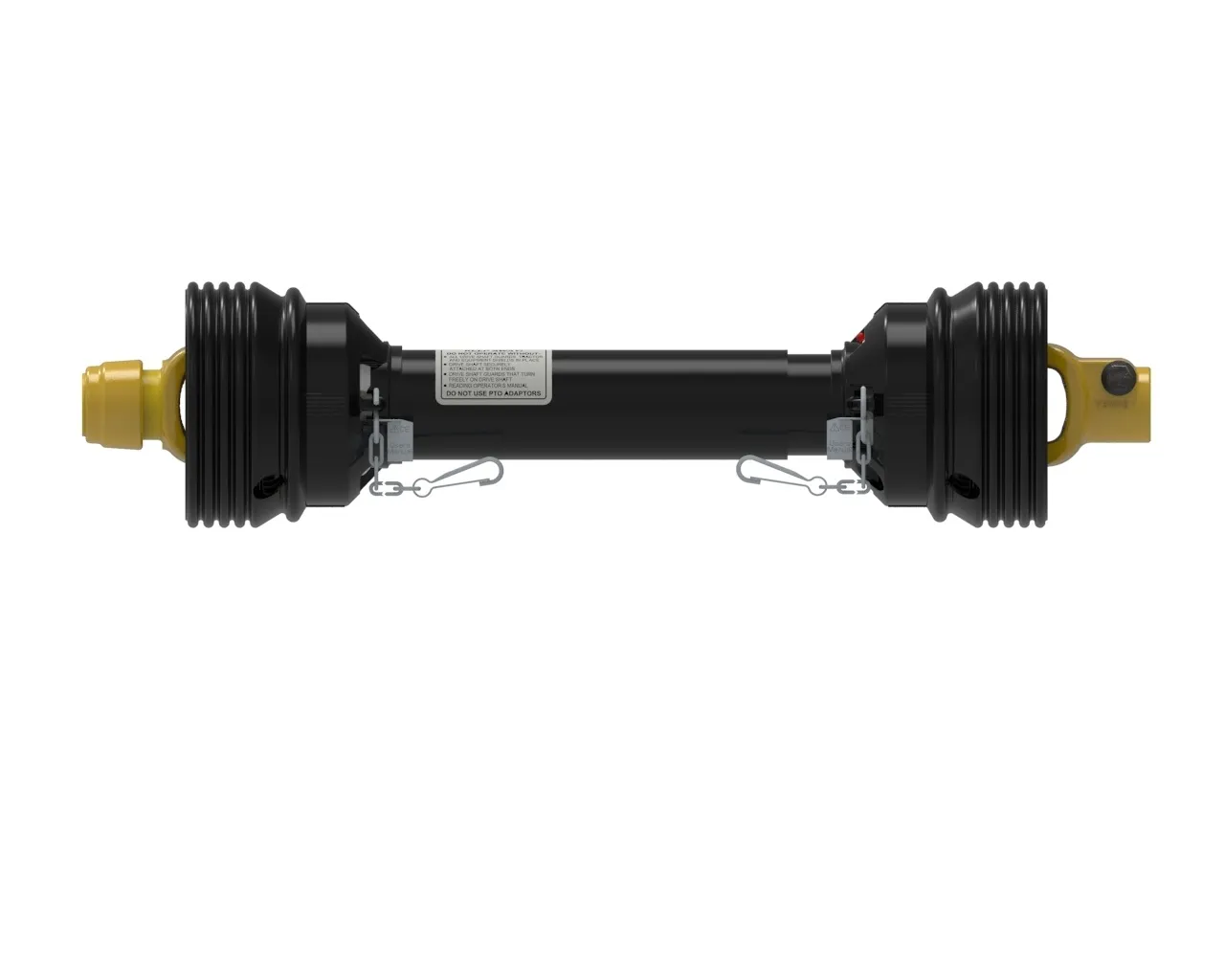
- “Dead-Man” Guards: The yellow shield sits on high-quality bearings. It does not rotate. It stops instantly if touched.
- Full Yoke Coverage: The guard cones extend over the friction clutch. Exposed rotating clutch springs are a violation of NR-12.
- Anchor Chains: We provide robust chains to secure the guard to the machine frame, ensuring it never spins.
Material Science: Hygiene and Durability
Cleanliness is vital in mushroom production to prevent contamination (Green Mold/Trichoderma).
Wash-Down Ready: Our guards and seals are designed to withstand high-pressure washing. The Zinc-Nickel Plating resists the caustic detergents often used to sanitize equipment between batches.
Sealed Bearings: We use Quad-Lip Seals on the cross kits. This prevents water and cleaning agents from entering the needle bearings and washing out the grease, ensuring long life even with daily sanitation cycles.
Case Study: The Shiitake Farm in Suzano
Client Profile: A large producer of substrate logs for Shiitake in Suzano (SP).
The Problem: The farm uses a stationary vertical mixer. They were breaking PTO shafts every 3 months. The failure mode was “twisted tubes.” The cause was the high start-up torque of the wet sawdust mix (70% moisture) combined with a lack of overload protection.
The EVER-POWER Solution: We installed a Series 8 Shaft with a 4-Plate Friction Clutch. We adjusted the clutch to slip just below the yield strength of the tube.
The Result: When the mixer is overloaded, the clutch slips for 2 seconds, allowing the operator to reverse the tractor or add water to loosen the mix. Tube failure was eliminated. The zinc plating also prevented the shaft from rusting solid in the steam-filled prep area.
Maintenance: The “Humid Environment” Protocol
Water is the enemy of mechanics.
- Grease After Washing: Always grease the PTO shaft immediately after washing the equipment. This pushes fresh grease in and water out of the seals.
- Check Clutch Plates: In humid environments, friction clutch plates can rust together (seize). Once a month, loosen the springs and slip the clutch to polish the plates, then re-tighten to spec. A seized clutch offers no protection.
- Guard Integrity: Ensure the yellow plastic guard is intact. In a stationary workspace, a broken guard is a severe safety violation.
Frequently Asked Questions (FAQ)
My mixer shaft vibrates when empty. Why?
Can I use a shear bolt instead of a friction clutch?
What grease is safe for mushroom equipment?
Agri-Market Trends: Automation and Sterility
The trend in Brazil is moving towards fully automated Bottle/Bag Filling Lines. While these are often electric, the raw material preparation (mixing/composting) remains PTO-driven due to the sheer power required. EVER-POWER is innovating with Sealed, Maintenance-Free Shafts for the “Clean Zones” of these facilities to minimize grease contamination risks.
 EN
EN  ES
ES  RU
RU  FR
FR  DE
DE  PT
PT  JA
JA  AR
AR  IT
IT  ZH
ZH