
The Pulse of the Parlor: PTO Shafts for Milking & Vacuum Systems
Securing the “White Gold” of Castro and Minas Gerais. Vibration-Free Drivelines for Emergency Vacuum Pumps and Mobile Milking Units.
Field Notes: The 5:00 AM Crisis in Minas Gerais
Brazil is a global dairy giant, with production hubs like Castro (Paraná), known as the National Capital of Milk, and the traditional dairy belt of Minas Gerais. Modern dairy farming is a biological clockwork; cows must be milked twice or three times a day, every day, without fail.
The heart of the milking parlor (sala de ordenha) is the Vacuum Pump (Bomba de Vácuo). It provides the gentle suction required to extract milk. While grid electricity powers most systems, the reliability of rural power grids in Brazil can be unpredictable, especially during summer storms.
The Critical Link: When the lights go out, the Tractor-PTO Driven Vacuum Pump (Conjunto de Vácuo Tratorizado) becomes the most important machine on the farm. If this backup system fails or operates poorly, the consequences are severe:
1. Delayed Milking: Causes immense stress to high-yield Holsteins, leading to immediate production drops.
2. Vacuum Instability: If the PTO shaft vibrates, the vacuum level fluctuates. This “teat slap” can cause physical damage to the teat ends, leading to Mastitis and somatic cell count spikes.
In 2023, we consulted with a cooperative in Minas Gerais that was experiencing high rates of hyperkeratosis (teat end damage) after using emergency tractor pumps. The cause was traced to Harmonic Vibration in the PTO shafts. The farmers were using cheap, unbalanced agricultural shafts intended for rototillers. The vibration was transferring to the pump lobes, creating micro-fluctuations in vacuum pressure (pulsation irregularity).
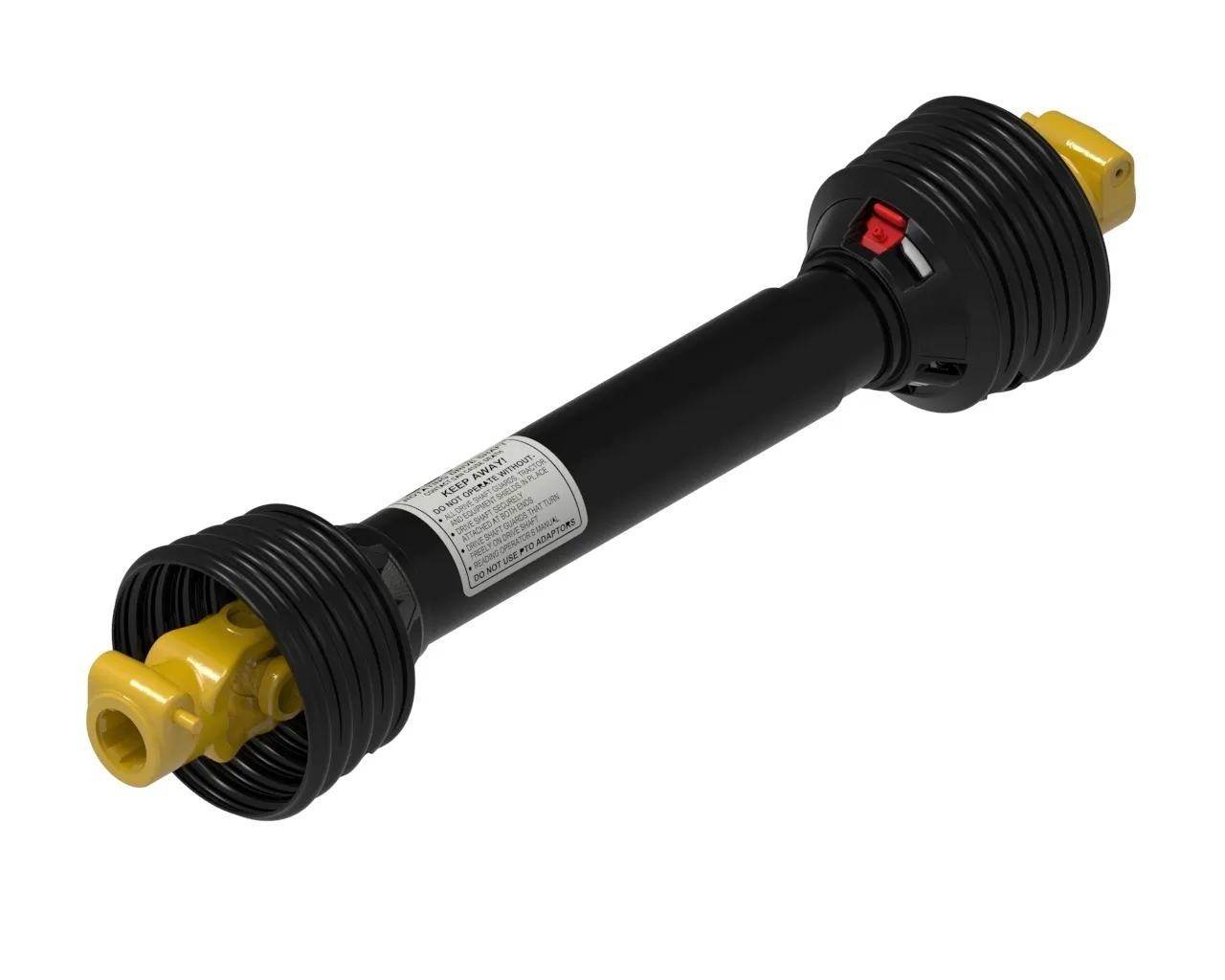
The EVER-POWER Solution: We introduced the Series 4 “Dairy-Safe” Precision Driveline. This shaft is Dynamically Balanced to G6.3 to ensure zero vibration at 540 RPM. Furthermore, recognizing the sanitary environment, we applied Zinc-Nickel Plating to resist corrosion from the humid milking parlor environment and the aggressive cleaning chemicals used in the dairy industry.
Technical Specifications & Engineering Parameters
Milking machine shafts do not require massive torque, but they require absolute consistency and cleanliness. Below are the specs for our Dairy Series.
| Parameter ID | Specification Category | Technical Value / Standard |
|---|---|---|
| 01 | Series Classification | Series 4 (Standard Pumps) / Series 6 (High Capacity) |
| 02 | Nominal Torque (540 RPM) | 460 Nm (S4) / 830 Nm (S6) |
| 03 | Nominal Torque (1000 RPM) | 380 Nm (S4) / 640 Nm (S6) |
| 04 | Balancing Standard | ISO 1940-1 Grade G6.3 (Mandatory for Vacuum Stability) |
| 05 | Tractor Interface | 1-3/8″ Z6 (Standard) |
| 06 | Implement Interface | 1-3/8″ Z6 or 30mm/35mm/40mm Keyed (Pump Input) |
| 07 | Closed Length (Lz) | 810 mm – 1,010 mm (Stationary Backup Standard) |
| 08 | Tube Profile | Lemon (S4) or Star (S6) – Low Friction |
| 09 | Tube Material | ST52 Cold Drawn Precision Steel (Plated) |
| 10 | Cross Kit Dimensions | 27mm x 74.6mm (S4) / 30.2mm x 92mm (S6) |
| 11 | Bearing Type | Sealed Needle Roller (Moisture Resistant) |
| 12 | Safety Device | Shear Bolt (SB) – Pump Seizure Protection |
| 13 | Operating Angle | Max 10° (Alignment critical for stationary use) |
| 14 | Surface Finish | Passivated Zinc-Nickel (Sanitary/Anti-Rust) |
| 15 | Guard Material | Chemical Resistant HDPE (Yellow/Blue) |
| 16 | Guard Certification | NR-12 / ISO 5674 |
| 17 | Lubrication | H1 Food Grade Compatible Grease (Optional) |
| 18 | Vibration Damping | Precision Yoke Alignment |
| 19 | Telescoping Overlap | Min 200mm (Required for stability) |
| 20 | Clutch Reset | Manual (Bolt replacement) |
| 21 | Weight | 12 kg – 22 kg |
| 22 | Application | Emergency Vacuum Pump / Mobile Milking Unit |
| 23 | Warranty | 2 Years (Balance & Corrosion) |
| 24 | Origin Compatibility | DeLaval, GEA, Fockink, Sulinox, Eurolatte |
The Physics of Vacuum: Stability equals Health
The mechanical performance of the PTO shaft has a direct biological impact on the herd.
1. Vacuum Stability (Estabilidade de Vácuo)
Milking machines operate at a specific vacuum level (e.g., 42-48 kPa).
The Physics: The vacuum pump (usually a rotary vane type) must spin at a constant RPM to maintain this pressure.
The PTO Link: If the PTO shaft is unbalanced or operating at a steep angle, it introduces “cyclic speed variation.” The pump speeds up and slows down slightly twice per revolution.
The Consequence: This fluctuation causes the vacuum level at the teat cup to jitter. This unstable vacuum causes the liner to slip or slap the teat, causing Hyperkeratosis (callousing of the teat canal). This opens the door for bacteria and Mastitis.
The Solution: Balanced Star Profile Shafts. Our shafts are balanced to remove mass eccentricities. The Star profile minimizes backlash, ensuring the tractor’s steady idle translates to a perfectly steady pump speed.
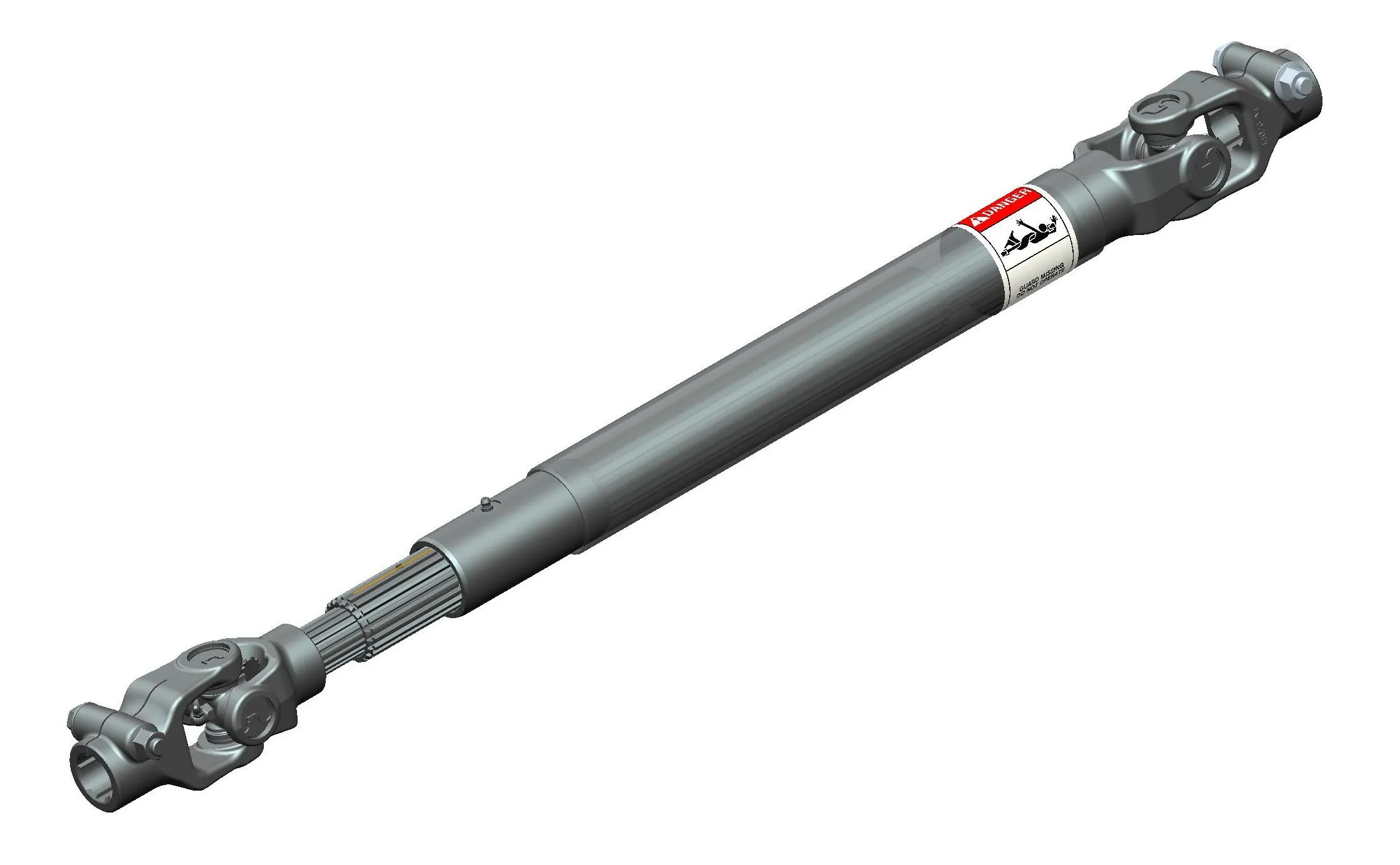
2. The Shear Bolt Fuse (Proteção contra Travamento)
Vacuum pumps are precision machines with tight tolerances.
The Risk: If a foreign object enters the pump, or if the vanes break due to lack of oil, the pump locks up instantly.
The Inertia: The tractor engine has massive inertia. If the pump locks, the tractor will twist the input shaft of the pump or explode the pump housing.
The Defense: The Shear Bolt Yoke. We use a precisely calibrated Grade 8.8 bolt. Upon a pump seizure, the bolt shears instantly, disconnecting the drive. This saves the expensive pump housing from catastrophic cracking.
3. Corrosion in the Parlor (Corrosão Química)
The milking environment is humid and chemically aggressive.
The Chemistry: Lactic acid from milk, manure gases (ammonia), and harsh cleaning agents (chlorine/acid detergents) attack steel.
The Failure: A painted shaft rusts quickly. Rust flakes can contaminate the clean zone. Rusted tubes seize, preventing connection during an emergency blackout.
The Solution: Zinc-Nickel Plating. We do not use paint. We plate the entire shaft. This provides a hygienic, silver finish that resists acid attack and high-pressure washdowns, ensuring the shaft is always ready for emergency deployment.

Operational Context: Reliability in the Dairy
The PTO shaft serves two main roles in Brazilian dairy farming.
Scenario A: Emergency Backup (Emergência)
Context: A “Standby” vacuum pump mounted on a cart or frame, sitting idle for weeks until a power outage occurs.
Challenge: Readiness. When the power cuts at 4 AM, the shaft must slide easily and lock securely.
Requirement: Plated Telescoping Tubes. Because we plate the inner tubes, they do not rust-weld together during storage. The farmer can extend the shaft and connect it to the tractor in seconds, minimizing the delay in milking.
Scenario B: Mobile Milking (Ordenha Balde ao Pé)
Context: Smaller farms or pasture-based systems where the milking unit moves to the cows.
Challenge: Constant Movement. The unit is towed by the tractor.
Requirement: Short-Coupled Shafts. The distance between the tractor and the pump on the trailer tongue is often short. We provide custom-length shafts (collapsed length 600-700mm) to prevent “bottoming out” when turning, which would destroy the pump bearings.
Interchangeability & OEM Replacement
We support the major dairy equipment brands operating in Brazil.
Fitment Guide:
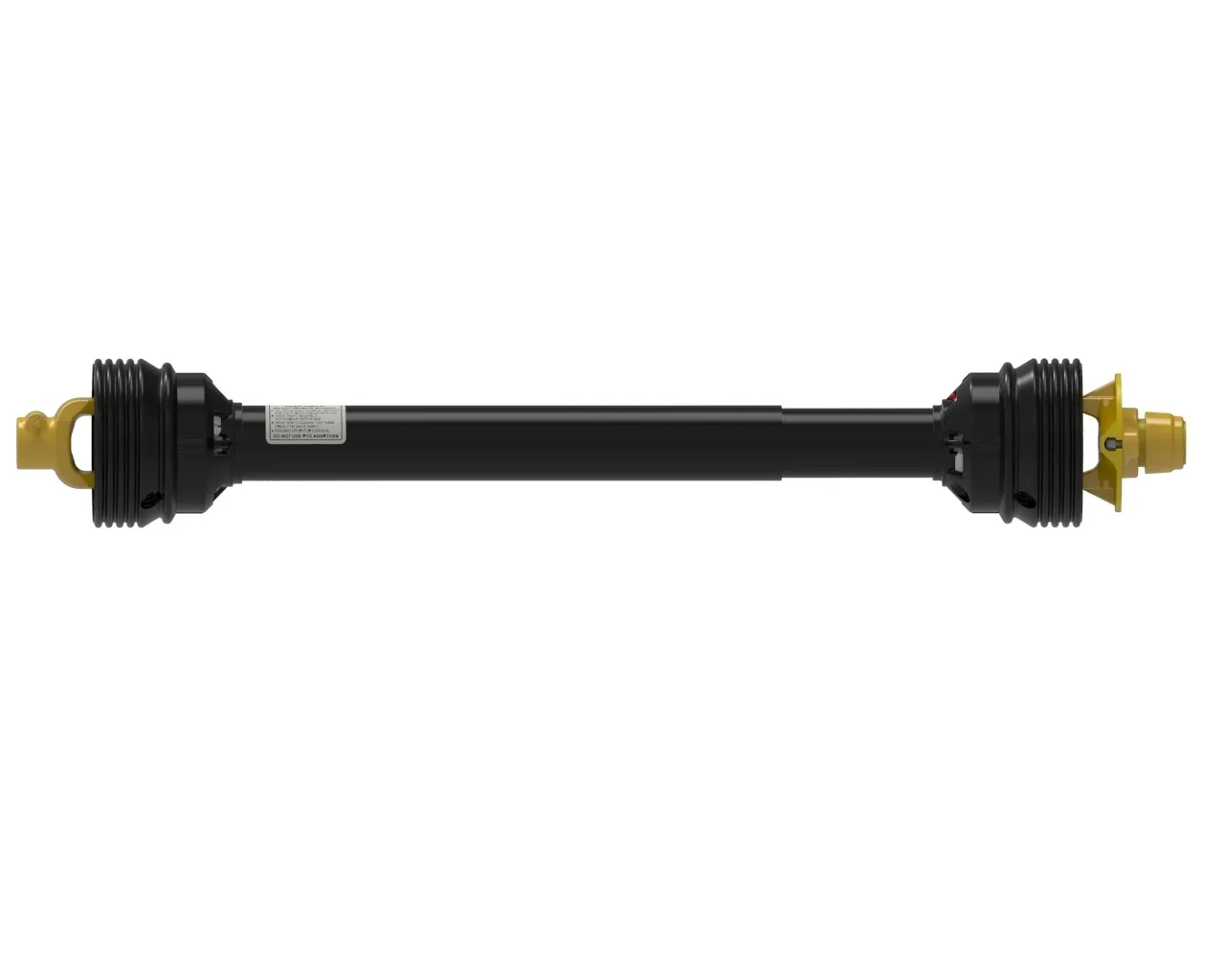
EVER-POWER Series 4 shafts are engineered replacements for:
- DeLaval™ (Vacuum Pumps): Direct replacement for PTO drive kits. We stock 30mm and 35mm keyed yokes common on their pumps.
- GEA Farm Technologies™: Compatible with emergency drive units for their rotary and parallel parlors.
- Fockink™ / Sulinox™: Standard equipment replacements for Brazilian-made milking systems.
- Eurolatte™ / Gimenez™: Universal fitment for mobile milking carts.
*Disclaimer: OEM names are for reference only. EVER-POWER is an independent manufacturer.
Compliance with Brazilian Regulatory Standards (NR-12)
NR-12 is strictly enforced in dairy sheds. The workspace is confined, floors are wet/slippery, and workers are constantly moving near the equipment.
The “Clean Zone” Safety
A spinning shaft in a wet, slippery milking parlor is a high risk.
EVER-POWER Dairy Shafts utilize:
- “Dead-Man” Guards: The yellow shield sits on high-quality bearings. It does not rotate. If a worker slips on wet concrete and grabs the shaft, the guard remains static.
- Full Cone Coverage: The guard cones extend over the entire U-joint. No rotating metal is visible. This also prevents cow tail hair from getting wound into the joint (a common and painful injury for the animal).
- Sanitary Chains: Our safety chains are stainless steel or coated to prevent rusting and snapping in the humid environment.

Material Science: Hygiene and Durability
The material choice is dictated by the chemical environment.
Zinc-Nickel Plating: This is the standard for our dairy line. It offers 1000+ hours of salt spray resistance. It ensures the shaft looks clean and functions perfectly despite daily exposure to ammonia and wash-down water.
Food Grade Grease Compatibility: While the internal cross bearings use high-performance lithium grease, the external sliding surfaces are compatible with H1 Food Grade grease if the farm protocols require it for incidental contact safety.
Case Study: The Dairy Farm in Castro
Client Profile: A high-production dairy in Castro (PR) milking 500 cows.
The Problem: The farm relies on a tractor-PTO generator and vacuum pump during frequent summer storms. They noticed that during generator operation, the vacuum regulators were “chattering,” and somatic cell counts (indicator of mastitis) increased after power outages.
The Diagnosis: The PTO shaft connecting the tractor to the vacuum pump was a standard, unbalanced tiller shaft. It vibrated violently at 540 RPM. This vibration interfered with the vacuum regulator’s diaphragm, causing pressure spikes.
The EVER-POWER Solution: We supplied a Series 4 Balanced “Dairy-Safe” Shaft.
The Result: The vibration ceased. The vacuum regulator stabilized immediately. The “teat end” health scores improved over the next month. The farm manager noted that the quiet operation also reduced stress on the cows during the milking process. The small investment in a balanced shaft protected the farm’s primary asset: the herd’s health.
Maintenance: The “Hygiene” Protocol
Maintenance in a dairy is about cleanliness.
- Grease after Washing: If you pressure wash the equipment, grease the PTO shaft immediately after. This pushes water and detergent out of the bearings.
- Check for Rust: Inspect the telescoping tubes monthly. If brown rust appears, clean and apply fresh grease. Rust particles falling into the milk line area is a contamination risk.
- Guard Integrity: Ensure the yellow plastic guard is intact and clean. A dirty, greasy guard attracts bacteria. Wipe it down as part of the parlor cleaning routine.
Frequently Asked Questions (FAQ)
Can I use a regular rototiller shaft for my vacuum pump?
How straight does the tractor need to be?
Why do you recommend plated shafts?
Agri-Market Trends: Automated Milking
Brazil is adopting Robotic Milking Systems (VMS) rapidly. These systems are 100% electric and require 100% power uptime. The demand for High-Precision PTO Generator Shafts is skyrocketing. EVER-POWER is supplying ultra-balanced shafts to power the large backup generators required to keep these robotic dairies running during grid failures, ensuring 24/7 autonomous operation.
 EN
EN  ES
ES  RU
RU  FR
FR  DE
DE  PT
PT  JA
JA  AR
AR  IT
IT  ZH
ZH