
The Heavy Lifters: PTO Shafts for Sugar Beet Harvesters
Unearthing Value in Heavy Clay. Precision Power Transmission for Lifting, Cleaning, and Loading Systems in the Modern Root Crop Industry.
Field Notes: The Battle Against “Heavy Soil”
Sugar beet harvesting (Colheita de Beterraba) is widely regarded as one of the most mechanically demanding operations in agriculture. Unlike grain or forage, the harvester does not just process the crop; it must process the soil itself. Whether using self-propelled giants (like Holmer or Ropa) or tractor-towed bunkers (like Grimme), the machinery must dig, lift, and clean tons of root crops from wet, sticky, and often stony ground.
The power transmission challenges are distinct:
1. Variable Torque Loads: As the lifter wheels or shares encounter patches of compacted clay or stones, the torque required fluctuates wildly.
2. Complex Geometry: Trailed harvesters require extreme articulation angles at headlands while keeping the cleaning stars and elevators running.
3. Shock Protection: A large stone jamming a cleaning turbine or an elevator web creates an instant, catastrophic shock load that must be isolated from the tractor.
In recent field analyses of trailed harvesters operating in heavy soil conditions, the primary point of failure was identified as the Main Input Driveline. Standard agricultural shafts often suffer from “telescoping seizure” due to the high torque preventing the tubes from sliding during turns, resulting in destroyed input bearings on the harvester’s gearbox. Furthermore, standard friction clutches often overheat and glaze when trying to power through heavy mud, rendering them useless as safety devices.

The EVER-POWER Solution: We engineered the Series 10 “Beet-Master” CV Driveline. This shaft utilizes a Constant Velocity (Wide Angle) Joint capable of 80-degree articulation under load. Instead of standard profile tubes, we employ Rilsan-Coated Splined Shafts. This low-friction coating allows the shaft to telescope effortlessly even under peak torque loads of 3,500 Nm, protecting the gearbox bearings. For overload protection, we moved away from friction disks and standardized the Automatic Cam Cut-Out Clutch (K64), which disconnects the drive completely upon overload and resets automatically, preventing heat buildup.
Technical Specifications & Engineering Parameters
Sugar beet harvesters require Class 8 or Class 10 drivelines due to the “earth-moving” nature of the work. Below are the specs for our Root Crop Series.
| Parameter ID | Specification Category | Technical Value / Standard |
|---|---|---|
| 01 | Series Classification | Series 8 (Cleaning Systems) / Series 10 (Main Drive) |
| 02 | Nominal Torque (540 RPM) | 1,240 Nm (S8) / 1,850 Nm (S10) |
| 03 | Nominal Torque (1000 RPM) | 980 Nm (S8) / 1,450 Nm (S10) |
| 04 | Max Shock Load Rating | 5,800 Nm (Stone Blockage) |
| 05 | Tractor Interface | 1-3/8″ Z21 or 1-3/4″ Z20 (High HP) |
| 06 | Implement Interface | 1-3/4″ Z6 or 1-3/4″ Z20 (Main Gearbox) |
| 07 | Closed Length (Lz) | 1,210 mm – 1,510 mm (Long Reach for Articulation) |
| 08 | Tube Profile | Involute Spline (S10) or Star Profile (S8) |
| 09 | Tube Material | 42CrMo4 Heat Treated Alloy Steel |
| 10 | Cross Kit Dimensions | 35mm x 106.5mm (S8) / 42mm x 104mm (S10) |
| 11 | Bearing Type | Cassette Sealed Needle Roller (Mud Proof) |
| 12 | Safety Device | Cam Cut-Out Clutch (K64/EK64) – Mandatory |
| 13 | Torque Setting | 2,000 Nm – 3,500 Nm (Calibrated) |
| 14 | Operating Angle | Max 25° (Continuous) / 80° (CV Joint) |
| 15 | Wide Angle (CV) | Standard on Tractor Side for Trailed Units |
| 16 | Guard Material | Impact Modified HDPE (Black/Yellow) |
| 17 | Guard Certification | NR-12 / ISO 5674 |
| 18 | Lubrication | Calcium Sulfonate Complex (Water Resistant) |
| 19 | Surface Treatment | Zinc-Nickel Plating (Corrosion Resistance) |
| 20 | Telescoping Overlap | Min 400mm (Required for turning stability) |
| 21 | Clutch Reset | Automatic (RPM Drop) |
| 22 | Weight | 55 kg – 85 kg (Requires lifting aid) |
| 23 | Application | Trailed Beet Harvester / Defoliator / Loader |
| 24 | Warranty | 1 Year (Structure) / 1000 Hours |
| 25 | Origin Compatibility | Grimme, Ropa, Holmer, Kleine, Edenhall |
The Physics of Extraction: Torque and Cleaning
The PTO shaft on a beet harvester is the prime mover for a complex hydraulic and mechanical system.
1. The Lifter Unit (O Arrancador)
Whether using vibrating shares or opposed wheels (Oppel wheels), the lifting unit requires significant power to break the soil suction and lift the beet.
The Load: This is a high-torque, low-speed application. However, the PTO usually drives a hydraulic pump bank or a main gearbox that distributes power to the row units.
The Stress: Torsional Vibration. The digging action creates a rhythmic pulsing load on the driveline.
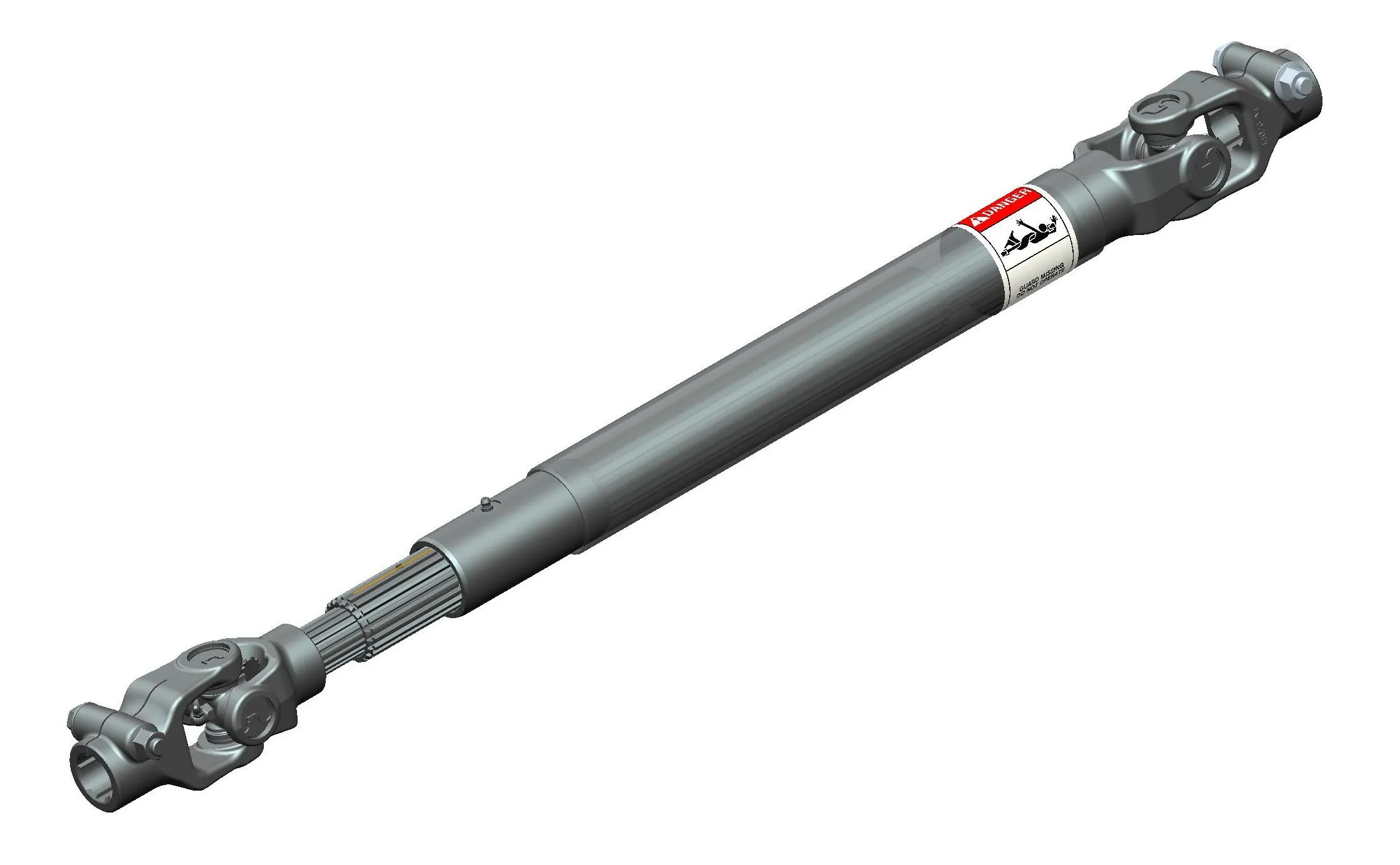
The Solution: Hardened Spline Yokes. To prevent the connection points from “fretting” or loosening due to vibration, we use Induction Hardened yokes (60 HRC) that lock rigidly onto the tractor and implement shafts.
2. The Cleaning Systems (Turbinas de Limpeza)
Once lifted, the beets are cleaned by a series of rotating stars (turbines) or spiral rollers.
The Hazard: Rocks. A large field stone can jam between the cleaning stars instantly.
The Kinetic Energy: The cleaning system has high rotational inertia. A sudden stop releases massive energy back through the driveline.
The Defense: The Automatic Cam Clutch. Unlike a friction clutch that slips and heats up, a Cam Clutch uses spring-loaded wedges. When torque exceeds the limit (e.g., a rock jam), the cams disengage fully, severing the power connection. The operator hears a loud “clatter.” To reset, the operator simply throttles down the PTO; the cams re-engage automatically once the speed drops. This is the only clutch type that can survive the frequent jams of rocky beet fields.

3. The Trailed Harvester Geometry
Large 6-row trailed harvesters are long and heavy.
The Turn: At the headland, the tractor turns 90 degrees or more.
The Requirement: 80° Wide-Angle (CV) Joint. Without a CV joint, the operator must stop the PTO every time they turn. This slows down harvest and leaves uncleaned beets in the machine. A CV joint allows continuous operation, keeping the cleaning system running to clear the mud while the tractor turns for the next pass.
Operational Context: Soil Conditions and Equipment
The equipment configuration depends heavily on the soil type.
Scenario A: Heavy Clay / Wet Conditions
Context: Harvesting late in the season when rains have started. Mud is sticky and heavy.
Challenge: Power Consumption. The mud adds tons of weight to the cleaning stars. The torque load is near the maximum limit of the tractor (200HP+).
Requirement: Series 10 Splined Shaft. We replace standard profile tubes with a solid splined bar telescoping inside a broached sleeve. This design is virtually twist-proof and can handle the continuous high load of moving heavy mud without binding or bending.
Scenario B: Defoliators (Desfolhadores)
Machine: Front-mounted or separate pass flails that remove the beet leaves.
Challenge: Dust and Juice. The flails create a corrosive mist of beet juice and soil dust.
Requirement: Zinc-Nickel Plating. Standard paint peels off quickly in this acidic/abrasive environment. Our Zinc-Nickel plating provides chemical resistance, ensuring the quick-release collars and guard bearings don’t seize up from corrosion.

Interchangeability & OEM Replacement
We provide upgrades for the European machinery that dominates the beet sector.
Fitment Guide:
EVER-POWER Series 10 shafts are engineered replacements for:
- Grimme™ (Rootster / Maxtron): Direct replacement for the main input drive. We offer the specific 1-3/4″ Z20 yokes used on these high-capacity machines.
- Ropa™ (Tiger / Panther): Heavy-duty shafts for the defoliator and lifting units.
- Holmer™ (Terra Dos): Compatible with the transfer case drives.
- Vervaet™ / Agrifac™: Specialized metric spline adaptations available.
*Disclaimer: OEM names are for reference only. EVER-POWER is an independent manufacturer.
Compliance with Brazilian Regulatory Standards (NR-12)
NR-12 is crucial. Beet harvesters are massive, complex machines with many moving parts. Operators often work near the machine to unclog mud.
The “Mud-Proof” Guard
A spinning shaft coated in mud is a heavy, dangerous object.
EVER-POWER Beet Shafts utilize:
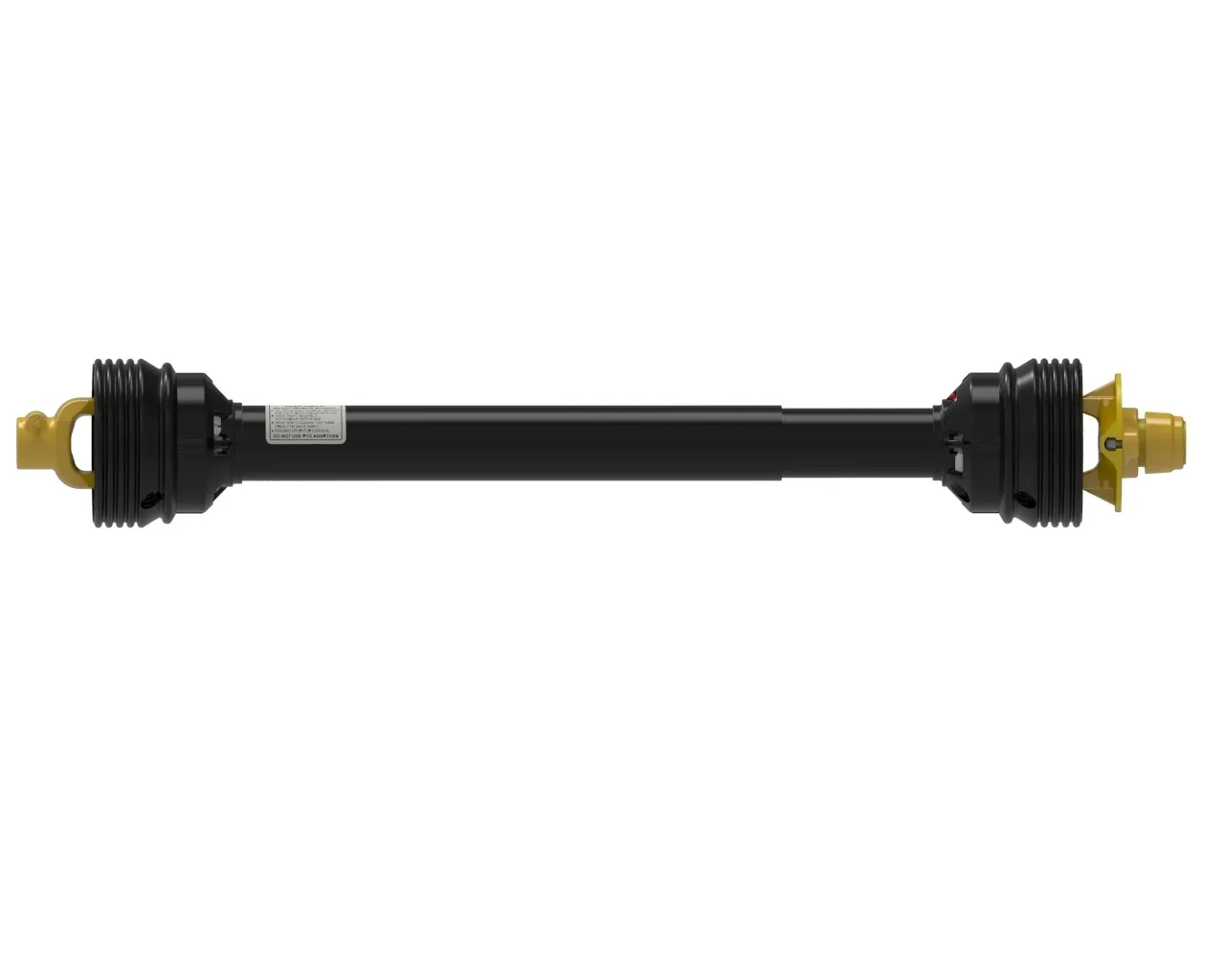
- Sealed Guard Bearings: We use triple-sealed bearings for the plastic guard. If liquid mud enters the guard bearing, it seizes. If it seizes, the guard rotates with the shaft, becoming a hazard. Our seals prevent this.
- Impact Resistant Plastic: Clods of dirt and stones are constantly thrown by the cleaning stars. Our guards are made of High-Impact HDPE to resist shattering under bombardment.
- Conical Coverage: The guard cones extend fully over the large Cam Clutch, preventing clothing entanglement with the clutch housing.
Material Science: Toughness for the Stones
The primary threat is impact fracture from stones.
Forged Steel Yokes: Cast iron yokes are too brittle for rocky conditions. We use S45C Forged Steel. The forging process aligns the grain of the metal, providing ductility. This allows the yoke to absorb the shock of a stone jam without snapping, while the clutch disengages.
Case Hardened Crosses: The cross kit journals are carburized to a depth of 1.5mm. This provides a hard wearing surface for the needle rollers while keeping the core tough to resist shock loads.
Case Study: The Harvest in Castro, Paraná
Client Profile: A cooperative in Castro (PR) growing sugar beets for animal feed and sugar.
The Problem: The cooperative operates trailed 6-row harvesters. They were breaking the main PTO cross kits every 50 hours. The soil is heavy clay with stones. The OEM shafts had friction clutches, but operators had tightened them fully to prevent slipping in the mud, effectively removing the safety protection. When a stone entered, the U-joint exploded.
The EVER-POWER Solution: We upgraded the fleet to Series 10 CV Shafts with K64 Cam Clutches.
The Result: The Cam Clutch provided non-adjustable protection. Operators could not overtighten it. When a stone hit, the clutch “popped” loudly and disconnected. The operator stopped, reversed, cleared the stone, and resumed. Driveline breakage dropped to zero. The cooperative calculated a savings of R$ 120,000 in parts and gained 15% more harvest uptime.
Maintenance: The “Mud” Protocol
Mud is the enemy of maintenance.
- Wash Before Grease: You must pressure wash the PTO shaft yokes before attaching the grease gun. If you don’t, you push dried clay into the needle bearings, which acts like grinding paste.
- Daily Greasing: In heavy harvest conditions, grease the CV joint and cross kits every 8 hours. The heavy load squeezes the grease out rapidly.
- Check the Cam Clutch: Once a season, verify the oil level in the Cam Clutch housing (if oil-bath type) or grease the cam ring. A dry clutch will wear out its cams and fail to transmit torque.
Frequently Asked Questions (FAQ)
My clutch makes a loud banging noise. Is it broken?
Can I use a friction clutch instead of a cam clutch?
Why does my CV joint overheat?
Agri-Market Trends: Self-Propelled Efficiency
The trend in high-yield regions is moving towards massive Self-Propelled Harvesters (Automotrizes). While these use hydraulic drives for wheels and some systems, the main defoliator and lifting units often still rely on mechanical PTO drives from the central engine gearbox for efficiency. EVER-POWER is developing Ultra-Short, High-Speed Shafts specifically for the internal power distribution of these 30-ton giants, ensuring the Brazilian sugar beet sector remains competitive.
 EN
EN  ES
ES  RU
RU  FR
FR  DE
DE  PT
PT  JA
JA  AR
AR  IT
IT  ZH
ZH